
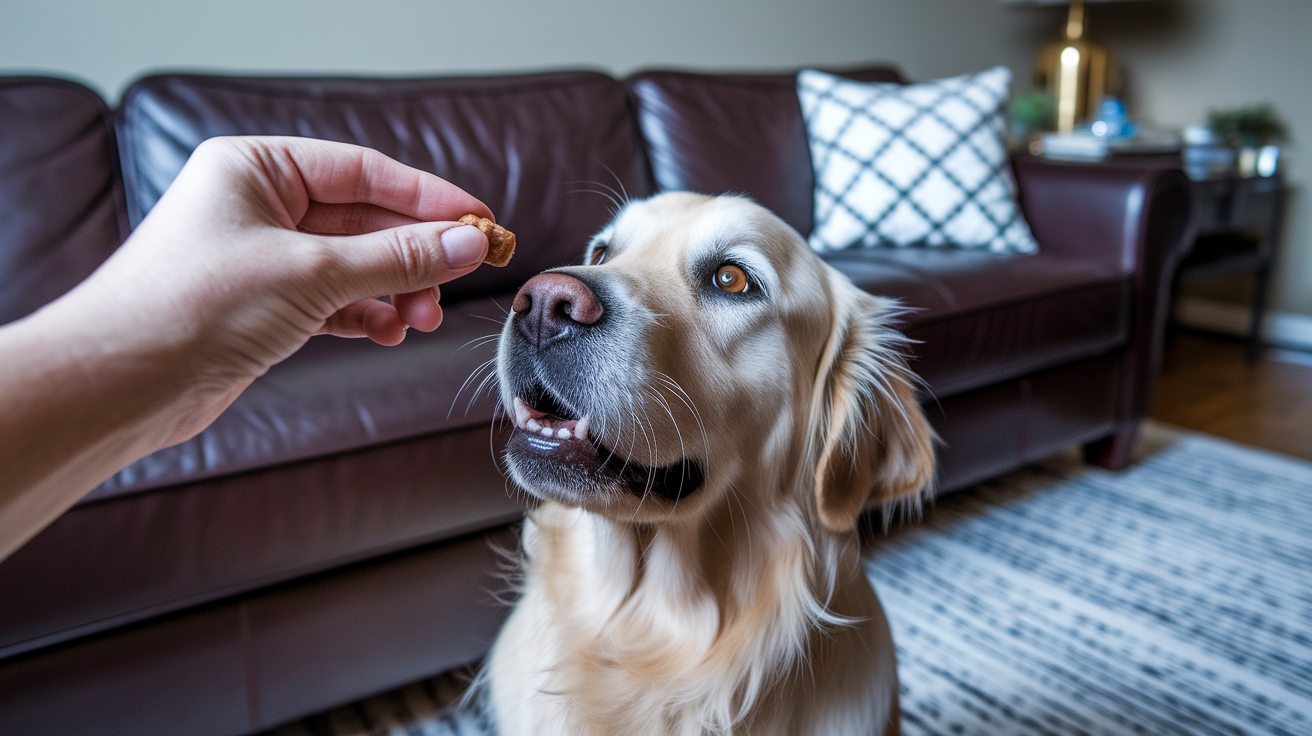
Think treats are bribery?
They’re not.
Used right, treats become clear communication your dog understands fast.
This post shows a simple, practical method: the two-second timing, marking the exact moment, choosing tiny high-value bites, and fading food so your dog doesn’t work only for snacks.
You’ll learn what treats to use, how to deliver them without rewarding the wrong thing, and an easy plan to shift from constant rewards to random treats that keep behaviors strong.
Read on and get a training routine you can actually stick with.
The Treat-Based Training Method Explained
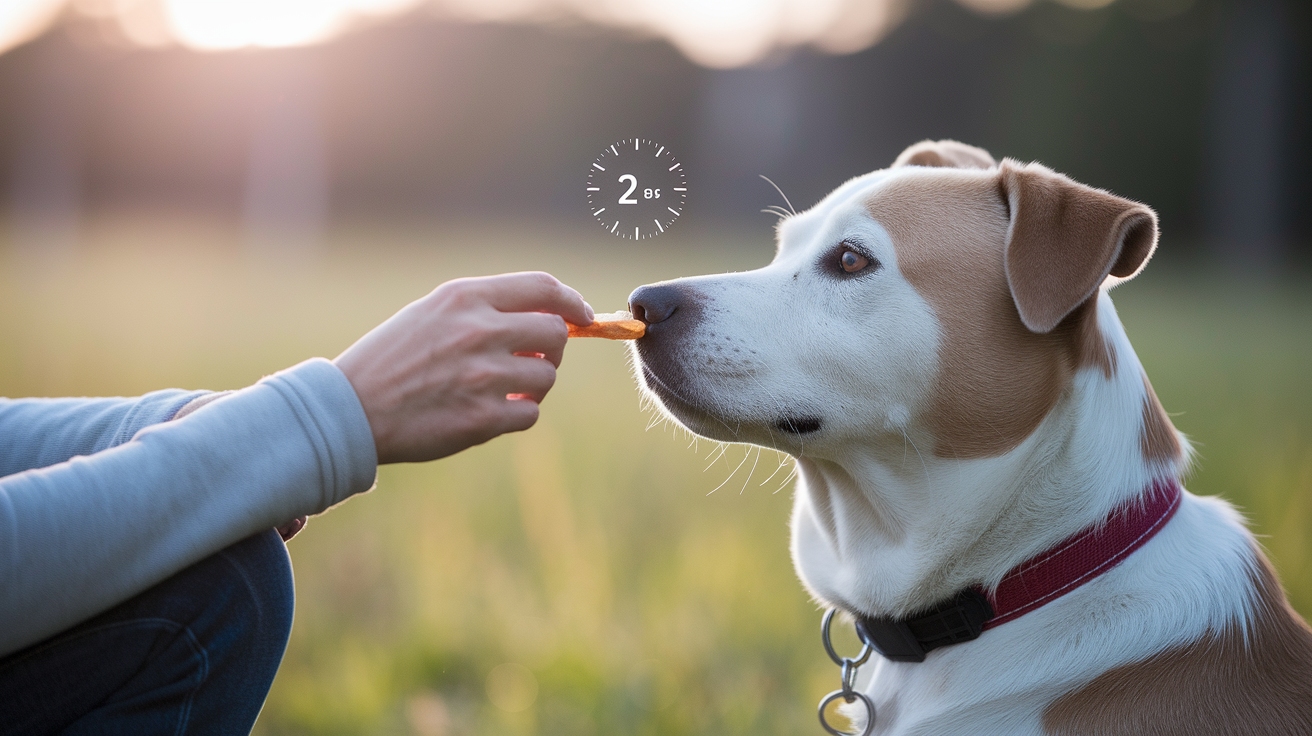
Using treats for dog training means rewarding your dog with small pieces of food right after they do what you asked. The core idea is simple: when a behavior gets rewarded, dogs do it again. You’re not bribing your dog. You’re building clear communication where good choices lead to good stuff. This works because dogs naturally repeat actions that result in something they value, and for most dogs, food ranks pretty high.
The basic process has three steps: ask for the behavior, mark the exact moment your dog nails it, and get that treat to them within 2 seconds. That timing window matters a lot because it helps your dog connect the treat directly to what you wanted.
Understanding the difference between lures, rewards, and bribes keeps things from getting messy. A lure guides your dog into position with a visible treat, like holding food above their nose to get them into a sit. A reward comes after your dog does the right thing without seeing the treat first. A bribe only shows up when your dog refuses to respond, which teaches them that ignoring you gets them better deals later. You want to use lures briefly at the start, switch to rewards fast, and skip bribes completely.
Timing precision matters as much as the treat itself. Reward your dog while they’re still doing the thing, treat them during the sit, not after they’ve already popped back up. If you wait until your dog breaks position, you’re accidentally rewarding the wrong behavior.
Consistency across all training sessions builds your foundation. Using the same marker word, delivering treats in the same timeframe, and rewarding the same behaviors the same way helps your dog understand faster and more reliably.
Selecting the Right Training Treats for Your Dog
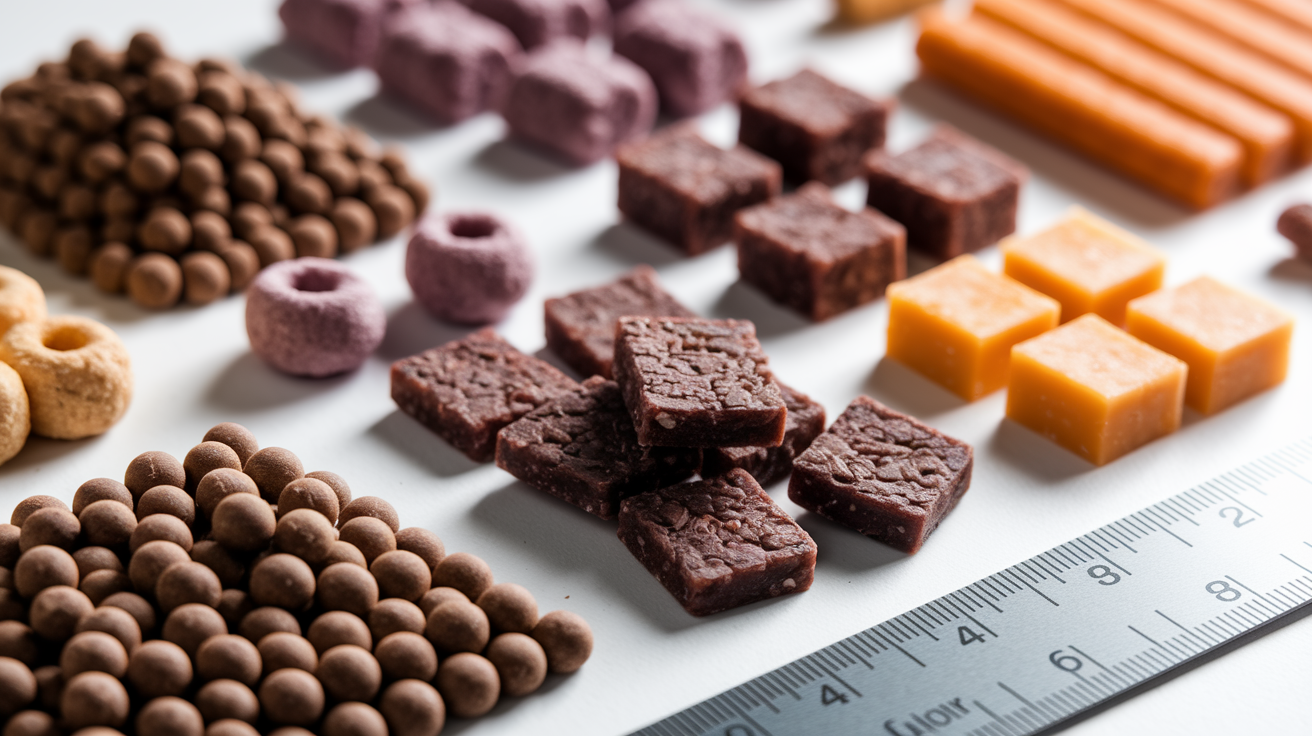
Treat size directly impacts how fast you can train and whether your dog stays focused without getting full. Pea sized treats work for large dogs, while small breeds need even tinier pieces, sometimes half a pea or smaller. These small portions let you reward dozens of repetitions without adding crazy calories or filling your dog’s stomach mid session. When your dog gets full, motivation drops, and your training ends early.
Soft treats get eaten faster than crunchy biscuits, which matters when you’re doing high repetition training. A soft treat disappears in one swallow, letting you move right to the next repetition and keep momentum going. Crunchy treats need chewing time, and broken pieces that hit the floor create distractions as your dog hunts for crumbs instead of focusing on you. Soft treats also smell stronger, ranking higher in most dogs’ reward hierarchies. Similar to how cheese or bacon creates more excitement than dry kibble.
High value versus low value treats change based on where you’re training and how hard the task is. Smelly, high value treats like small pieces of cheese, cooked chicken, freeze dried liver, or bacon become necessary in distracting environments. Think a busy park with squirrels and other dogs nearby. Your dog’s regular kibble might work in a quiet living room with no distractions, but it won’t compete with a squirrel. Building a reward hierarchy helps you match treat value to the situation: kibble at the bottom, commercial soft treats in the middle, and real meat or cheese at the top.
Effective training treats share these characteristics:
- Soft texture that dissolves quickly without chewing time
- Strong smell that grabs attention even in distracting settings
- Small size allowing 50 to 100 rewards without overfeeding
- Protein rich content providing nutritional value rather than empty calories
- Quick consumption enabling immediate progression to next repetition
- Portability through options like freeze dried liver or jerky pieces
- Freshness maintained through proper storage to preserve smell and appeal
- Ingredient quality free from artificial colors, excessive fillers, or problem additives
Mastering Treat Timing and Delivery Techniques
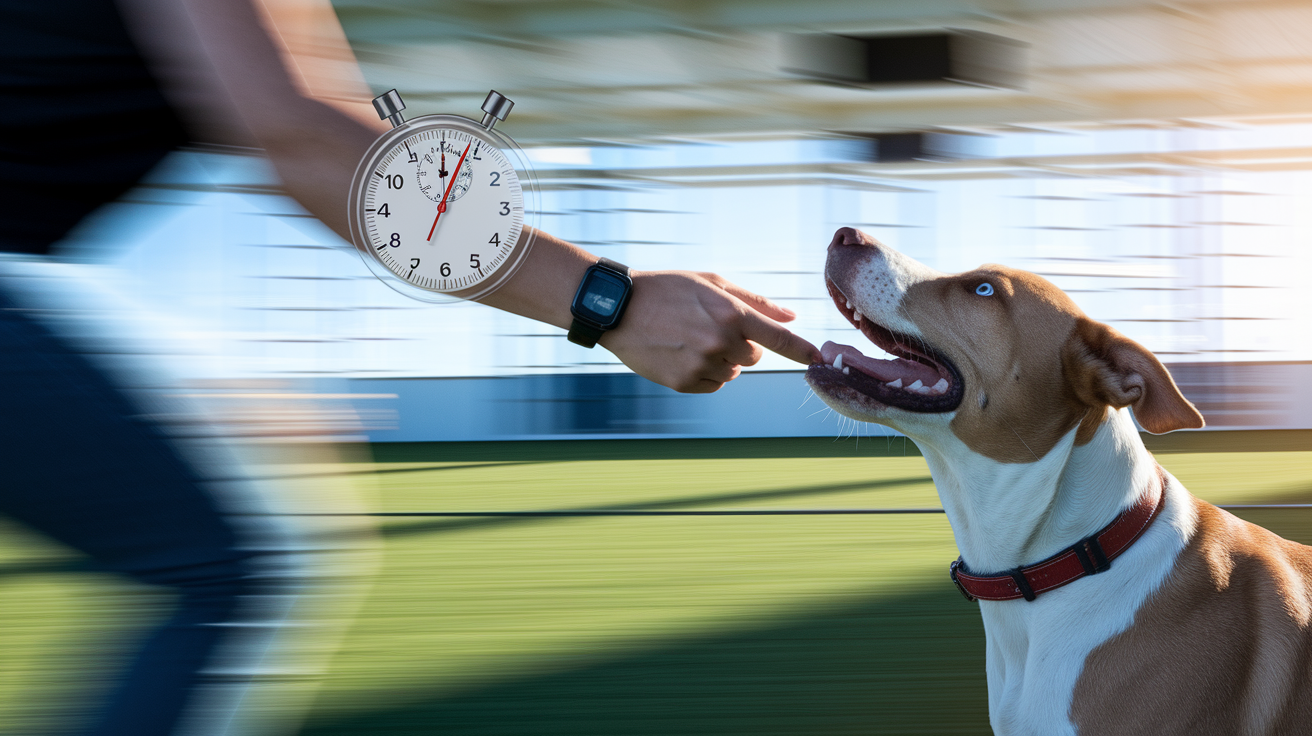
The 2 second window between your dog’s correct behavior and treat delivery creates the foundation for effective learning. Beyond 2 seconds, your dog starts losing the connection between what they did and why they’re getting food. If you ask for a sit, your dog sits, then you fumble in your pocket for 5 seconds searching for a treat, your dog might think they’re being rewarded for standing back up, sniffing the ground, or whatever they happened to be doing when the treat finally appeared.
Rewarding while your dog holds the correct position reinforces exactly what you want. Treat your dog during the sit, not after they’ve released themselves and wandered off. This precision teaches your dog that holding the position matters, not just briefly touching it before moving on. Fast eating treats support this timing by allowing immediate progression to the next repetition without long chewing breaks that interrupt flow and reduce how many practice opportunities you can fit into a short session.
Using Markers and Clickers for Precise Communication
Marker words like “yes” or “good” and clicker devices serve the same purpose: pinpoint the exact moment your dog performed the correct behavior. The marker bridges the gap between the action and the treat delivery. When your dog sits, you immediately click or say “yes,” then deliver the treat a second later. This gives you more timing flexibility because the marker captures the precise moment, even if the treat takes an extra second to reach your dog’s mouth.
Hand positioning during treat delivery prevents confusion about where to focus. Hold treats at your dog’s nose level rather than high above their head, which encourages jumping. Deliver from your hand directly to their mouth rather than tossing treats on the ground, unless you’re specifically working on calmness or searching behaviors.
Training Basic Commands with Treat Rewards
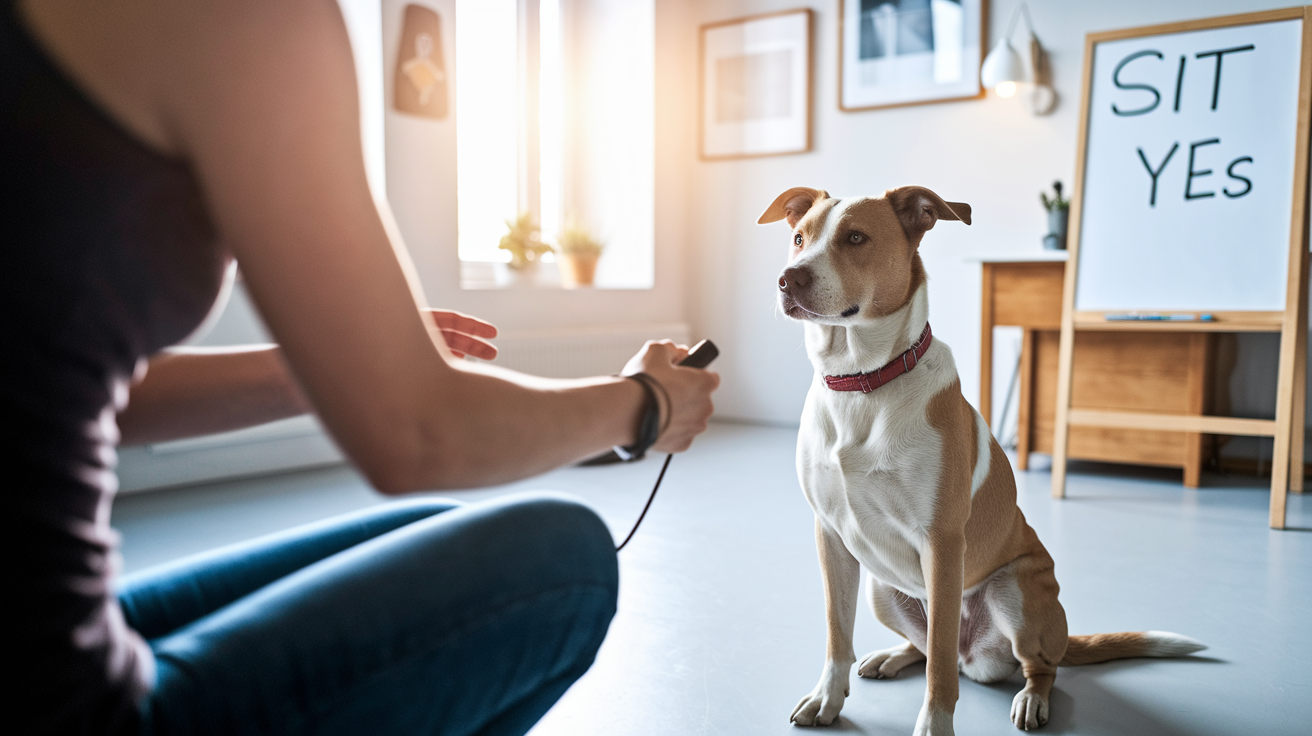
Applying treat based methods to core obedience commands starts with understanding that every behavior breaks down into teachable steps, and each correct step earns a reward.
Teaching Sit and Stay with Food Lures
Hold a treat just above your dog’s nose, then slowly move it back over their head toward their tail. As their head follows the treat upward and backward, their rear end naturally lowers to the ground. The moment their bottom touches the floor, mark with “yes” and deliver the treat. Practice this 5 or 6 times until your dog starts sitting as soon as your hand moves into position. Once sitting becomes reliable, add stay by increasing the duration before you mark and treat. First one second, then two, then five, gradually building the time they hold position before earning the reward.
Building Reliable Recall Training
Start recall training in a low distraction environment like a quiet hallway or small room. Call your dog’s name in an upbeat tone, and the moment they turn their head toward you or take a step in your direction, mark it and reward. As they improve, wait until they’ve moved closer before marking, gradually requiring them to come all the way to you for the treat. Use high value treats for recall because coming when called competes with every interesting smell, sight, and sound in your dog’s environment. Treats for recall continue throughout your dog’s life, especially during off leash exploration when reliable return matters most.
Loose Leash Walking Basics
Reward your dog for walking at your side with a loose leash by marking and treating every few steps when the leash stays slack. When the leash tightens because your dog pulls ahead or lags behind, stop moving immediately. Wait silently until your dog creates slack in the leash again, then mark, treat, and resume walking. This teaches your dog that pulling stops forward progress (which they want) while staying near you keeps things moving and earns treats.
Practice multiple short sessions daily rather than one long session. Three 5 minute sessions spread throughout the day build skills faster than a single 15 minute session, especially for puppies and dogs new to training. Short sessions end before frustration sets in, keeping training enjoyable and maintaining your dog’s enthusiasm for the next session.
Fading Treats and Transitioning to Variable Rewards
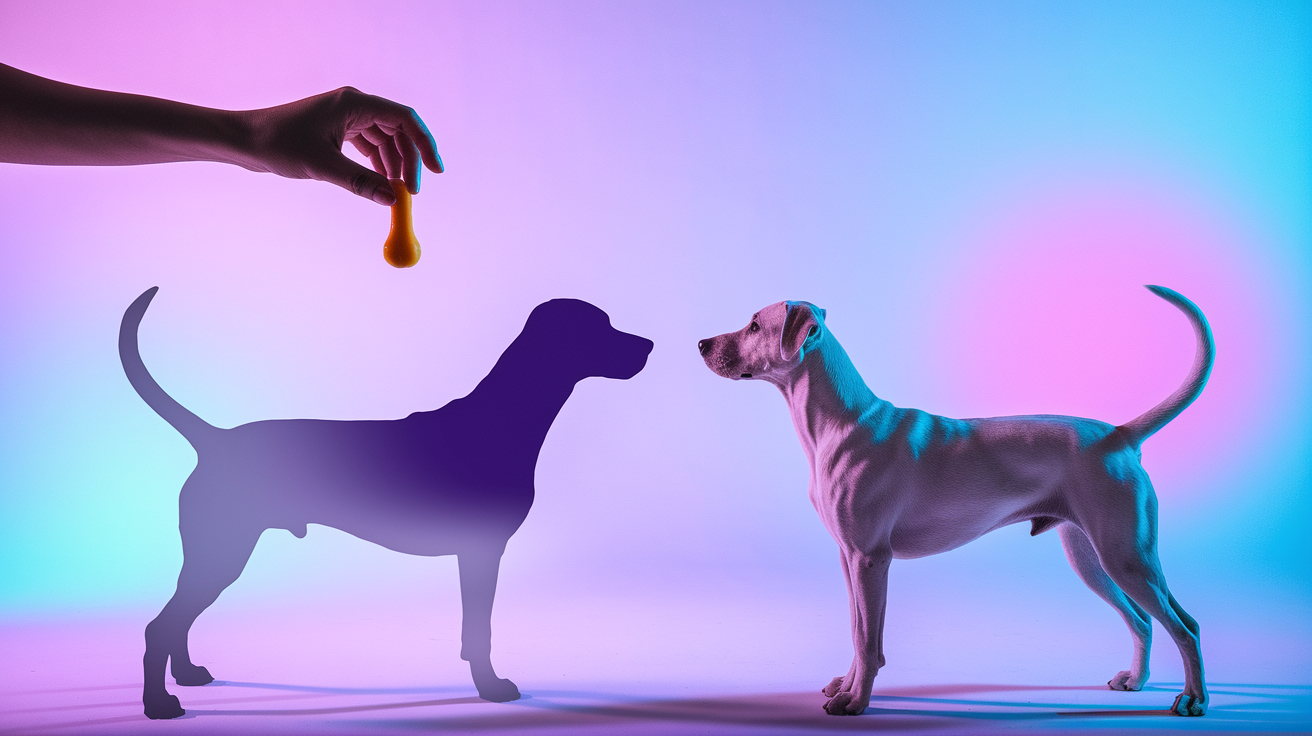
Fading food lures quickly prevents treat dependency while maintaining clear communication. After your dog understands a behavior with the lure, complete two repetitions with the treat visible in your hand guiding them through the motion. On the third repetition, use the exact same hand motion but with an empty hand, no treat guiding them. When your dog completes the behavior following your empty hand, immediately mark and reward by delivering a treat from your opposite hand or pocket. This teaches your dog to respond to your hand signal rather than the presence of food.
Once the lure has been faded and your dog reliably performs the behavior from your hand signal alone, transition from continuous to intermittent reinforcement schedules. Instead of treating every single correct response, treat every second response, then every third, then randomly. Your dog doesn’t know which repetition will earn the treat, so they maintain effort across all attempts. This randomness actually strengthens behavior more than predictable rewards because it creates anticipation and prevents your dog from thinking “I already got my treat, so I’m done now.”
Pairing treats with verbal praise and physical affection increases the value of non food rewards through classical conditioning. Say “good dog” or “yes” in an enthusiastic voice immediately before delivering the treat. Pet your dog gently right as they take the treat. After dozens of pairings, your dog starts associating your praise and touch with the same positive feeling the treat creates, making your words and affection more powerful motivators on their own.
Life rewards replace food treats once behaviors become reliable. A life reward is anything your dog wants that you can safely provide. Opening the door to the backyard becomes the reward for sitting and waiting calmly. Permission to greet another dog rewards a polite sit during the approach. Off leash exploration time rewards a solid recall. Getting their dinner bowl placed down rewards waiting calmly instead of jumping at you. These rewards sustain motivation without adding calories and integrate training into daily routines.
| Training Stage | Reward Frequency | Reward Type |
|---|---|---|
| Learning (first week) | Every correct response | Food treats only, high value |
| Practicing (weeks 2 to 4) | Every 2 to 3 correct responses | Mix of food treats and praise |
| Reliable (months 2 to 3) | Random, unpredictable schedule | Food treats, praise, life rewards |
| Maintained (ongoing) | Occasional reinforcement | Life rewards primarily, food for high value situations |
Managing Treat Portions and Calorie Intake
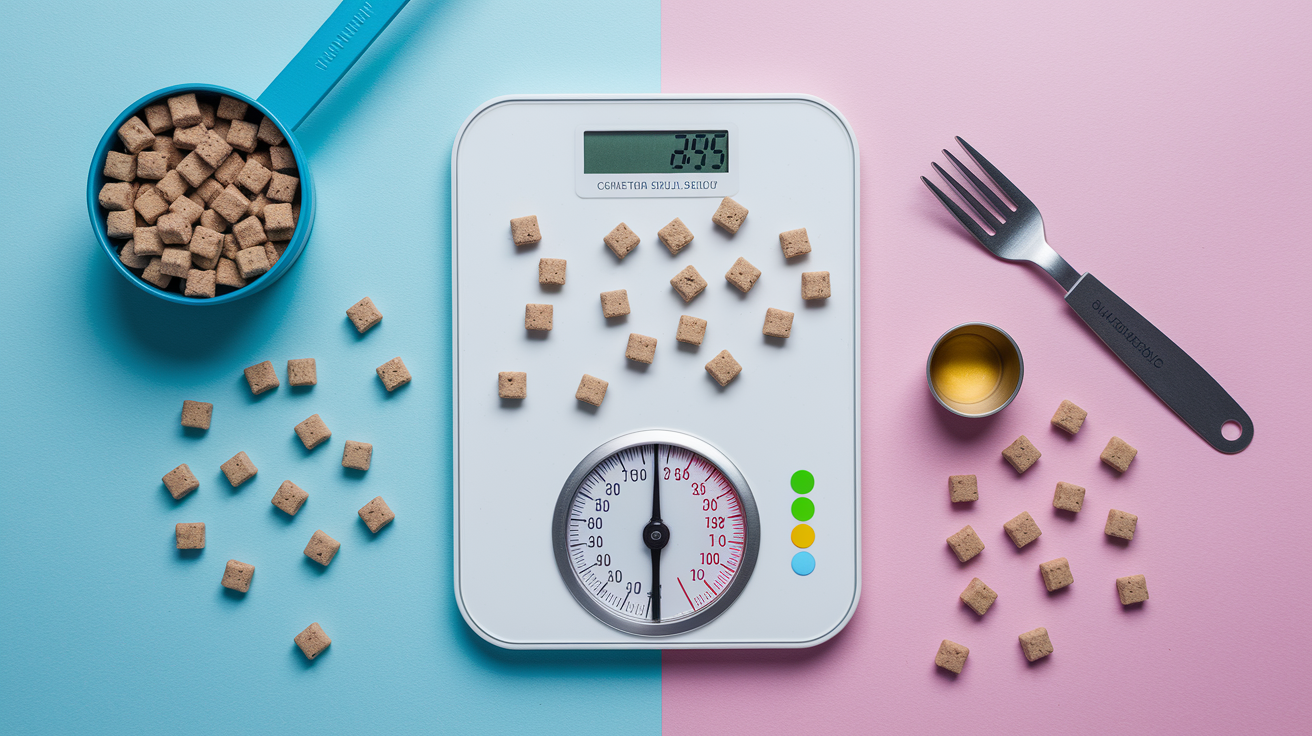
Training treats should make up no more than 10% of your dog’s daily caloric intake to prevent weight gain and nutritional imbalances. A 50 pound dog eating roughly 1,000 calories per day can safely receive about 100 calories from training treats. One small commercial training treat typically contains 3 to 5 calories, meaning you could offer 20 to 30 treats daily while staying within the 10% guideline.
Using extra small portions allows more repetitions without overfeeding. Breaking larger treats into thirds or quarters multiplies your training opportunities while keeping calories constant. This strategy prevents dogs from becoming full mid session, which kills motivation and ends training early. A dog with a comfortably empty stomach stays focused on earning treats. A dog with a full belly would rather nap.
Adjust your dog’s meal portions on heavy training days to compensate for treat calories. If you plan an intensive training session using 100 calories of treats, reduce their dinner by roughly 100 calories. This maintains their total daily intake and prevents gradual weight gain over weeks of regular training.
Five practical calorie management strategies:
- Reduce breakfast or dinner portions by the approximate amount of treats used during training sessions
- Use low calorie vegetables like small carrot pieces or green beans as training rewards for less difficult behaviors
- Choose freeze dried or air dried meat treats that deliver high value with fewer calories than soft jerky style treats
- Track daily treat intake by counting treats used and calculating approximate calories from package labels
- Break commercial treats into 3 or 4 smaller pieces, tripling or quadrupling the number of rewards from each treat
Addressing Different Motivation Levels and Drive
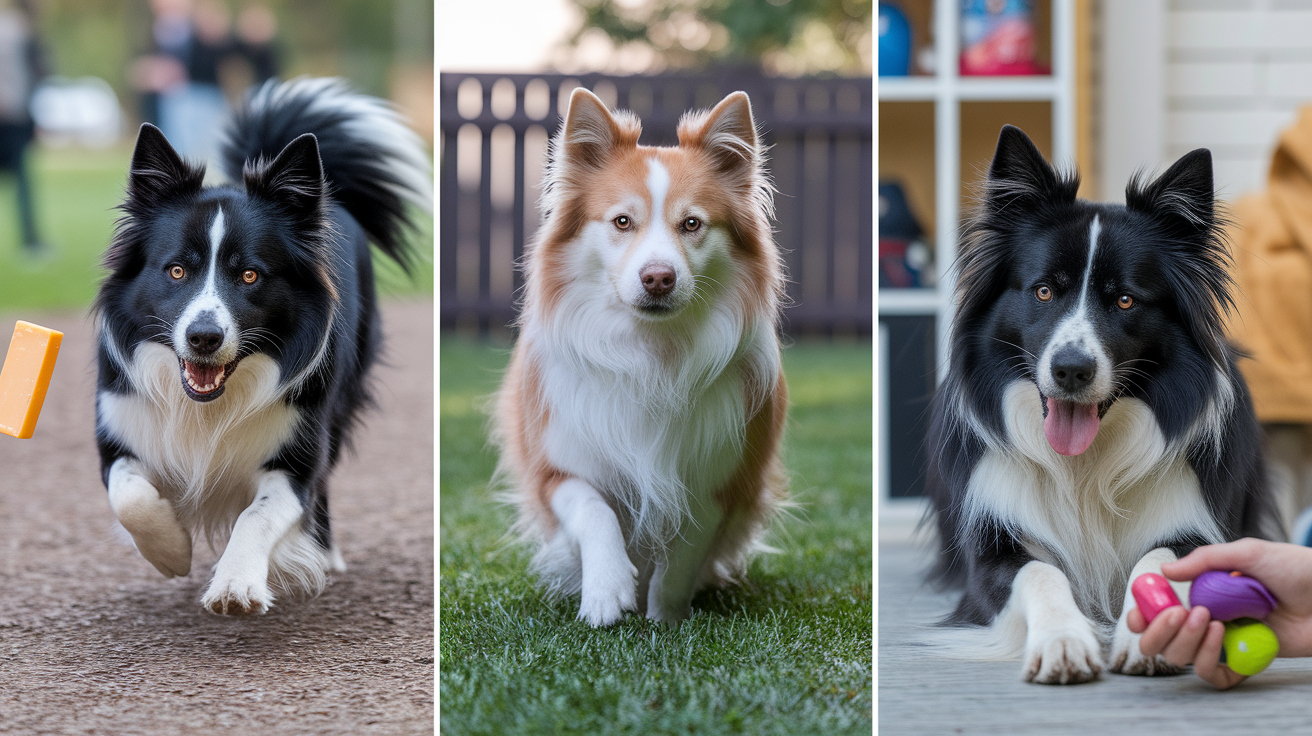
Assessing your dog’s food motivation level helps you set realistic expectations and choose appropriate training approaches. Highly food motivated dogs work enthusiastically for plain kibble in any environment and will happily train through 50 repetitions. Moderately food motivated dogs need tastier treats to maintain focus and might lose interest after 20 or 30 repetitions. Minimally food motivated dogs show little excitement about treats, requiring the highest value rewards and shorter sessions, or may respond better to toy or play rewards instead.
Rotating treat types within a single session prevents boredom and maintains engagement through unpredictability. If your dog starts losing enthusiasm midway through training, switching from chicken to cheese or from soft treats to freeze dried liver often revives their interest immediately. Multiple treat varieties during one session sustain engagement because your dog never knows whether the next reward will be good, great, or amazing.
Dogs with low food motivation benefit from training right before mealtimes when hunger increases treat value. Some dogs respond better to toys, play, or physical affection as primary rewards, with treats serving as secondary reinforcement. For these dogs, consider whether food motivation is truly low or whether you haven’t found the right treat yet. Even picky dogs usually have one food they can’t resist.
Environmental factors also affect motivation. A dog who works enthusiastically for treats at home might ignore them at a dog park where play opportunities rank higher. In these situations, use play itself as the reward, asking for a behavior then immediately releasing your dog to play as their reinforcement.
Puppy Training with Treats: Age-Appropriate Methods
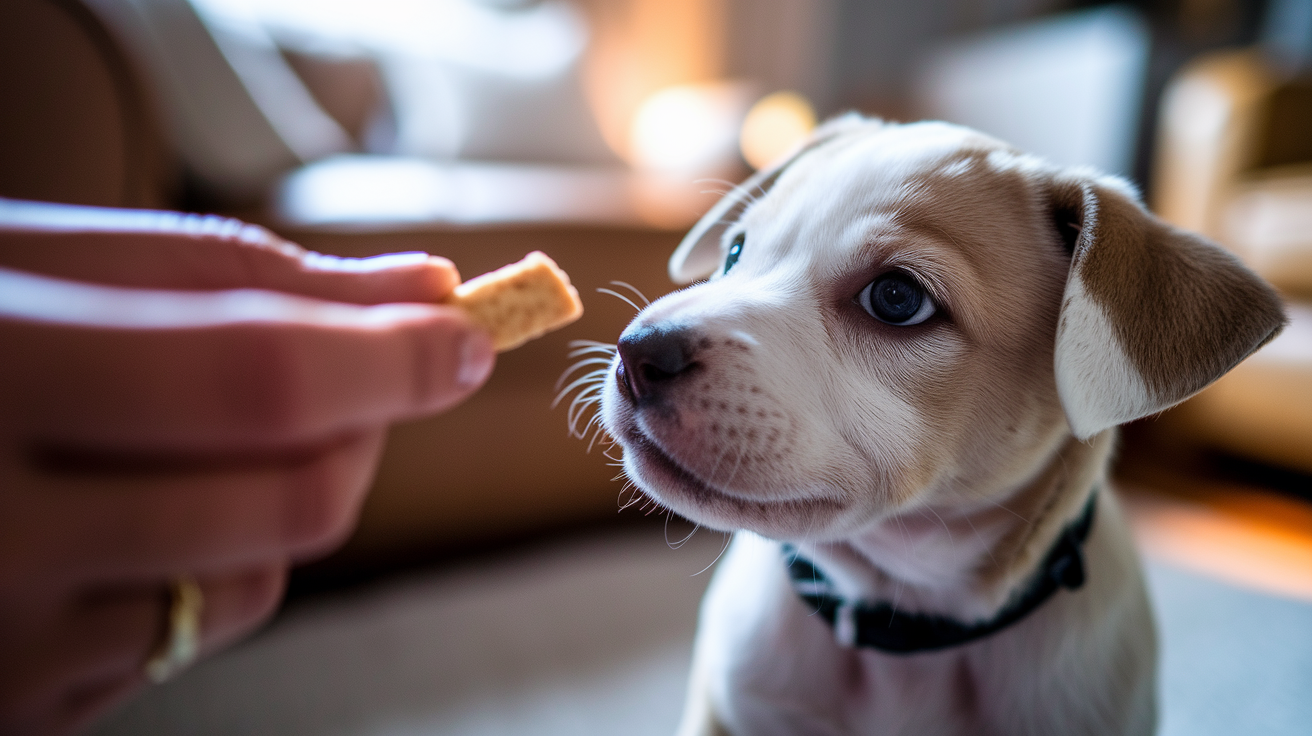
Puppy attention spans last roughly 3 to 5 minutes, requiring short, focused training sessions that end before frustration or boredom sets in. Fast eating treats allow immediate progression from one repetition to the next, maximizing practice opportunities within those few minutes while your puppy’s attention holds. Training multiple times daily builds skills faster than trying to extend sessions beyond your puppy’s natural focus limits.
Choose extra soft, tiny treats suitable for developing digestive systems. Puppies have sensitive stomachs and small mouths, so hard or large treats cause problems. Soft treats sized like a grain of rice work well, small enough that puppies swallow them immediately without chewing time, gentle enough that they won’t upset sensitive digestion. Avoid treats with artificial colors, excessive fillers, or ingredients that commonly trigger stomach upset in young dogs.
Start with simple behaviors requiring minimal physical or mental complexity. Sit, touch (nose to your hand), and basic attention work suit puppies better than complex behavior chains or extended duration commands. Gradually increase difficulty as your puppy’s focus and physical coordination develop, but expect progress to happen slowly over weeks and months, not days.
Six puppy training best practices:
- Keep training sessions to 3 to 5 minutes maximum, stopping before your puppy loses interest
- Adjust treat size to puppy’s mouth, smaller than pea sized for small breeds
- Integrate training into socialization experiences, rewarding calm behavior around new people, dogs, and environments
- Schedule multiple short sessions daily rather than one long session
- Ensure consistency across all family members in commands, timing, and reward delivery
- Practice patience with learning pace, remembering that puppies forget behaviors between sessions and need frequent reminders
Shaping Complex Behaviors Through Successive Approximation

Shaping means rewarding small steps toward a final behavior goal rather than waiting for your dog to perform the complete behavior perfectly on the first try.
Teaching “spin” demonstrates shaping clearly. First, reward your dog for turning their head to the side. After several repetitions, wait for a quarter turn before marking and treating. Once quarter turns happen consistently, require a half turn. Then three quarters. Finally, reward only complete 360 degree spins. Each small approximation builds toward the final behavior without overwhelming your dog or causing confusion about what you want.
Capturing naturally occurring behaviors involves marking and treating actions your dog performs spontaneously. If your dog yawns, immediately mark and treat it. After several captures, your dog starts offering yawns intentionally because they’ve learned that behavior earns rewards. This technique works well for stretches, head tilts, paw lifts, or any natural behavior you want to put on cue. Watch for moments when your dog naturally does something interesting, mark it, and treat it before the moment passes.
Using jackpot rewards when your dog makes breakthrough progress or exceptional performance accelerates learning during critical moments. A jackpot consists of multiple treats delivered one at a time over 10 to 15 seconds, creating an extended reward period that tells your dog “that was amazing, remember exactly what you just did.” Reserve jackpots for genuine breakthroughs, the first time your dog holds a stay for 30 seconds, the moment they finally perform a complex behavior correctly, or when they make an obvious mental connection. Overusing jackpots diminishes their value because everything becomes normal rather than special.
Break behaviors into achievable increments that allow success at each stage. If your dog struggles at any step, you’ve asked for too much progress too quickly. Back up to the previous easier step and practice more before advancing again. Patience during shaping prevents frustration for both you and your dog and builds confidence through consistent small wins.
Troubleshooting Common Treat Training Problems
Common obstacles appear in most training journeys, and identifying root causes leads to faster solutions than simply pushing harder with the same approach that isn’t working.
Frustration often stems from unclear criteria, where your dog doesn’t understand exactly what behavior earns the reward. Simplify your request, reward smaller approximations, and ensure you’re delivering treats within the 2 second timing window with your dog still in the correct position.
Dog Ignores Treats During Training
When your dog shows no interest in treats during training, several factors might be interfering. Rotate treat varieties to prevent boredom, switch from chicken to cheese, or from soft treats to freeze dried options. If rotation doesn’t help, reduce environmental distractions by moving to a quieter location where your dog can focus without competing stimuli. Check whether your dog is too full from a recent meal. Training before meals rather than after increases food motivation. Watch for stress signals like yawning, lip licking, or avoiding eye contact, which indicate your dog feels overwhelmed rather than unmotivated. Some dogs need higher value treats. What you’re offering might not compete with the environment.
Dog Only Responds When Treats Are Visible
Treat dependency develops when you skip the lure fading process or fade too slowly. Hide treats in your pocket or treat pouch rather than holding them in your hand before asking for behaviors. Use marker words to bridge the timing gap, marking the correct behavior then reaching for the treat afterward. Practice with an empty hand earlier in the training process. Refer back to the fading section for the specific technique of two repetitions with a treat in hand, then the third with an empty hand using the same motion. Reward from your opposite hand or pocket to break the visual connection between your lure hand and the treat source.
Dog Becomes Too Excited or Jumpy
Excessive excitement around treats disrupts training and reinforces overaroused behavior. Lower treat value temporarily by switching from high value rewards like cheese to medium value options like commercial soft treats or even kibble. Require calm behavior before treating. If your dog jumps, the treat disappears until all four paws return to the ground. Practice impulse control exercises like “wait” before releasing treats, teaching your dog that patience earns rewards while grabbing doesn’t. Deliver treats low to the ground near your dog’s chest level rather than holding them high, which encourages jumping and increases arousal.
Training in Distracting Environments with Food Rewards
Starting training in quiet, familiar indoor locations builds foundation behaviors without competing stimuli overwhelming your dog’s attention. Your living room with no other people or pets present offers the lowest distraction level, making it ideal for teaching new behaviors. Once your dog performs reliably in this controlled environment, gradually increase difficulty rather than immediately jumping to a dog park.
The three Ds of training, distance, duration, and distraction, increase independently, never simultaneously. If you increase distance between you and your dog, keep duration short and distractions low. If you increase distraction level by training outside, decrease distance and duration requirements. Trying to increase all three simultaneously sets your dog up for failure because the combined difficulty exceeds their current skill level.
Adjust treat value as challenge increases, matching reward level to difficulty and distraction. The quiet living room might allow training with kibble, but the backyard requires soft chicken treats, and the neighborhood park demands real bacon or cheese. High value treats help your dog’s motivation overcome environmental distractions. Refer back to the treat selection section for guidance on building your reward hierarchy from low to high value.
Four step progression for generalizing behaviors from home to outdoor distracting environments:
- Master the behavior indoors with zero distractions using medium value treats until your dog responds correctly 9 out of 10 times
- Practice in your backyard or quiet outdoor space with minimal activity, upgrading to high value treats while keeping distance and duration easy
- Train in moderately distracting locations like quiet streets or empty parking lots during low traffic times, using highest value treats while accepting shorter duration and closer distance
- Progress to high distraction environments like busy parks only after success at all previous levels, maintaining highest value treats and temporarily reducing your expectations for distance and duration until your dog adjusts to the new environment
Special Dietary Considerations for Training Treats
Common food allergies and ingredient sensitivities affect many dogs, with beef, dairy, wheat, and chicken ranking as frequent culprits. Dogs with sensitivities show symptoms like itchy skin, ear infections, digestive upset, or excessive licking. If your dog has diagnosed allergies or suspected sensitivities, training treats must avoid problem ingredients while still providing motivation.
Limited ingredient treat options contain only one or two components, making them suitable for dogs with restrictions. Single protein freeze dried meats like lamb, venison, or duck work well because they’re pure protein without added fillers or common allergens. These options also produce strong smells that rank high in reward hierarchies despite their simple composition, and their nature makes them practical for carrying in pockets.
Homemade treat alternatives provide complete ingredient control when commercial options don’t meet your dog’s needs. Plain cooked chicken breast, turkey, or lean beef cut into tiny pieces works for dogs who tolerate those proteins. Small pieces of cooked sweet potato or plain vegetables like carrots and green beans serve dogs needing very low calorie options or those with multiple protein sensitivities.
Seven safe training treat options for dogs with dietary restrictions:
- Single protein freeze dried meats (salmon, venison, duck) without added ingredients
- Small pieces of fresh vegetables like carrots, green beans, or cucumber for dogs tolerating these
- Limited ingredient commercial treats listing only 1 to 2 components on the label
- Plain cooked meat (chicken, turkey, beef) prepared without seasonings or oils
- Grain free commercial treats for dogs with wheat or corn sensitivities
- Novel protein sources your dog hasn’t eaten before (kangaroo, rabbit, bison)
- Prescription treats designed for specific allergies if recommended by your vet
Equipment and Tools for Effective Treat Training
Treat pouches clip to your waist or pocket, providing instant access to rewards without fumbling through pockets or bags. Quick access improves timing precision because you deliver treats within the critical 2 second window more consistently when you’re not searching for them. Pouches with magnetic closures open with one hand while keeping treats secure when not in use. Fast eating treats stored in accessible pouches allow immediate progression to the next repetition without delay.
Clicker devices produce a distinct “click” sound that marks correct behavior with perfect consistency. The sound remains identical every time, unlike verbal markers that vary in tone, volume, and timing depending on your mood or stress level. Verbal markers like “yes” or “good” serve the same purpose and work well for people who find clickers awkward to hold or for situations where you need your hands free. Both clickers and verbal markers bridge the timing gap between behavior and treat delivery.
Treat storage solutions maintain freshness and portability for different training scenarios. Small airtight containers preserve smell and prevent treats from drying out or going stale. Silicone bags work for carrying options like freeze dried liver or jerky pieces for impromptu training moments around the house without worrying about spoilage.
| Tool | Purpose | Best For |
|---|---|---|
| Treat pouch | Quick access during active training | High repetition sessions requiring fast delivery |
| Clicker | Precise marking of correct behavior | Shaping complex behaviors and exact timing needs |
| Verbal marker | Hands free marking alternative | Training while handling leash or in situations where clicker is impractical |
| Portable treat bag | Carrying treats during walks | Training during daily walks and outdoor sessions |
| Airtight storage container | Preserving treat freshness | Storing soft treats at home between sessions |
Long-Term Maintenance and Lifetime Treat Use
The misconception that dogs should eventually work without treats entirely creates unnecessary pressure and often leads to deteriorating behaviors over time.
Using treats throughout a dog’s life is appropriate and represents enlightened training rather than failure. Strategic treat use for specific high value behaviors like recall during off leash exploration or remaining quiet when the mail carrier arrives maintains reliability when it matters most. You wouldn’t expect to work without a paycheck indefinitely. Dogs appreciate ongoing rewards for difficult tasks too, especially behaviors that require them to override strong instincts like chasing or barking.
Maintenance training involves periodic reinforcement to keep behaviors sharp even after they become reliable. A behavior you practiced intensively for two weeks then never rewarded again will gradually deteriorate. Occasional training sessions with treat rewards every few weeks remind your dog that these behaviors still matter and still earn good outcomes. This prevents the slow fade where your dog’s sit becomes slower, their recall less reliable, or their stay shorter because the behavior stopped producing anything valuable.
Blending treats with life rewards creates sustainable motivation without relying exclusively on food. Opening the door rewards recall, permission to greet another dog rewards a polite sit, and off leash exploration time rewards staying close during the walk. Anything your dog wants that you can safely provide works as a reward. Refer back to the fading section for specific life reward examples and implementation strategies.
Strategic treat use strengthens your bond and keeps training enjoyable for both you and your dog. Training becomes a fun game you play together rather than a chore, and your dog stays engaged and eager to learn new things throughout their life because learning continues to produce positive outcomes.
Final Words
Start practicing right away: ask for a behavior, mark it, and reward within 2 seconds. Use pea-sized, smelly treats in distracting spots and fade lures quickly.
Keep sessions short, consistent, and vary treats; save jackpot rewards for big wins. Watch calories and adjust meal portions on heavy training days.
Remember how to use treats for dog training as a simple tool—timing, the right rewards, and steady practice will get you there. Small, regular sessions lead to real progress.
FAQ
Q: What is the 7 7 7 rule for dogs?
A: The 7-7-7 rule for dogs is a training shortcut meaning seven short sessions of about seven minutes each across seven days, using frequent, focused repetitions to build a new behavior.
Q: What do professional dog trainers use for treats?
A: Professional trainers use tiny, high-value soft treats, like pea-sized freeze-dried meat or cheese, and kibble indoors; they keep treats in a pouch and vary rewards to maintain motivation.
Q: What is the 3-3-3 rule for dog training?
A: The 3-3-3 rule generally refers to doing three short training sessions, three times a day, for three minutes each, to keep puppy focus and build habits gradually.
Q: What is the hardest command to teach a dog?
A: The hardest command to teach a dog is reliable recall in distracting environments because it requires distance, duration, and proofing; use high-value treats and gradual progress to succeed.