
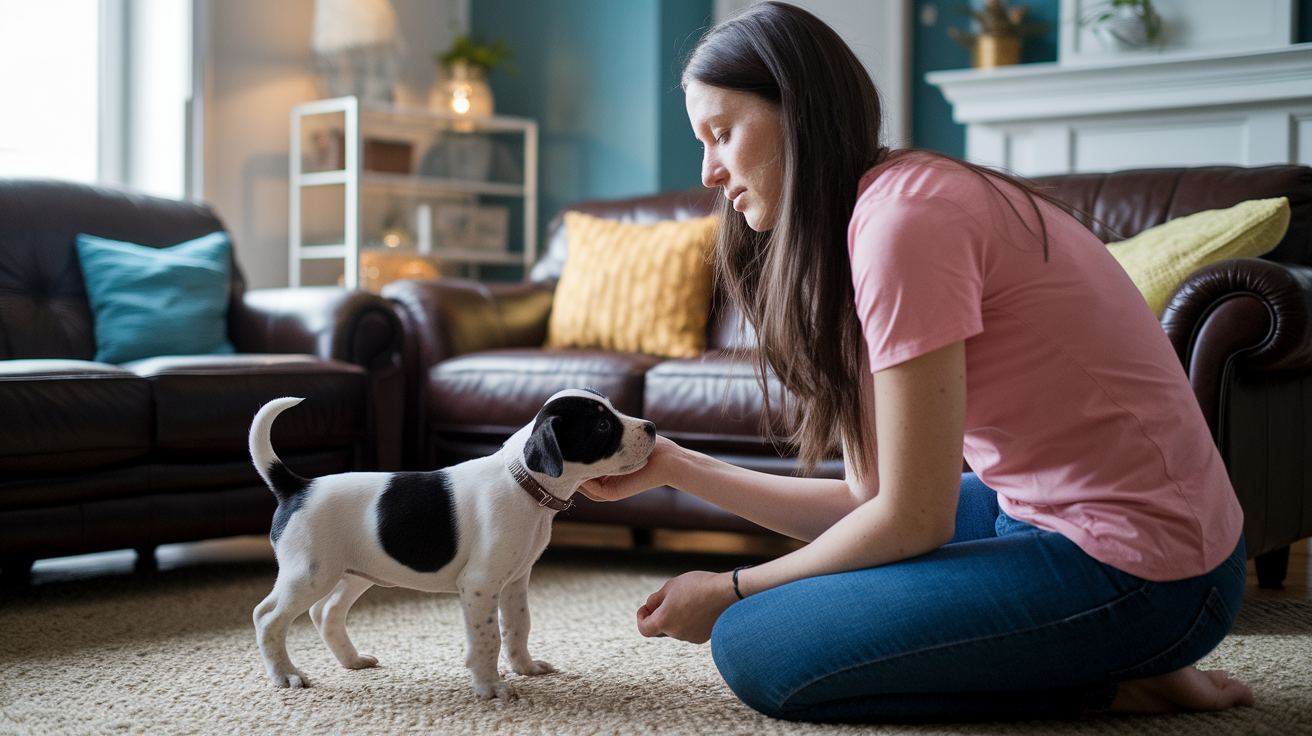
Most fancy puppy treats fail at the one job that matters: getting a puppy to repeat a behavior.
They look tempting on the shelf but take too long to eat or add too many calories.
If you’re tired of soggy results and wasted money, this guide cuts through the hype.
You’ll get a short list of treats that actually work, like freeze-dried liver, soft meat cubes, and small low-calorie biscuits.
You’ll also get simple rules for when and how to use them without overfeeding.
Start training today with options puppies love and parents can stick with.
Top-Rated Puppy Training Treats Puppies Can Start Using Immediately
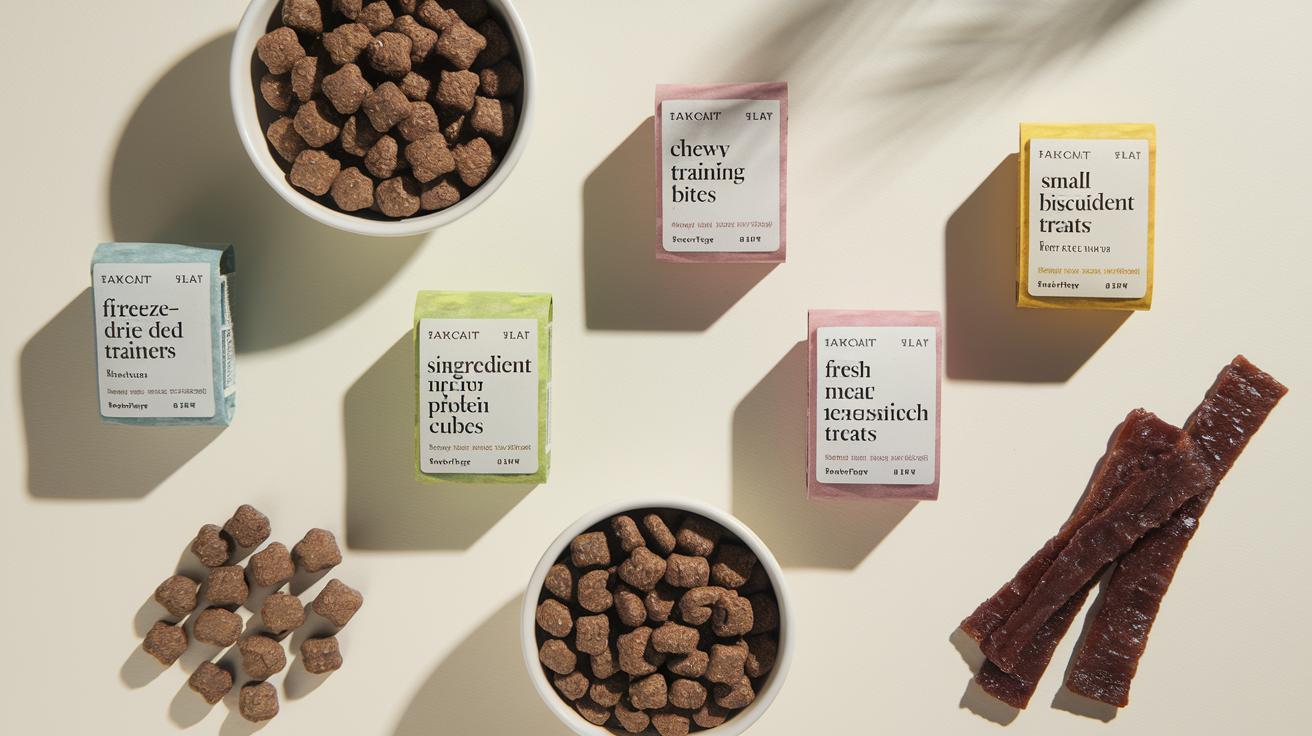
If you’re scrolling through treat options and feeling lost, here’s the shortcut: freeze-dried liver bits, chewy meat cubes, and small grain-free biscuits are what most trainers reach for first. They’re fast, they work, and puppies usually love them.
This section’s designed to cut through the noise. Instead of walking you through every trait a treat should have, we’re starting with what to actually buy so you can get started today.
Six reliable puppy training treat categories:
- Freeze-dried liver treats – Strong scent, high motivation, single ingredient
- Chewy training bites – Soft meat cubes designed for rapid delivery, easy to chew
- Small biscuit-style trainers – Crunchy, low calorie, portion controlled pieces
- Single-ingredient protein cubes – Plain chicken, turkey, or beef with nothing added
- Fresh meat jerky strips – Example: grain free puppy beef jerky with 90% fresh beef (around £3.99)
- Limited ingredient sensitive stomach treats – Minimal components, gentle on digestion
These categories cover the priorities most puppy parents care about: quick consumption during training, calorie control, natural ingredients, and digestive safety. Whether your puppy’s got a picky palate or a sensitive tummy, one of these formats will probably fit.
Key Characteristics That Make Puppy Training Treats Effective
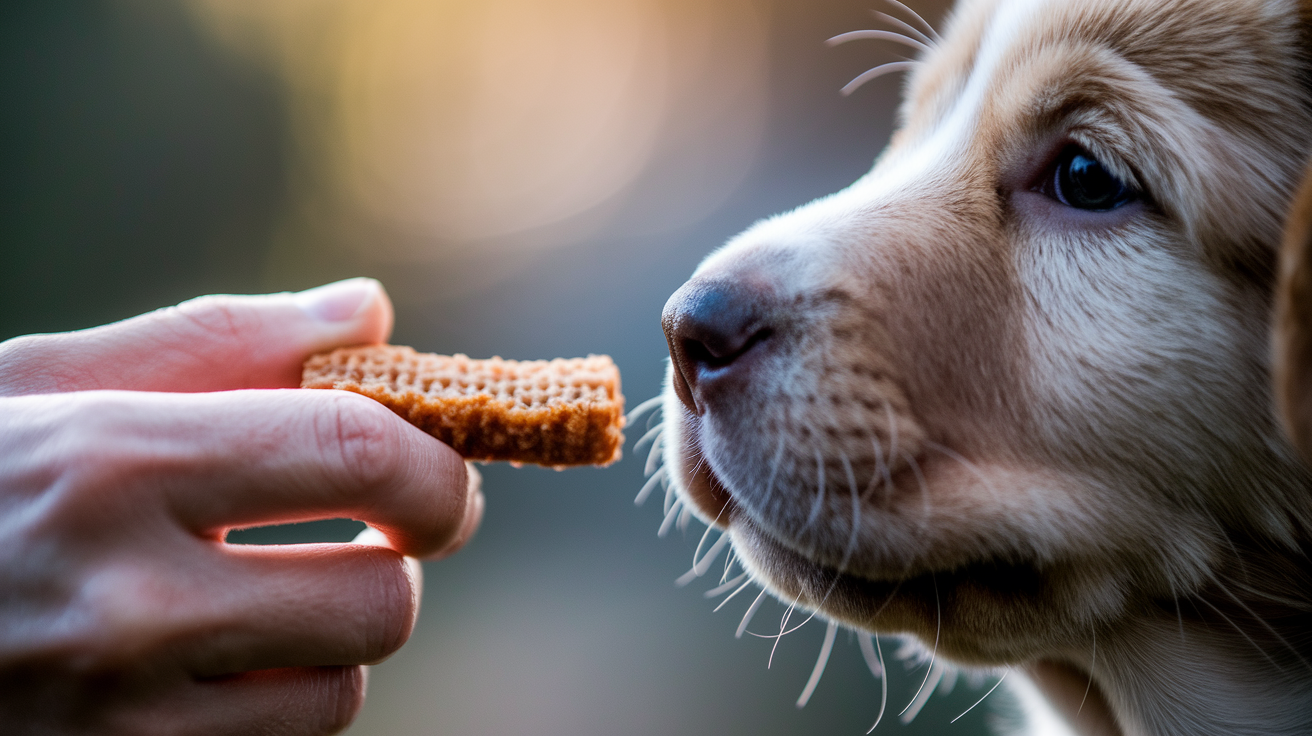
Good training treats disappear fast. A puppy should swallow it in one or two bites and look back at you, not stand there chewing for twenty seconds. The faster the treat’s gone, the quicker you can move to the next repetition without losing focus or momentum.
Soft, aromatic, and tasty treats hold a puppy’s attention better than bland or hard options. Strong smelling proteins like chicken, beef, or fish signal “high value” to your puppy’s nose. Soft textures protect developing teeth and gums, especially during the teething phase when hard treats can cause discomfort or hesitation.
Four must have traits for training treats:
- Size – Pencil eraser sized or smaller, easy for tiny mouths to handle
- Calories – Low enough to use frequently without exceeding 10% of daily intake
- Texture – Soft or semi soft, not brittle or hard
- Ingredients – Whole proteins, recognizable foods, no vague “meat meal” or artificial additives
When treats check these boxes, training flows better. Your puppy stays engaged, you can reward generously without overfeeding, and sessions feel productive instead of frustrating.
Healthy Puppy Training Treat Options Based on Ingredients and Nutrition
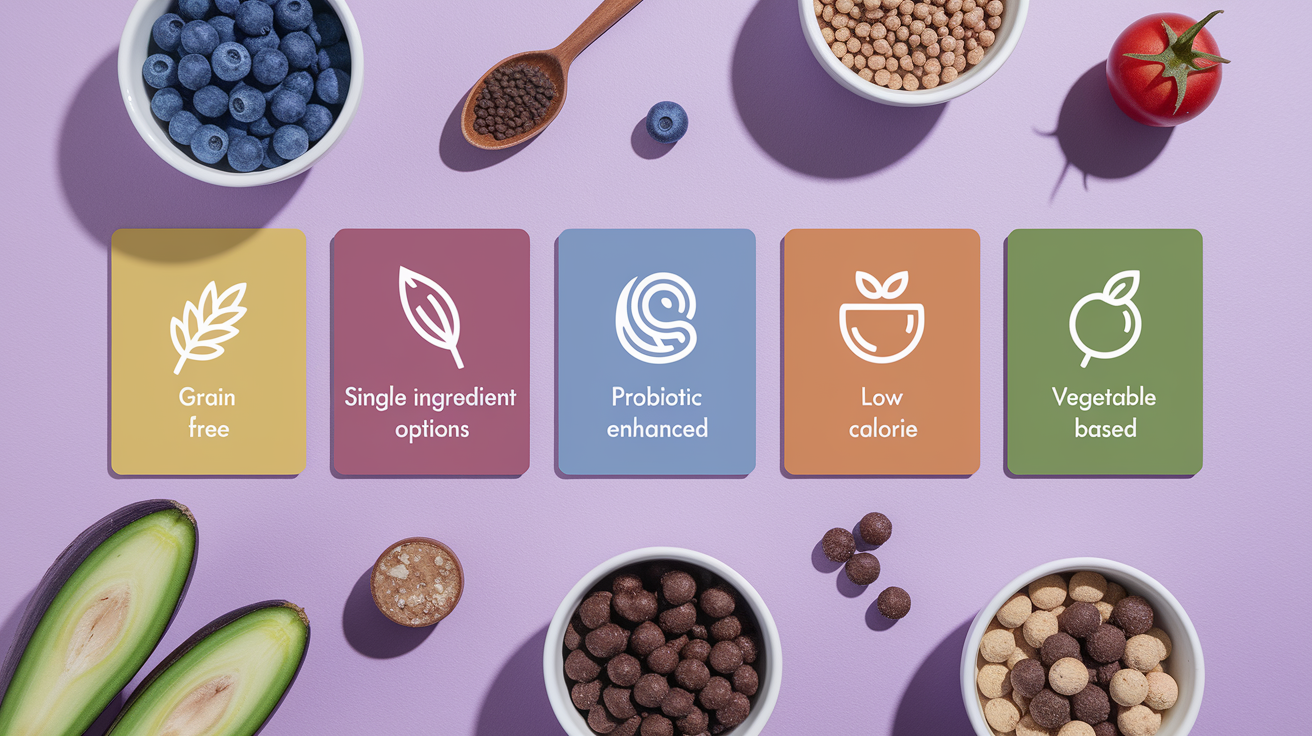
Natural, minimal ingredient formulas are easier on sensitive puppy digestive systems. Whole food treats made from single proteins or simple combinations reduce the risk of upset stomachs, loose stools, or allergic reactions during the trial and error phase of finding what your puppy tolerates.
Five ingredient focused treat categories:
- Grain free treats – Avoid wheat, soy, and corn, which are common allergen triggers
- Single ingredient options – Freeze dried beef liver, plain turkey, or dehydrated chicken with nothing else added
- Probiotic enhanced treats – Support gut microbiome health, digestion, and immunity
- Low calorie treats – Made from lean proteins or vegetables like sweet potato, carrot, or pumpkin
- Vegetable based options – Soft fruits like apple slices or steamed carrots offer fiber, vitamins, and low cost
Puppy safe flavors include beef, chicken, turkey, lamb, salmon, prawn, peanut butter (xylitol free only), and dog safe “chocolate” alternatives. Common allergy triggers to watch for include corn, soy, wheat, dairy, and artificial preservatives. If your puppy develops itchy skin, loose stools, or ear inflammation after starting a new treat, pull back and try a limited ingredient option instead.
Read ingredient labels like you’re shopping for yourself. Look for recognizable whole foods at the top of the list, not vague terms like “animal by-products” or “meat meal.” The simpler the ingredient panel, the easier it is to identify what might be causing a reaction if one happens.
How to Use Puppy Training Treats Correctly During Training Sessions
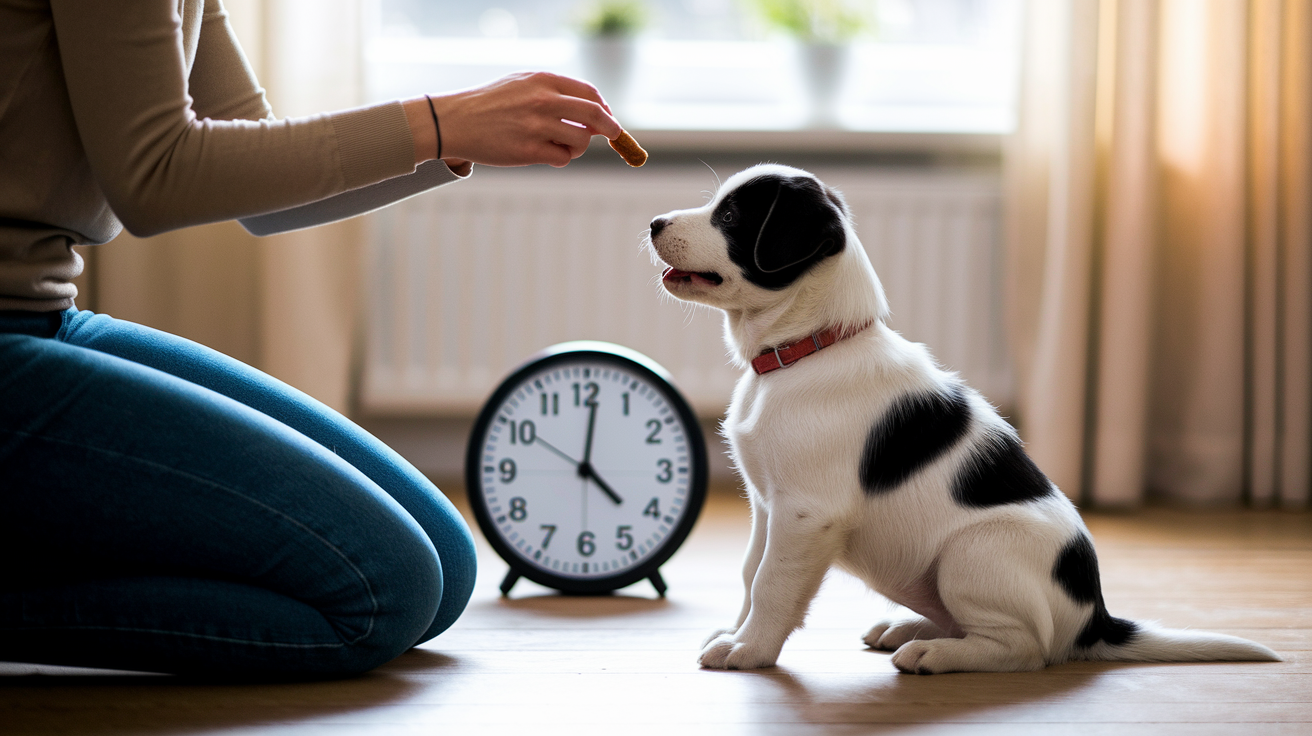
Timing’s everything. The treat should land in your puppy’s mouth within one or two seconds of the behavior you want to reinforce. Any longer and the connection weakens. Your puppy might think they’re being rewarded for looking at a leaf instead of sitting on command.
Consistency matters just as much. Use the same treat for the same behavior until your puppy understands the pattern, then you can rotate flavors or types. Pair every treat with verbal praise and affection so your puppy learns that good behavior earns multiple rewards, not just food.
Reward Timing
Deliver the treat immediately after your puppy completes the desired action. If you’re teaching “sit,” the treat should appear the moment their bottom hits the ground. Never reward crying, barking, jumping, or aggression, even by accident, because that reinforces the exact behavior you’re trying to stop.
Treat Rotation Strategy
Save your puppy’s absolute favorite treats (cheese, freeze dried liver, beef jerky) for difficult tasks like recall training or staying calm around distractions. Use mid value treats like plain chicken or kibble for easier commands like “sit” or “down.” In high energy environments like the park, switch to lower value treats to reduce distraction and keep focus on you.
Specific Training Scenarios
For potty training, reward outdoor elimination immediately with a high value treat and praise. Use the same system for pre bedtime bathroom breaks and accident free nights. Crate training works well when you toss a treat into the crate before closing the door, building a positive association. Leash walking improves when you reward your puppy for staying by your side instead of pulling. For beginner tricks like “shake” or “roll over,” use smaller, frequent rewards to keep interest high.
Keep training sessions short. Five to ten minutes max for young puppies. The goal’s to make learning fun and focused, not exhausting. Treats should stay under 10% of your puppy’s daily calorie allowance. If your puppy eats 300 calories a day, that’s 30 calories total from treats. Count the calories per treat from the package label and adjust portions or meals accordingly. Overfeeding during training can lead to weight gain, digestive upset, or picky eating at mealtime.
Popular Types of Puppy Training Treats and Their Benefits
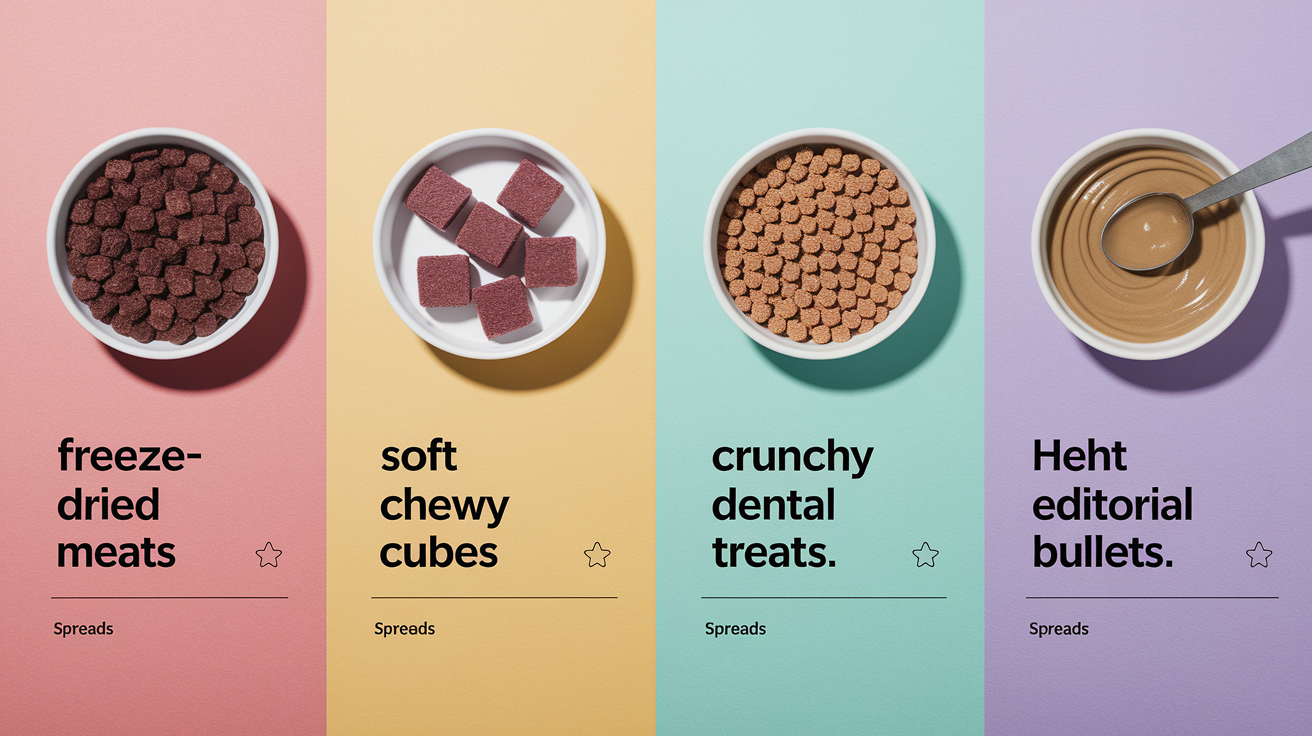
Different treat formats serve different purposes. Freeze dried options, crunchy dental treats, and soft chews each bring something useful to your training routine, but they’re not interchangeable. Understanding what each format does best helps you match the right treat to the right moment.
| Treat Type | Benefits | Best For |
|---|---|---|
| Freeze-dried meats | Retain full nutritional value, strong scent, long shelf life without refrigeration | High-value rewards, difficult tasks, recall training |
| Soft chewy cubes | Quick to eat, gentle on teeth, easy to break into smaller pieces | Frequent repetition training, teething puppies, basic commands |
| Crunchy dental treats | Help remove plaque, freshen breath with mint or spirulina, satisfying texture | Post-training rewards, dental upkeep outside training sessions |
| Spreads (peanut butter, yogurt) | High motivation, can be used in puzzles or Kongs, slows eating | Crate training calm-down periods, distraction during grooming |
Freeze dried treats work best when you need your puppy’s full attention. Their strong scent distinguishes them from regular food, making them feel special and worth working for. Crunchy treats are fine for rewarding calm behavior after a training session, but they take too long to chew during active learning. Long lasting chews like bully sticks or bones interrupt training flow and should be saved for downtime. Spreads are useful for specific situations (licking peanut butter off a spoon keeps a puppy occupied while you trim nails) but they’re too messy and high calorie for rapid fire repetition work.
Homemade Training Treats for Puppies: Simple and Safe DIY Options
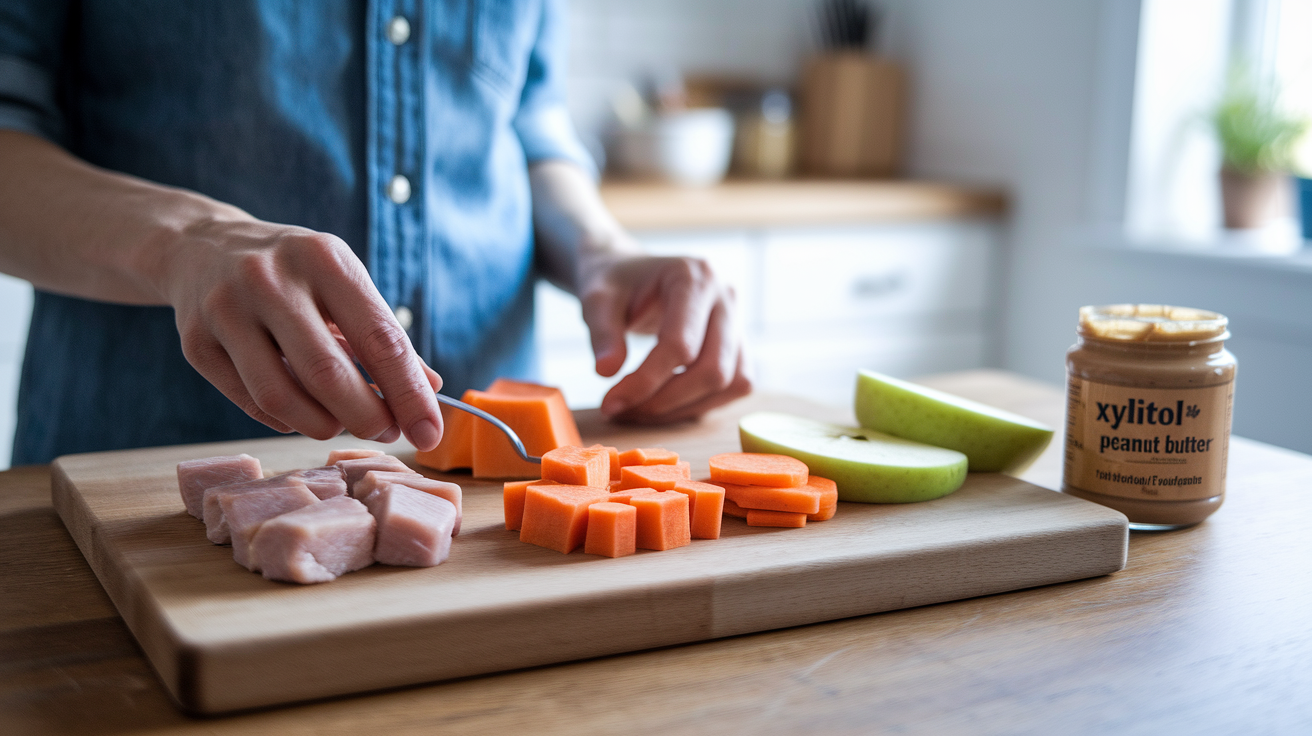
Making your own treats gives you full control over ingredients, portion size, and cost. Plain boiled chicken, turkey, or beef cut into pea sized cubes works as well as anything you’ll buy. Cook the meat without spices, oil, or seasoning, let it cool, and store it in the fridge for up to three days.
Five simple DIY puppy training treats:
- Plain cooked sweet potato – Dice into small cubes after baking or steaming, rich in fiber and beta carotene
- Steamed carrot pieces – Soft, low calorie, easy to digest
- Apple slices – Remove seeds and core, cut into tiny pieces for quick rewards
- Plain cooked pumpkin – Use pure pumpkin, not pie filling, gentle on stomachs
- Xylitol free peanut butter on a spoon – Use sparingly, high in calories but extremely motivating
Homemade treats should be refrigerated in an airtight container and used within three to five days for maximum freshness. If you batch cook chicken or turkey, freeze individual portions and thaw one at a time. Soft fruits and vegetables can be prepped in bulk, portioned into small bags, and frozen for convenience. Always check that peanut butter’s xylitol free. Xylitol causes blood sugar drops, seizures, and liver failure in dogs.
Frequently Asked Questions About Puppy Training Treats
How many training treats can I give my puppy per day?
Treats shouldn’t exceed 10% of your puppy’s total daily calorie intake. If your puppy eats 400 calories a day, limit treats to 40 calories. Check the package label for calories per piece and adjust your puppy’s meal portions slightly on heavy training days to prevent overfeeding.
Are training treats healthy for puppies?
Yes, when chosen carefully. Treats made from whole proteins, vegetables, or single ingredients support healthy growth without adding empty calories or artificial additives. Avoid treats with vague ingredient lists, excessive salt, sugar, or preservatives. Treats are tools, not spoiling. They motivate learning and strengthen your bond.
What if my puppy has a sensitive stomach?
Start with single ingredient or limited ingredient treats like plain freeze dried chicken or turkey. Avoid common allergens like wheat, soy, corn, and dairy. Probiotic enhanced treats can support gut health during the adjustment period. Introduce new treats one at a time and monitor stool consistency and energy for two weeks.
Can I use kibble as training treats?
Absolutely. Kibble from your puppy’s regular food works well for bulk training without adding extra calories. It’s already compatible with your puppy’s digestive system and costs nothing extra. Reserve high value treats for difficult tasks and use kibble for easier repetitions.
What treats are best for teething puppies?
Soft, chewy treats protect developing teeth and gums. Avoid hard, brittle options like jerky or biscuits until adult teeth come in. Freeze dried meats can be rehydrated with a little water to soften them. Cold treats like frozen apple slices or frozen pumpkin cubes soothe sore gums between training sessions.
When should I reduce treat usage?
As your puppy masters a behavior, gradually replace treats with verbal praise, petting, or play. Start by rewarding every other correct response, then every third, until treats are occasional surprises instead of expectations. This process is called fading the lure. It keeps your puppy responsive without dependence on food rewards.
Final Words
You got fast, buy-now picks plus the why: soft, small, low-calorie, high-value treats that swallow quickly and keep puppies focused.
We also covered nutrition-based options, safe ingredient choices, timing and portion rules (treats under 10% of daily calories), format trade-offs, simple homemade snacks, and quick FAQs to answer common worries.
Use this guide to compare options and pick the best training treats for puppies that match your pup’s taste, age, and your routine. Small, steady habits make training easier—and more fun.
FAQ
Q: What is the 7 7 7 rule for puppies?
A: The 7 7 7 rule for puppies is a loose socialization guideline—commonly described as meeting 7 people, visiting 7 places, and experiencing 7 different surfaces during early weeks; exact definitions can vary by trainer.
Q: What treats should you give a puppy when training and what training treats do vets recommend?
A: The treats you should give a puppy when training, as vets often recommend, are small, soft, low‑calorie, high‑value options like freeze‑dried liver, tiny cooked chicken bits, or purpose-made training biscuits.
Q: What is the 3-3-3 rule for dog training?
A: The 3-3-3 rule for dog training means expect 3 days to decompress in a new home, 3 weeks to learn basic routines, and about 3 months to fully settle into household life.