
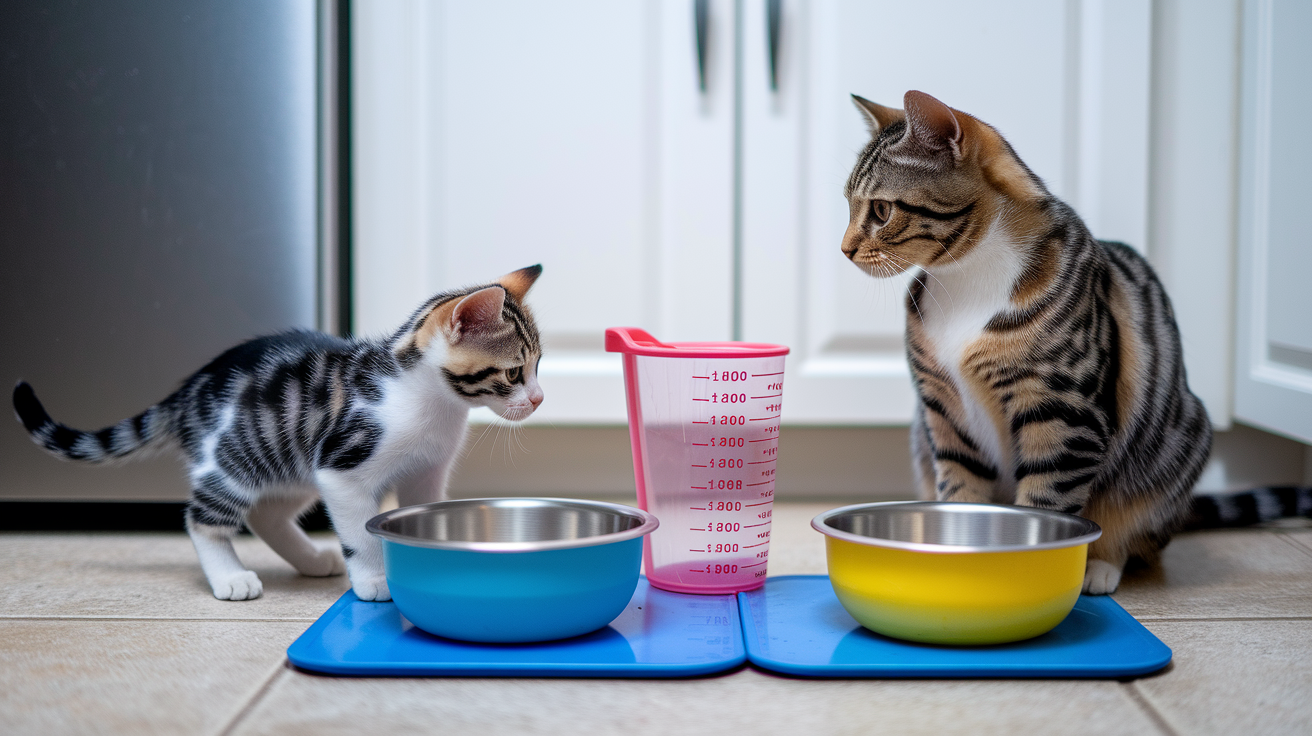
Is your cat on the wrong feeding schedule for its age, and you don’t even know it?
Kittens need tiny, frequent meals, adults usually do best with morning and evening portions, and seniors often do better with smaller, higher-protein meals spread through the day.
This post gives simple, age-by-age portions and timing, plus easy practical steps on how to measure, how to transition, and what signs to watch, so feeding fits your cat’s life stage and keeps them healthy.
Age-Based Feeding Schedules for Cats (Clear Breakdown by Life Stage)
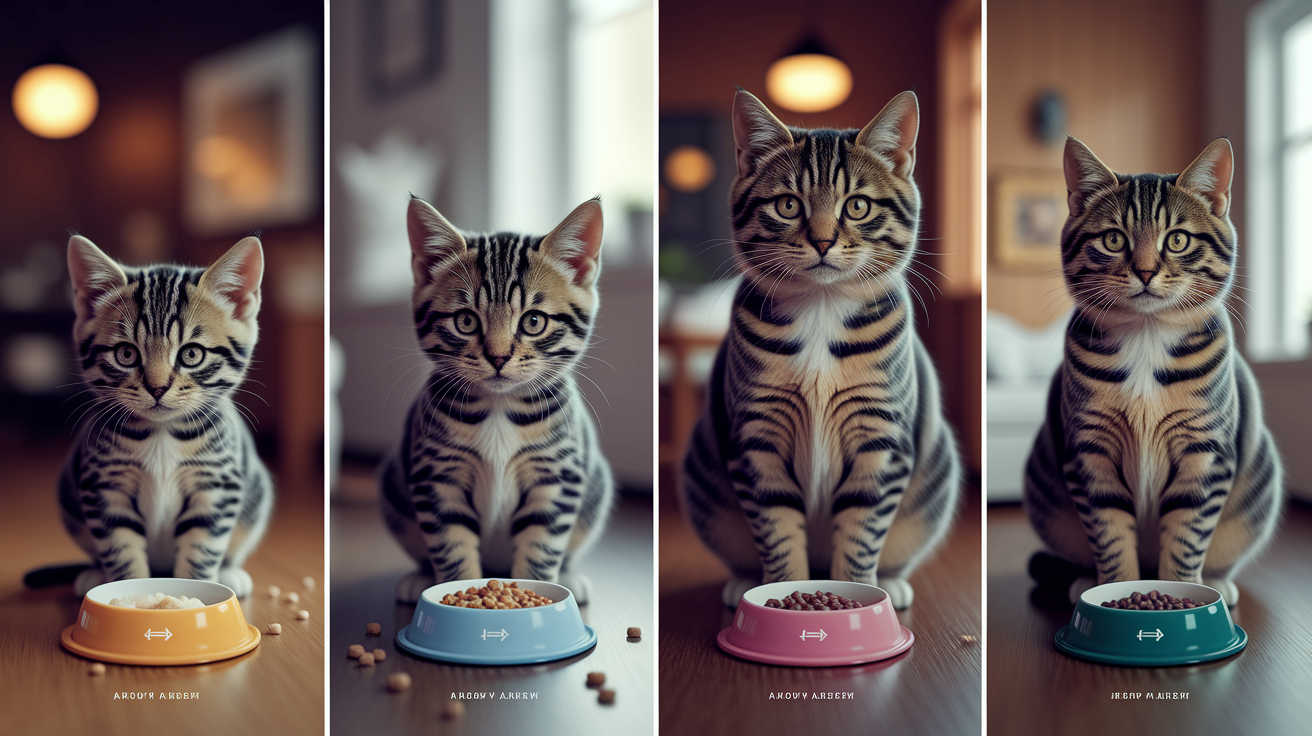
Newborn kittens rely completely on their mother’s milk or kitten formula every two to three hours, day and night. Around four to five weeks, they’ll start nosing around solid food while still nursing, and most kittens are fully weaned by eight weeks, eating three to four small meals each day. This frequent schedule supports their crazy growth rate and tiny stomach size.
Adult cats between one and seven years do well on two meals a day, usually spaced about twelve hours apart. Their metabolism’s stable now, and they need way fewer calories per pound than when they were kittens. A consistent morning and evening routine works for most households and makes it easier to notice when something’s off with their appetite.
Senior cats aged seven and up often do better with two to three smaller meals throughout the day. Cats over ten sometimes start losing muscle and weight, which means they actually need more calories and protein than middle aged adults despite moving slower. Really old cats dealing with muscle wasting may need as much high protein food as they’ll eat, offered in small portions to keep digestion comfortable and body condition stable.
Feeding frequency by age:
- 0–4 weeks: Nursing or bottle feeding every 2–3 hours
- 4–8 weeks: Weaning period with 4 small meals plus nursing
- 8 weeks–6 months: 3–4 meals per day
- 6–12 months: 2–3 meals per day as growth slows
- 1–7 years: 2 meals per day, morning and evening
- 7+ years: 2–3 smaller meals, adjusted for weight and health
Kitten Feeding Requirements for a Healthy Start
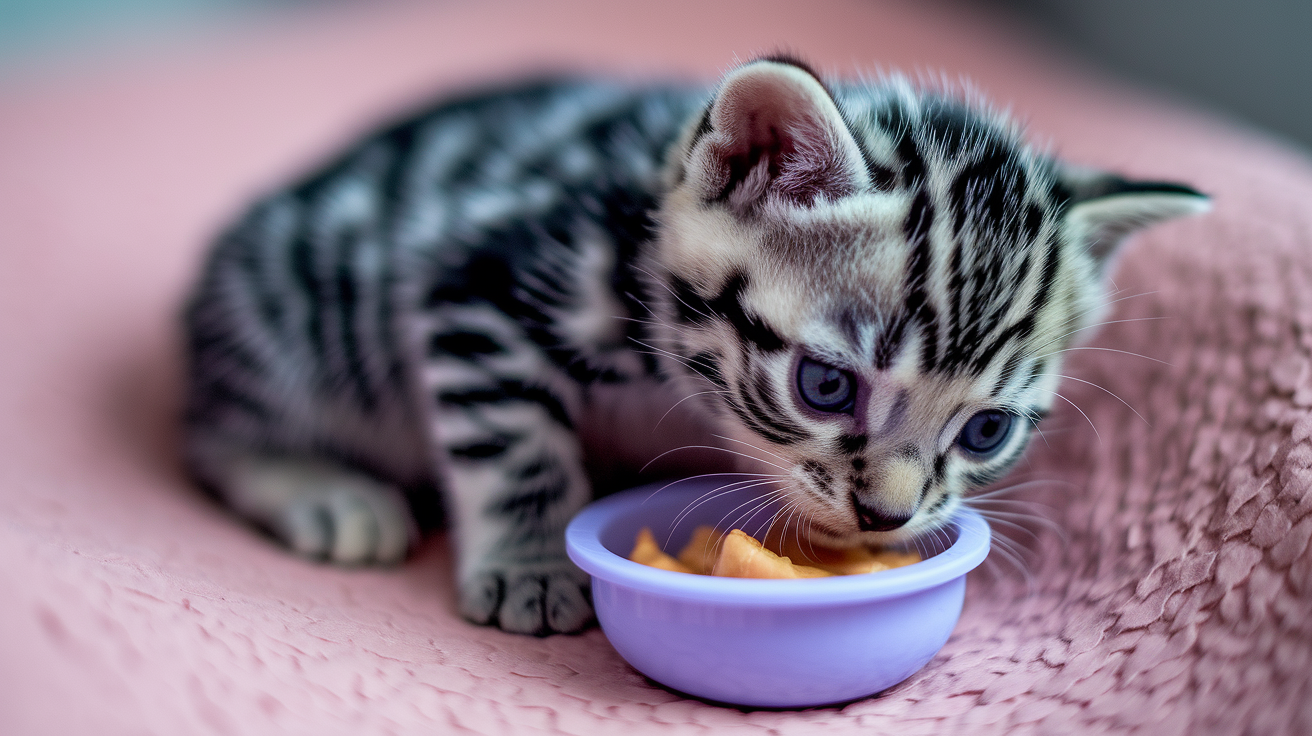
Kittens are born with digestive systems that aren’t fully developed yet, but they mature fast during those first few months. Their stomachs can only hold tiny amounts at a time, which is why meal frequency matters more than portion size early on. By five to six weeks, their bodies start making the enzymes needed to handle solid food, though they’ll keep nursing for comfort and immune support. The switch from milk to solids needs to happen gradually because their intestinal lining’s still getting used to new proteins and textures.
Growth drives everything about kitten nutrition. A two month old kitten needs roughly 150 calories per day to fuel bone development, organ growth, and all that constant playing and exploring. As they grow, calorie needs climb steeply. By six months, a kitten might need 400 calories or more, which is nearly double what a lazy adult cat of the same weight requires. Wet food works well during early weaning because the soft texture is easier for tiny mouths and provides hydration alongside calories. Dry kibble can be introduced around the same time, either softened with water or offered whole to kittens ready to crunch. Both formats support development, and lots of kitten owners mix the two to balance moisture with the dental benefits of chewing.
| Age | Average Weight | Daily Calories |
|---|---|---|
| 2 months | 2 pounds | 150 calories |
| 3 months | 3 pounds | 200 calories |
| 4 months | 4.5 pounds | 300 calories |
| 6 months | 6.5 pounds | 400 calories |
| 9 months | 8 pounds | 460 calories |
| 11 months | 10 pounds | 540 calories |
Adolescent and Adult Cat Feeding Requirements and Maintenance Factors
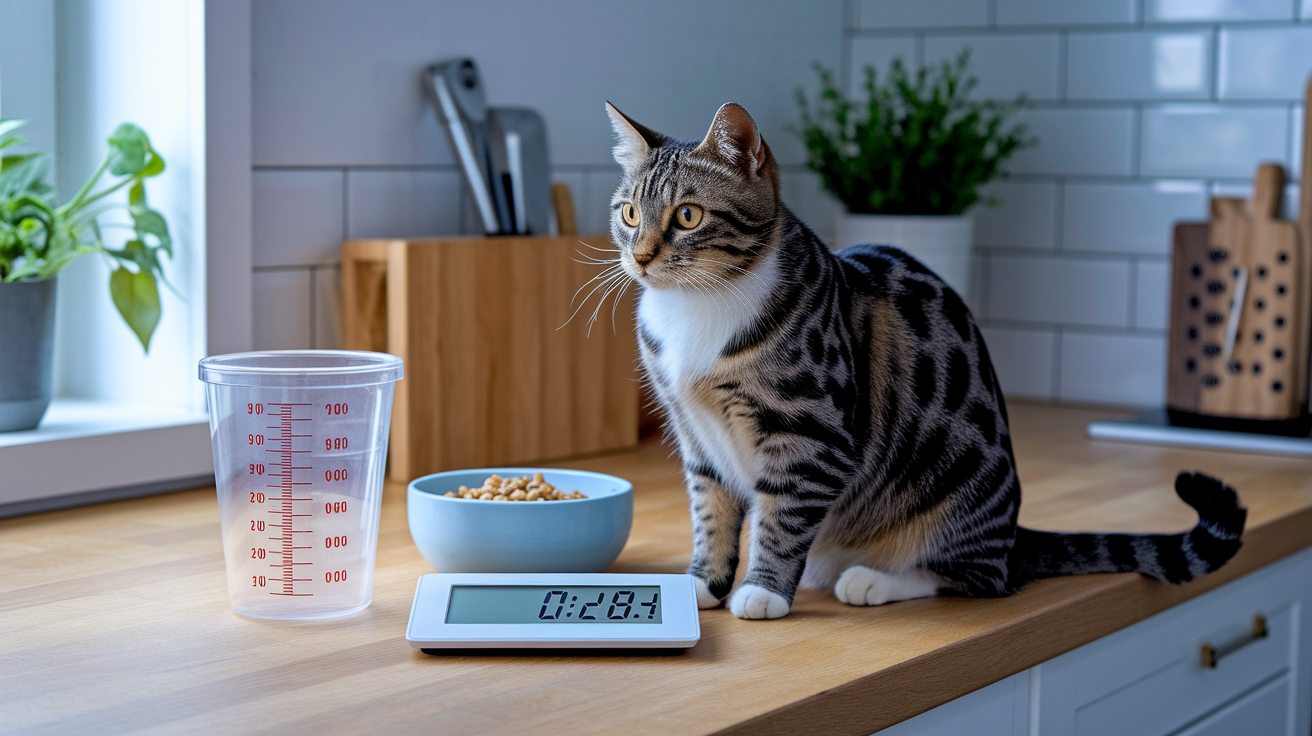
Once a cat hits adulthood around twelve months, their metabolism shifts from rapid growth mode to steady maintenance. Calorie needs per pound drop because they’re not building bone, muscle, and organs at kitten speed anymore. A healthy ten pound adult typically needs only 200 to 250 calories per day, depending on activity level and whether they’re spayed or neutered. This is when portion control starts mattering more than meal frequency, because it’s really easy to overfeed a cat whose energy needs have dropped but whose appetite hasn’t.
Scheduled meals give you way better control over how much your cat eats compared to leaving food out all day. Free feeding works for some cats, but many will graze constantly and pack on weight, especially indoor cats with limited activity. Measuring food with an actual measuring cup instead of eyeballing helps you stay consistent and adjust quickly if your cat’s weight starts creeping up or down. Combining wet and dry food can give you the best of both. Moisture from wet food supports urinary health, while dry kibble provides some mechanical cleaning of teeth and costs less per calorie.
Behavior and lifestyle shape how much an adult cat actually needs. An indoor cat who naps eighteen hours a day burns fewer calories than one who patrols a yard or plays hard with puzzle toys. Body condition matters more than the number on a scale. If you can feel ribs easily but they’re not visible, your cat’s likely at a healthy weight. Treats are fine, but they add up fast. Keeping treat calories under ten percent of daily intake means a 200 calorie per day cat should get no more than 20 treat calories, which is about two small treats depending on the brand.
Factors that influence adult portions:
- Current body weight and body condition score
- Activity level and lifestyle (indoor vs. outdoor, active vs. sedentary)
- Food calorie density (dry kibble ranges from 300 to 500+ calories per cup)
- Metabolism differences between individual cats
Senior and Geriatric Cat Dietary Adjustments by Age
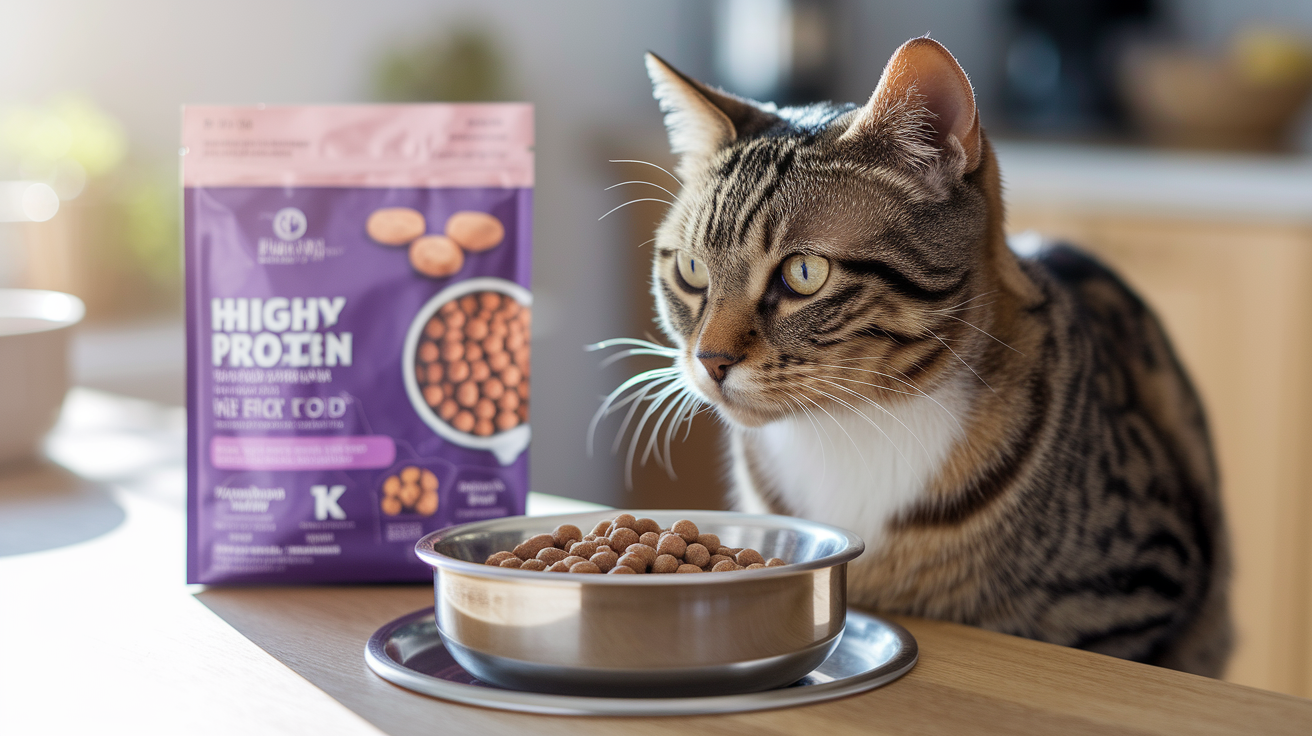
Aging changes how cats process and use nutrients. Starting around age seven, many cats experience a gradual slowdown in kidney function, which affects how they filter waste and balance minerals like phosphorus. Their digestive efficiency may decline a bit, meaning they absorb fewer calories and nutrients from the same amount of food. Muscle mass becomes harder to keep as cats age, even if their weight stays stable, because their bodies break down muscle protein faster and rebuild it slower.
Protein becomes more important, not less, as cats move into their senior years. Older cats need high quality animal protein to maintain muscle and support immune function, especially once they pass ten years old. Lots of senior formulas reduce protein to protect aging kidneys, but healthy seniors without diagnosed kidney disease often do better with higher protein intake. If your cat starts losing weight or muscle despite eating normally, increasing protein and overall calories may help. Wet food works especially well for seniors with dental pain or missing teeth, and the extra moisture supports kidney function.
Senior cats often develop pickier appetites. Food that smells stronger or is slightly warmed becomes more appealing, which is one reason wet food works well for this age group. Smaller, more frequent meals can prevent nausea and make it easier for a slower digestive system to handle. Joint stiffness may make it harder for a cat to bend down to floor level bowls, so slightly elevated feeding stations can help. Lower phosphorus levels in senior formulas matter once kidney disease appears, but healthy seniors don’t need that restriction.
Recognizing When to Modify Senior Feeding
Watch for subtle changes in how your cat approaches food. A senior who used to clean their bowl but now leaves half may be dealing with nausea, dental pain, or a declining sense of smell. Weight loss that happens gradually over months can be hard to notice day to day. Running your hands along their spine and ribs every few weeks helps you catch early muscle wasting.
Appetite changes can signal underlying issues like hyperthyroidism, kidney disease, or diabetes, all common in older cats. If your cat suddenly becomes ravenous or loses interest in food entirely, check in with your vet. Stool changes (chronic soft stool, constipation, or straining) may mean digestive function is declining or that the current food isn’t working anymore. Vomiting more than occasionally, especially undigested food shortly after eating, often means portions are too large or the food is too rich for an aging stomach to handle comfortably.
Wet vs. Dry Feeding Strategies Through Every Age
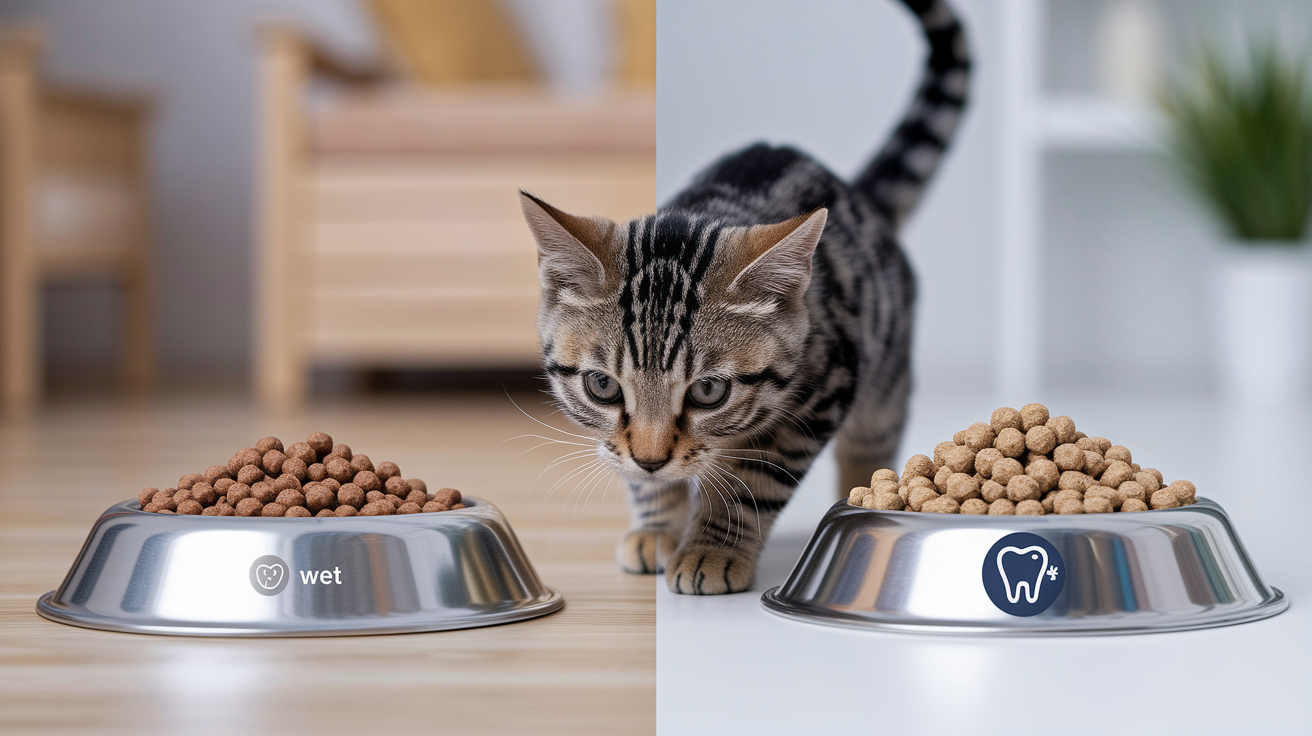
Wet food provides high moisture content, which matters because most cats don’t drink enough water on their own. This extra hydration supports kidney and urinary tract health, reducing the risk of crystals and stones. Wet food’s also easier to chew for kittens with baby teeth and seniors with dental pain or missing teeth. You can mix medications or supplements directly into wet food, and warming it slightly releases aroma that increases palatability for picky eaters or cats with declining senses of smell.
Dry kibble supports dental health by providing a crunchy texture that can help scrape away plaque as cats chew. It’s more cost effective per calorie than wet food and stays fresh in the bowl longer, which works well for cats who prefer to graze throughout the day. Kibble also works in puzzle feeders and food dispensing toys, giving indoor cats mental stimulation and tapping into their natural hunting instincts. Lots of kittens enjoy the crunch, and it helps develop strong jaw muscles during growth.
Wet food benefits:
- High moisture supports hydration and urinary health
- Easier to chew for kittens and seniors
- Higher palatability for picky eaters
- Simple to mix with medications or supplements
- Warming releases aroma that stimulates appetite
Dry food benefits:
- Supports dental health through mechanical cleaning
- Cost effective and convenient for busy schedules
- Works well in puzzle feeders for mental stimulation
- Longer shelf life once opened
- Helps build jaw strength in growing kittens
Lots of cats thrive on a combination of both wet and dry food. You might feed wet food in the morning and evening to ensure hydration, then leave a small portion of kibble out for midday grazing or puzzle play. This mixed approach balances moisture intake, dental benefits, and cost. Just remember to account for total daily calories across both formats. A cat eating a full wet meal plus a full dry portion will likely gain weight unless you adjust portions down.
Portion Control, Measuring, and Calorie Planning by Age
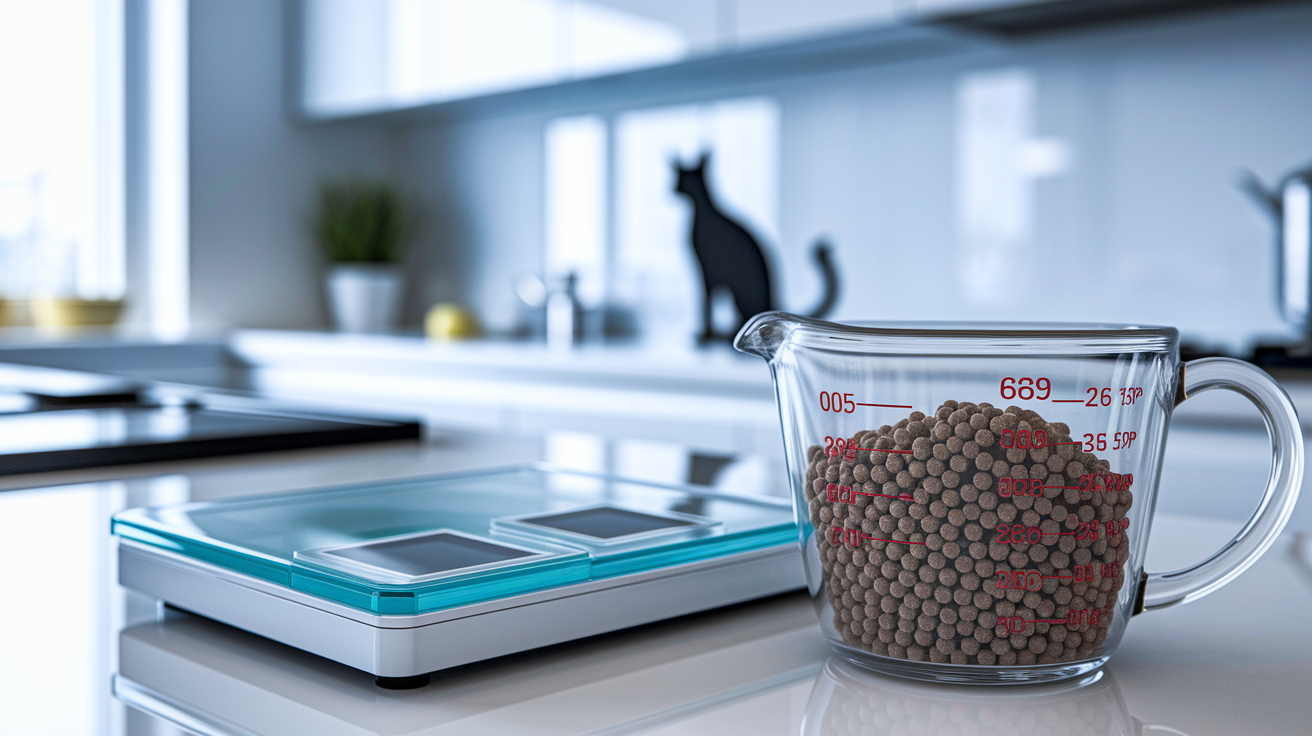
A ten pound adult cat needs roughly 200 to 250 calories per day for weight maintenance, but that number shifts based on age, activity, and metabolism. Kittens need way more calories per pound because rapid growth burns energy at a much higher rate. A three pound kitten eating 200 calories per day is getting about 67 calories per pound, while a ten pound adult eating the same amount gets only 20 calories per pound. This is why eyeballing portions doesn’t work well. What looks like a reasonable amount for an adult can starve a kitten or overfeed a senior.
Measuring cups give you accuracy that visual estimation can’t. Calorie density varies widely across brands and formulas. One dry kibble might pack 400 calories per cup while another delivers 500 or more. Wet food ranges from 70 to 100+ calories per three ounce can depending on the formula. Check the feeding guidelines on the package, but treat them as a starting point. Real world needs depend on your cat’s body condition, activity level, and individual metabolism. Treats and table scraps count toward daily calories. If treats make up more than ten percent of intake, you’re cutting into the calories available for complete nutrition.
| Life Stage | Calories per Day | Notes |
|---|---|---|
| Kitten (2–6 months) | 150–400 | Needs increase rapidly with growth; feed high calorie kitten formula |
| Adolescent (6–12 months) | 400–540 | Growth slows but energy needs remain high; adjust as spay/neuter happens |
| Adult (1–7 years) | 200–250 | Varies by weight, activity, and metabolism; measure portions carefully |
| Senior (7+ years) | 180–300+ | Needs vary widely; some lose weight and need more, others gain and need less |
Transitioning Cat Food Safely Through Life Stages
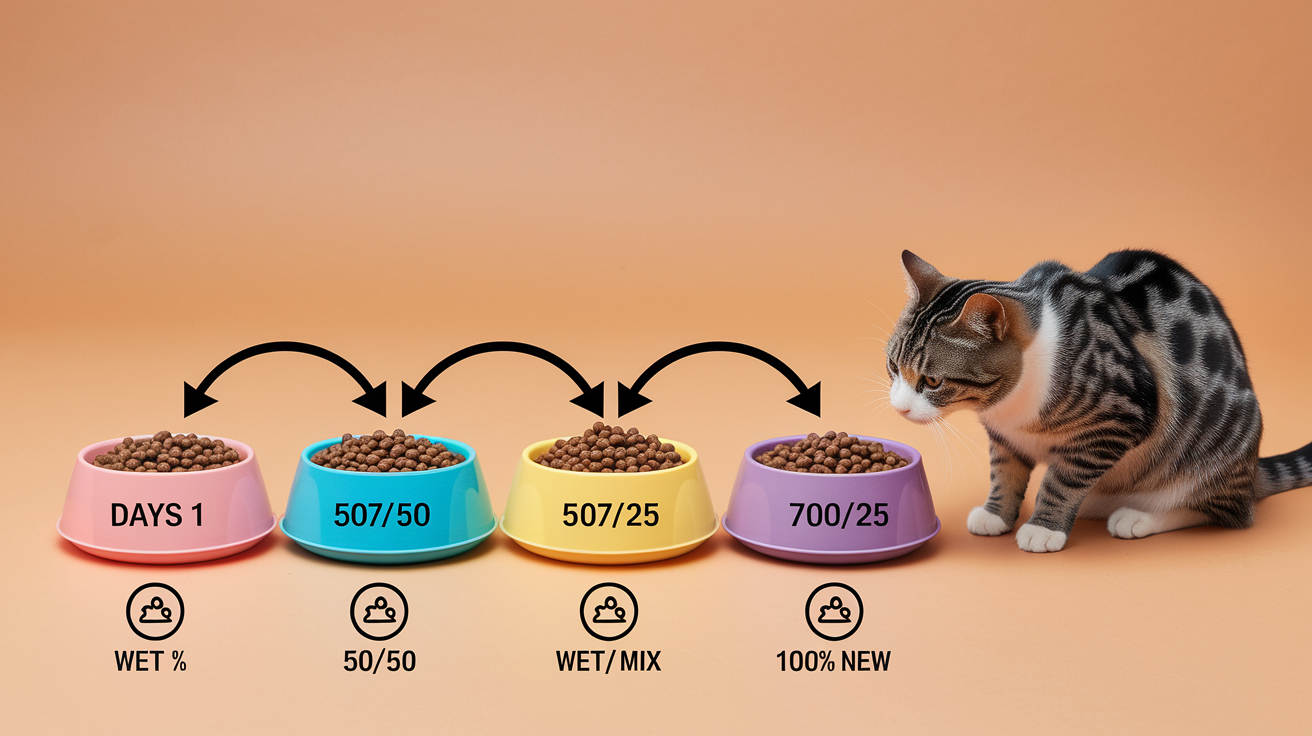
Moving from one food to another requires patience because cats have sensitive digestive systems. A sudden switch can trigger vomiting, diarrhea, or refusal to eat. The standard transition takes seven to ten days, starting with a small amount of new food mixed into the old. Begin with a ratio of 25 percent new food to 75 percent old food for the first two days, then shift to half and half for the next two days, then 75 percent new to 25 percent old, and finally 100 percent new food by day seven.
Some cats need a slower approach, especially seniors or those with sensitive stomachs. If your cat develops loose stool or seems uncomfortable during a standard transition, back up a step and hold that ratio for a few extra days before moving forward. For particularly sensitive cats, start with just 10 percent new food and increase in 10 percent increments every couple of days. This stretches the transition to two weeks or longer, but it prevents digestive upset and food refusal. Mixing wet and dry food during the transition can help with acceptance because the wet food’s moisture and aroma often mask differences in taste or texture.
Step by step food transition method:
- Days 1–2: Mix 25% new food with 75% current food
- Days 3–4: Mix 50% new food with 50% current food
- Days 5–6: Mix 75% new food with 25% current food
- Day 7: Feed 100% new food
- If stool becomes loose or your cat refuses to eat, hold the current ratio for two extra days before increasing
Multi-Cat Feeding Routines and Behavior Management
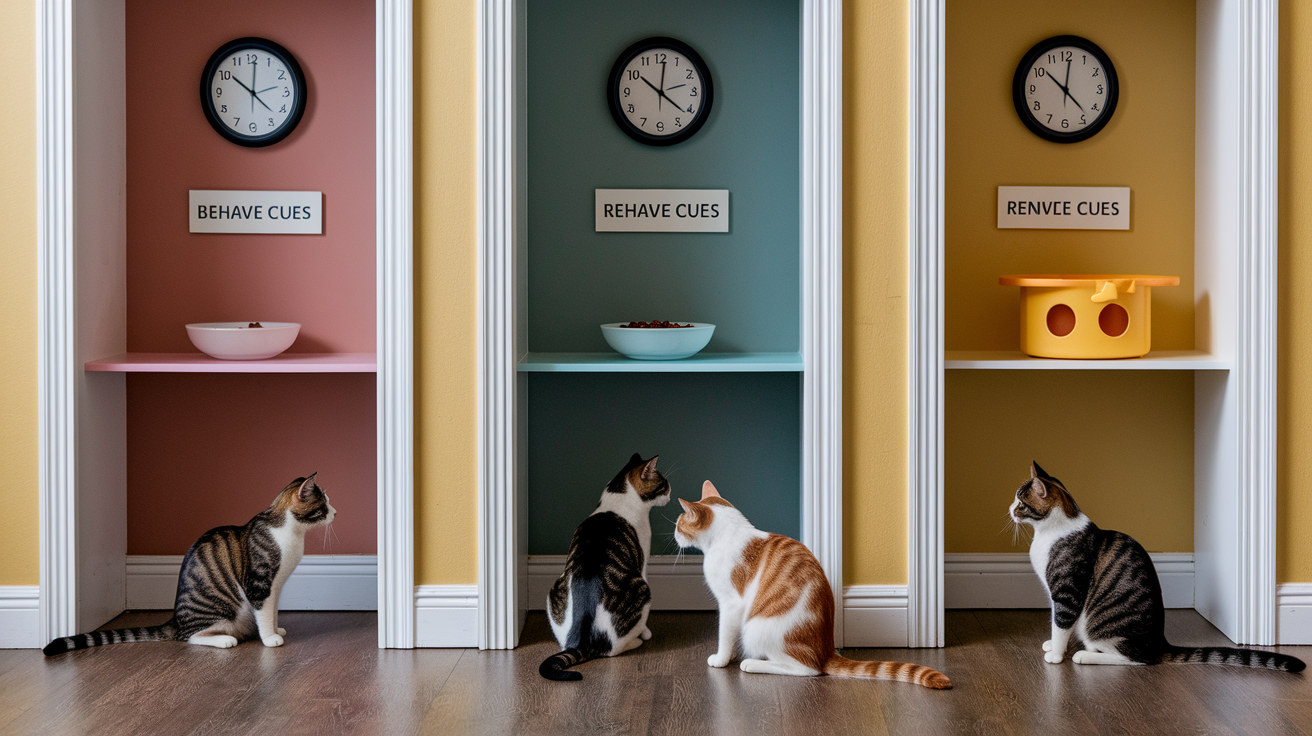
Feeding multiple cats in one household requires planning because some cats eat faster, some are more food motivated, and competition can lead to stress or overeating. Separate feeding stations in different rooms help cats eat at their own pace without feeling rushed or threatened. Quiet areas away from litter boxes and noisy appliances reduce stress and make mealtime calmer. Scheduled feeding works better than free feeding in multi cat homes because it lets you monitor how much each cat eats and spot appetite changes that might signal illness.
Competitive eaters or food aggressive cats may need supervised feeding. Set bowls down at the same time, then stay nearby to make sure no cat finishes early and steals from another. Elevated feeding spots can prevent dogs from stealing cat food if you have both species in the house. Puzzle feeders slow down fast eaters and give less food motivated cats a chance to finish their meals without interference. Whisker friendly shallow bowls help all cats eat more comfortably because deep bowls can cause whisker fatigue, which some cats find irritating enough to avoid eating.
Tools That Support Smooth Multi-Cat Feeding
Automatic feeders with portion control let you schedule meals when you’re not home, keeping routines consistent even during busy weeks. Microchip feeders open only for the cat wearing a matching chip, which is helpful if one cat needs a special diet or tends to steal from others. These feeders prevent food theft and let you feed different formulas or portion sizes to different cats without constant supervision.
Puzzle bowls and slow feeder dishes force cats to work for each bite, which slows down gulpers and reduces vomiting after meals. They also provide mental stimulation that can ease boredom related behaviors like excessive meowing or destructive scratching. For multi cat households with limited space, wall mounted feeding shelves at different heights give each cat a personal feeding zone and reduce crowding around floor level bowls.
Final Words
Keep feeding straightforward: age-based schedules give quick clarity—kittens need frequent small meals, adults usually twice a day, seniors may need more small meals and higher protein. The post covered kitten growth needs, adult portion planning, wet vs dry tradeoffs, safe transitions, and multi-cat routines.
Use measuring, scheduled mealtimes, and watch stool and weight. Treats should stay small. Use this as a simple cat feeding schedule by age you can follow this week, and expect steadier energy and easier vet checks.
FAQ
Q: What is the 3-3-3 rule for cats?
A: The 3-3-3 rule for cats is a simple adoption timeline: 3 days to hide and observe, 3 weeks to start showing personality, and about 3 months to fully settle and bond with your home.
Q: How much food should a cat eat per day by age?
A: How much food a cat should eat per day by age varies: kittens under 6 months need 3–4 small meals and extra calories per pound; adults (1–7 yrs) ~200–250 kcal/day; seniors often need smaller, more frequent meals and extra protein.
Q: What is the best feeding schedule for my cat?
A: The best feeding schedule for your cat depends on age and lifestyle: kittens 3–4 meals/day, adults two meals about 12 hours apart, and seniors 2–3 smaller meals, adjusted for weight, activity, or health needs.
Q: Is tuna good for cats?
A: Tuna can be okay for cats occasionally, but tuna-only feeding isn’t balanced and may cause picky eating or excess mercury; use tuna as an occasional treat or topper, not a regular complete diet.