
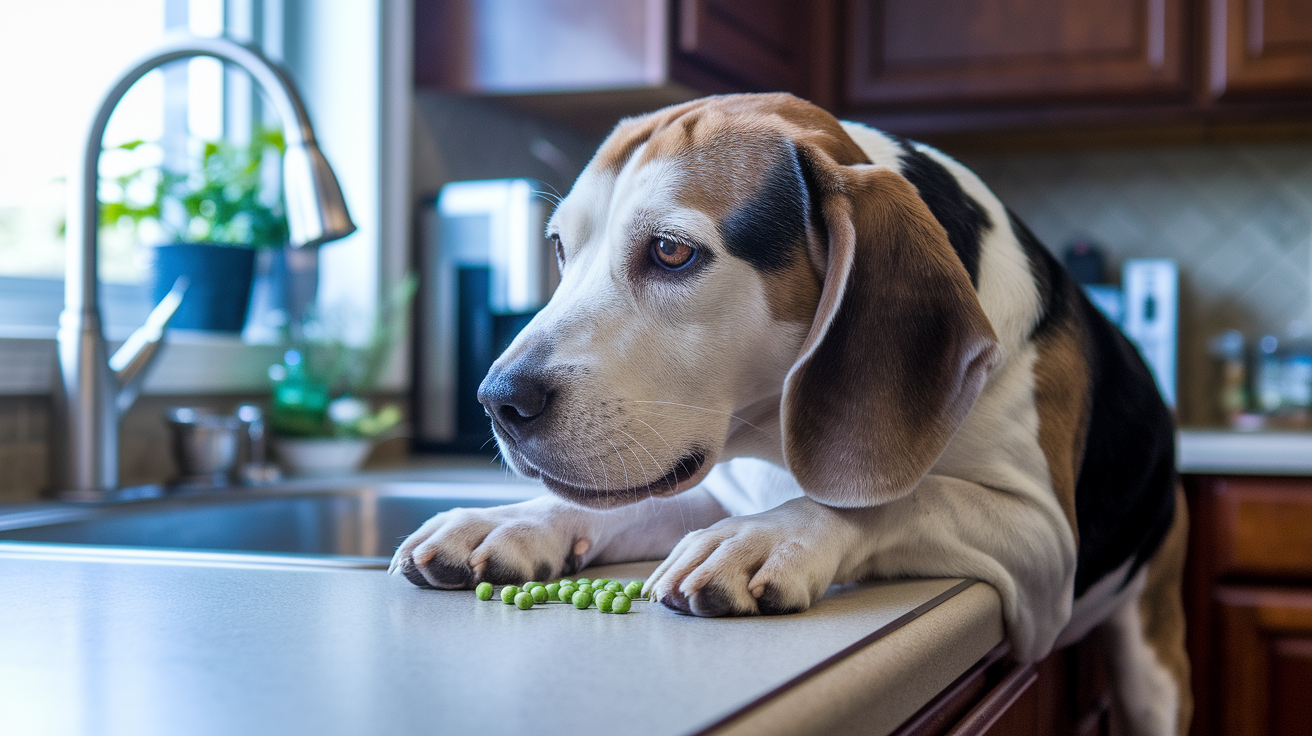
Ever wonder why training leaves your dog a few pounds heavier?
Using regular treats in 20–30 reward sessions can eat up a large chunk of daily calories.
Low calorie training treats—under 3 kilocalories per piece—let you reward often without stacking on weight.
In this post you’ll learn what to look for (low fat, higher protein, low moisture), smart store-bought and homemade choices, and how to use them in real training so you can teach more and worry less.
Key Low Calorie Training Treats That Fit Frequent Reward Sessions
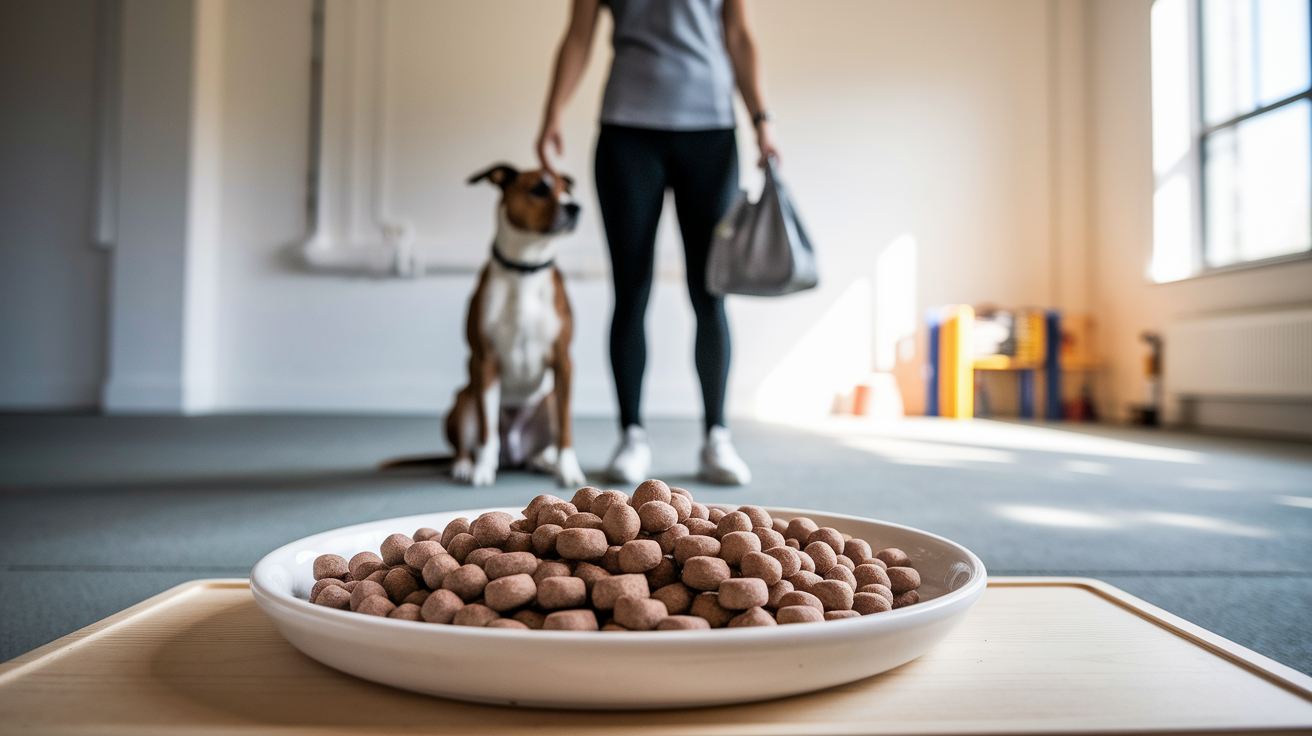
Low calorie training treats contain fewer than 3 kilocalories per piece. That threshold matters when your dog’s getting 20 to 30 rewards in a single session. A 22 pound dog needs between 470 and 590 kilocalories daily, according to World Small Animal Veterinary Association guidelines. Use standard treats in a high frequency session and you’ve just burned through half that intake. Keeping each piece under 3 kilocalories lets you reinforce behavior over and over without wrecking daily nutrition or stacking up gradual weight gain across weeks of consistent training.
You’re looking for treats that stay under 5 percent crude fat, deliver 20 to 30 percent crude protein, hold moisture under 12 percent, and provide 2 to 5 percent fiber while weighing less than 3 grams per piece. Fat gives you 9 kilocalories per gram. Protein gives you 4 kilocalories per gram. So formulas that lean into protein instead of fat naturally cut calorie density. These benchmarks work whether you choose commercial freeze dried cubes, air dried strips, or fresh vegetable pieces you prep at home.
Commercial options usually stick to single proteins like chicken breast, turkey, or pork loin and skip fillers such as corn, wheat, or potato starch that add calories without doing anything useful. Whole food options include small pieces of carrot, green beans, or apple without seeds. Each delivers under 2 kilocalories per bite. Homemade treats made from lean ground meat or pureed pumpkin give you complete control over ingredients and portion size, and a lot of recipes bake into thin wafers you can break into training sized fragments.
Popular low calorie treat categories include:
- Freeze dried single protein cubes (chicken, turkey, liver): 2 to 3 kilocalories per cube, high protein retention, minimal processing
- Air dried meat strips (beef, duck, venison): 2 to 4 kilocalories per small strip, chewy texture, grain free
- Vegetable training bites (carrots, green beans, zucchini): 1 to 2 kilocalories per piece, high water content, crunchy
- Homemade lean meat wafers (ground turkey, chicken): 2 to 3 kilocalories per wafer, customizable ingredients, batch friendly
- Fruit pieces (apple without seeds, blueberries): 1 to 3 kilocalories per piece, natural sweetness, vitamin rich
- Commercial low fat biscuits (pea protein, chickpea flour): 2 to 3 kilocalories per mini biscuit, plant based protein, shelf stable
What Makes Low Calorie Dog Training Treats Nutritionally Different?
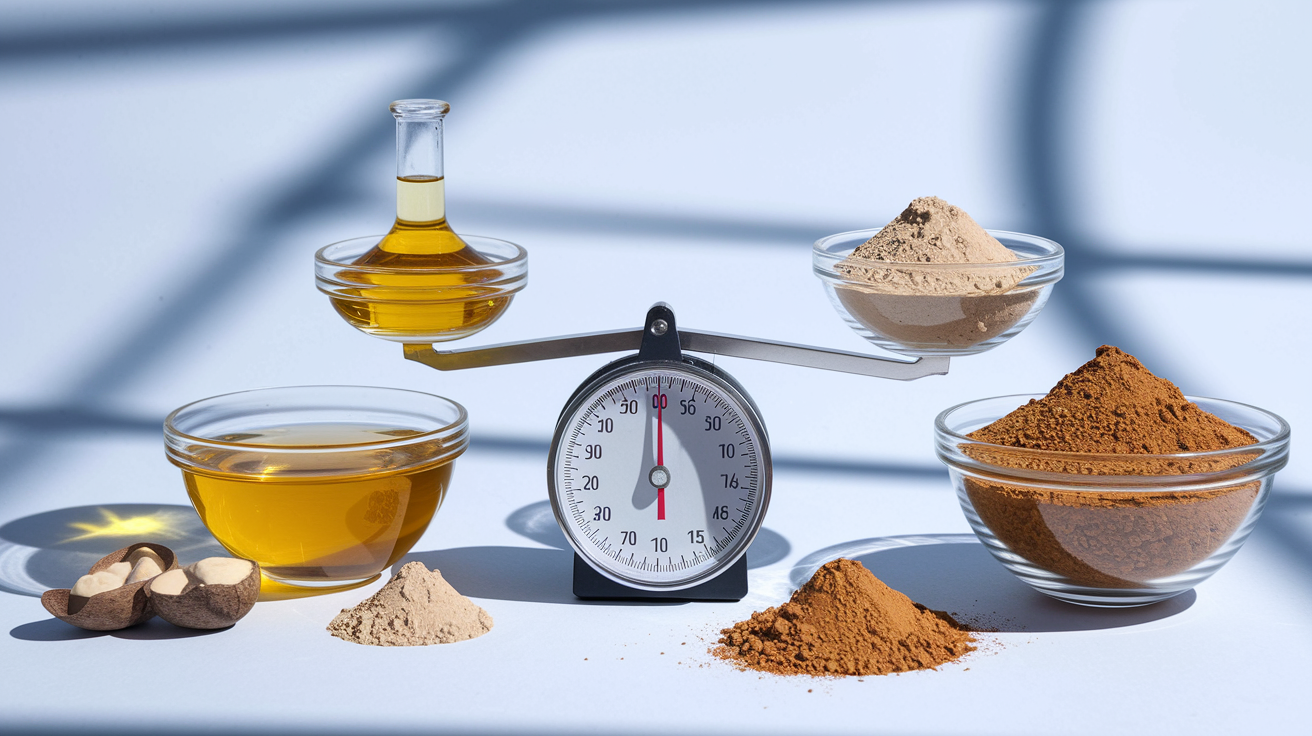
Low calorie training treats get their reduced energy density by limiting fat and moisture while concentrating protein and fiber. Fat delivers 9 kilocalories per gram, more than double the 4 kilocalories you get from protein or carbohydrate. Keeping crude fat under 5 percent is the most direct way to cut calories without shrinking treat size. A treat with 25 percent protein and 3 percent fat weighs the same as a treat with 15 percent protein and 8 percent fat. But the leaner formula delivers way fewer kilocalories per bite. Moisture content under 12 percent also reduces weight without adding nutrients, which concentrates the protein and fiber that support satiety and muscle maintenance.
Fiber between 2 and 5 percent slows digestion and helps your dog feel satisfied after small portions. That matters when you’re handing out dozens of rewards in a session. Soluble fiber types like beet pulp or inulin support gut health and stabilize blood sugar, preventing the energy spikes and crashes that happen with high starch treats. Protein between 20 and 30 percent preserves lean muscle, especially important for older dogs or those recovering from injury, and delivers amino acids that support coat quality, immune function, and tissue repair during periods of increased activity.
| Nutrient | Ideal Range | Impact on Calories |
|---|---|---|
| Crude Fat | Under 5% | Fat yields 9 kcal/g, reducing fat is the fastest way to lower calorie density |
| Crude Protein | 20–30% | Protein yields 4 kcal/g, high protein supports satiety and muscle without excess calories |
| Moisture | Under 12% | Moisture adds weight but no nutrients, low moisture improves shelf life and concentrates protein |
| Crude Fiber | 2–5% | Fiber slows digestion, prolongs satiety, and supports gut health without contributing calories |
Best Commercial Low Calorie Training Treat Options for Dogs
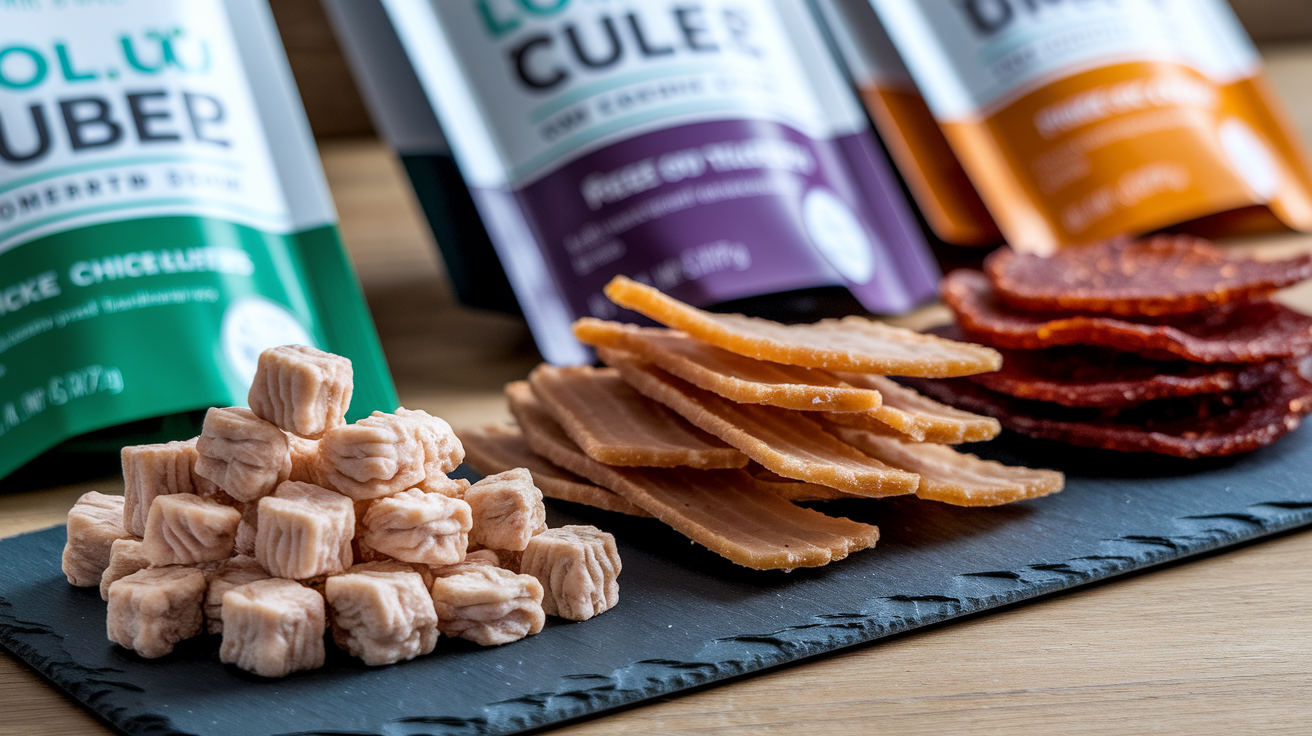
Commercial low calorie training treats often feature human grade, single protein formulas that skip grains, fillers, and artificial additives. Freeze dried chicken breast cubes deliver around 2 kilocalories per piece, retaining nearly all the protein and amino acids of raw meat while reducing moisture to under 10 percent for shelf stability. Air dried turkey strips provide a chewy texture that extends treat time and promotes dental plaque reduction, with most brands landing between 2.5 and 3 kilocalories per small strip. Pork loin jerky made from 100 percent lean pork contains roughly 86 milligrams of crude protein per 60 gram serving. That translates to about 3 kilocalories per 2 gram piece, and the low fat content (around 4.3 milligrams per 60 grams) keeps overall energy density minimal.
Vegetable enhanced formulas pair lean protein with nutrient dense produce such as purple cabbage, kabocha squash, or spinach, adding vitamins A and C while maintaining protein levels above 80 milligrams per 50 gram serving. These blends typically include ground chicken or turkey as the primary ingredient, with the vegetables contributing fiber, antioxidants, and natural color without raising calorie counts much. Papaya marinated chicken jerky offers vitamin C and digestive enzymes, with the fruit adding subtle sweetness that appeals to picky eaters while the lean chicken breast keeps fat under 4 percent.
- Freeze dried chicken breast cubes: Single ingredient jidori chicken, approximately 2 kcal per cube, crispy texture that rehydrates quickly in the mouth
- Air dried turkey strips: Lean turkey breast, approximately 2.5 kcal per small strip, chewy texture supports dental health
- Chicken purple cabbage sticks (50g): Ground chicken and purple cabbage, 86mg protein, 3.5mg fat, approximately 2.8 kcal per stick
- Chicken kabocha sticks (50g): Ground chicken with Japanese kabocha squash and spinach, 89mg protein, approximately 3 kcal per stick
- Pork loin jerky (60g): 100% human grade pork loin, 86.2mg protein, 4.31mg fat, approximately 3 kcal per 2g piece, shelf stable
Homemade Low Calorie Training Treat Ideas for Dogs
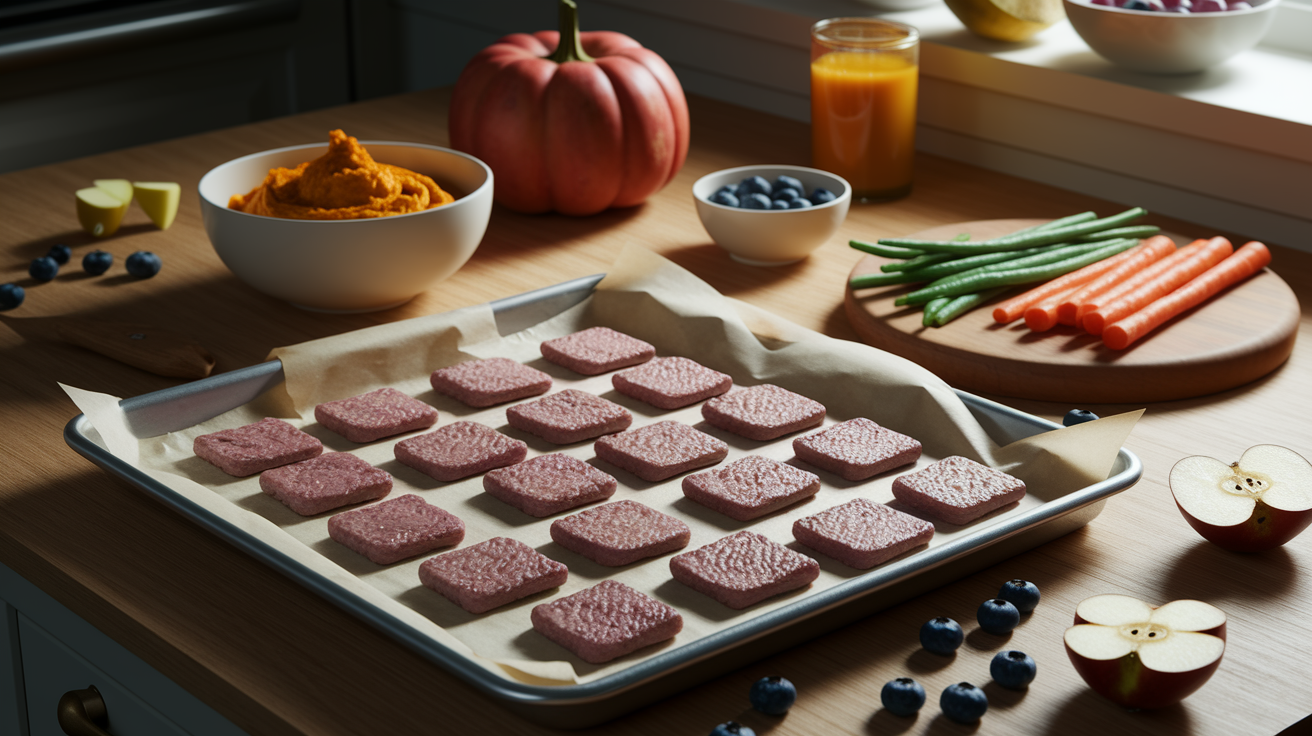
Homemade training treats give you complete control over ingredients, portion size, and texture while keeping calories under 3 kilocalories per piece. Lean ground turkey or chicken mixed with pureed pumpkin and a small amount of oat flour bakes into thin wafers you can break into pea sized rewards. The pumpkin adds beta carotene and soluble fiber that supports digestion. Blanched vegetables such as green beans, carrots, or zucchini sliced into small discs deliver 1 to 2 kilocalories per piece and provide a crunchy texture that a lot of dogs find satisfying, especially when lightly dehydrated in a low oven to concentrate flavor. Blueberries and small apple pieces without seeds offer natural sweetness and antioxidants, and their firm texture makes them easy to carry in a training pouch without creating mess.
No bake options include mashed sweet potato mixed with a small amount of unsweetened applesauce and rolled into balls before freezing. That creates a chewy, semi frozen treat that lasts longer during warm weather sessions. Cottage cheese blended with finely chopped spinach and portioned into silicone molds before freezing delivers protein and calcium in a soft format that works for senior dogs or those with dental sensitivity, with each mold cavity holding roughly 2 to 3 kilocalories depending on size.
- Lean turkey and pumpkin wafers: Combine 1 pound lean ground turkey, 1/2 cup pureed pumpkin, 1/4 cup oat flour. Spread thin on parchment, bake at 300°F for 20 minutes, break into 1cm pieces (approximately 2 kcal per piece)
- Dehydrated vegetable chips: Slice carrots or zucchini into 2mm rounds, arrange on baking sheet, bake at 200°F for 2 hours until crisp (approximately 1 kcal per chip)
- Frozen sweet potato bites: Mix 1 cup mashed sweet potato with 2 tablespoons unsweetened applesauce, roll into 1cm balls, freeze for 2 hours (approximately 2 kcal per ball)
- Cottage cheese spinach cubes: Blend 1 cup low fat cottage cheese with 1/2 cup finely chopped spinach, pour into small silicone molds, freeze until solid (approximately 3 kcal per cube)
Using Low Calorie Treats During Dog Training Sessions
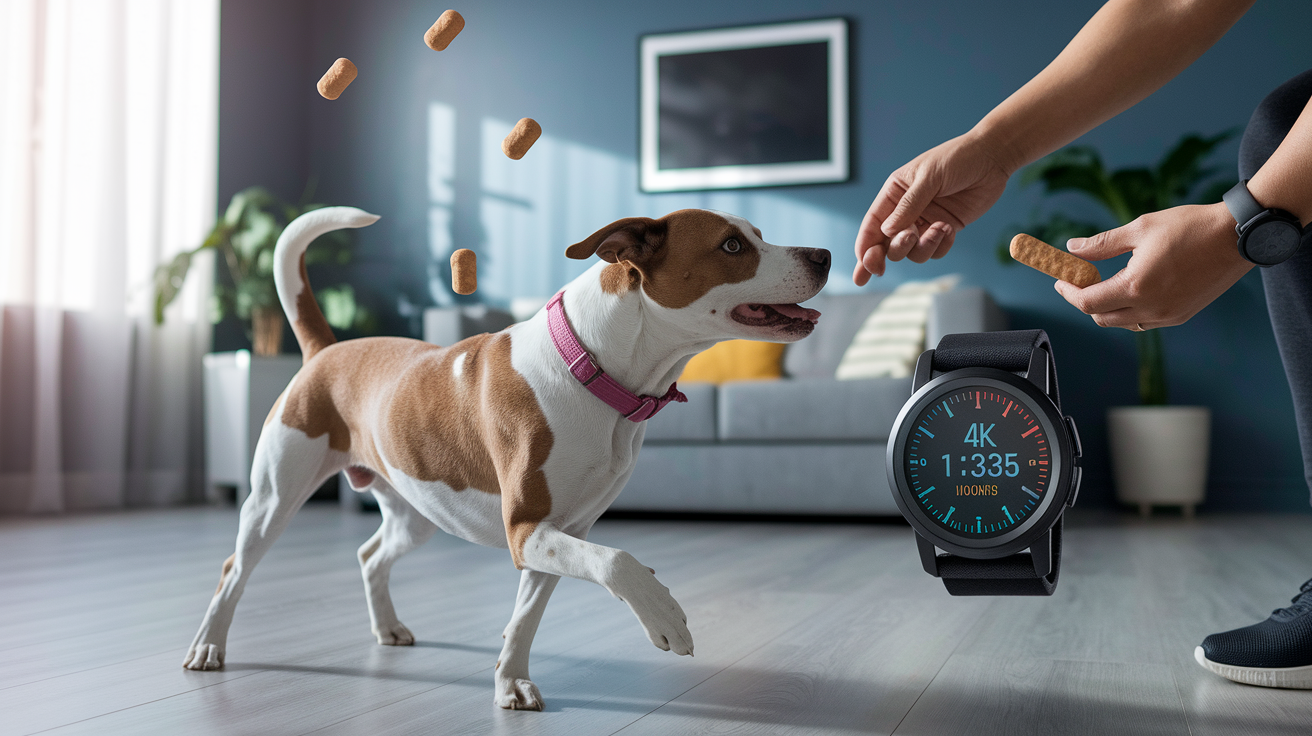
Dogs form the strongest behavior reward connections when treats are delivered within one second of the desired action. Keeping low calorie options in an easily accessible pouch on your waist or in your pocket gets rid of delays that weaken the association. Breaking treats into pea sized pieces maximizes the number of rewards you can deliver without exceeding the 10 percent daily calorie threshold. For a 22 pound dog, that means limiting treats to roughly 50 kilocalories per day. If you’re running a 20 minute session with 30 repetitions, using 2 kilocalorie pieces keeps total intake at 60 kilocalories. Slightly above the ideal but manageable if you reduce dinner portions by one quarter cup of kibble.
Variable reward schedules, where treats appear after every third or fifth correct behavior rather than every single time, maintain high motivation while cutting total calorie intake even more. Pairing treats with verbal praise or a quick play break reinforces the idea that the behavior itself is rewarding, not just the food. That helps you gradually reduce treat frequency as the behavior becomes reliable. On heavy training days, reducing your dog’s main meal by 10 to 15 percent prevents calorie surplus without leaving them hungry, and using high value proteins like freeze dried liver for new or difficult behaviors reserves the strongest reinforcement for moments that need extra motivation.
- Deliver treats within one second of the desired behavior to build immediate behavior reward links
- Break treats into pea sized pieces to double or triple the number of rewards from a single treat
- Use variable reward schedules after the behavior is established, rewarding every third or fifth repetition to maintain engagement
- Reduce main meal portions by 10 to 15 percent on days with extended training sessions to balance total energy intake
Low Calorie Treat Choices for Overweight or Sensitive Dogs
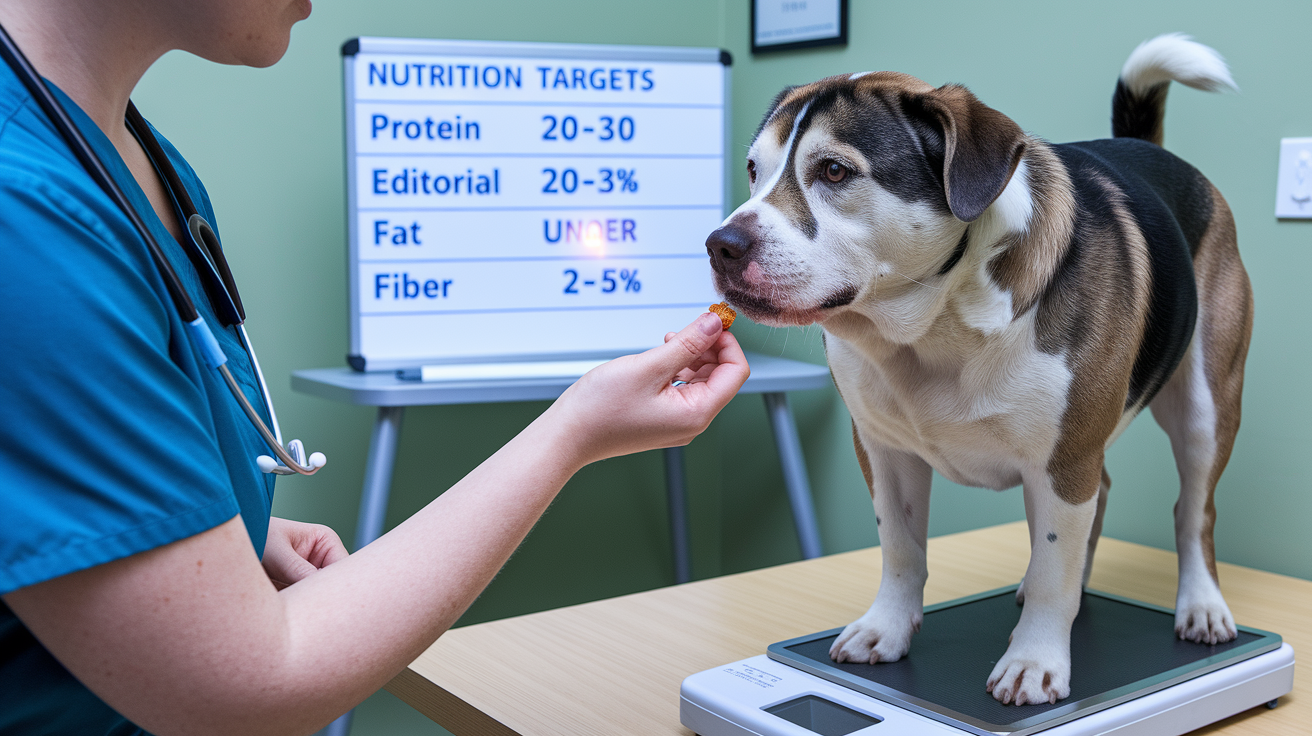
Overweight dogs benefit from training treats that stay under 2 kilocalories per piece. You can reinforce frequently without adding to the calorie deficit needed for gradual weight loss. Single protein freeze dried options such as chicken or turkey eliminate common allergens like beef, dairy, or grains, which cuts the risk of digestive upset or skin reactions during periods of increased treat consumption. Dogs with sensitive stomachs respond well to low fat formulas that include soluble fiber sources like pumpkin or beet pulp. These slow gastric emptying and support consistent stool formation even when treat frequency spikes during intensive training weeks.
Grain free treats made from chickpea flour, lentil protein, or pea protein avoid wheat, corn, and soy. All of which can trigger inflammatory responses in dogs with food sensitivities or mild intolerances. Limited ingredient formulas with three or fewer components simplify troubleshooting if your dog develops symptoms like itching, loose stool, or ear redness after starting a new treat. And they reduce exposure to preservatives, artificial colors, or flavor enhancers that may worsen sensitivities.
| Dog Need | Suitable Treat Type | Notes |
|---|---|---|
| Overweight or obese | Freeze dried single protein (chicken, turkey) under 2 kcal per piece | High protein preserves lean muscle during weight loss, low fat prevents calorie surplus |
| Food allergies or sensitivities | Novel protein (duck, venison, rabbit) with limited ingredients | Avoids common allergens like beef, dairy, grains. Simplifies symptom tracking |
| Sensitive stomach or digestive issues | Low fat with soluble fiber (pumpkin, beet pulp) | Slows digestion, supports consistent stool. Reduces gastric upset from frequent treats |
Storage Tips and Shelf Life for Low Calorie Dog Training Treats
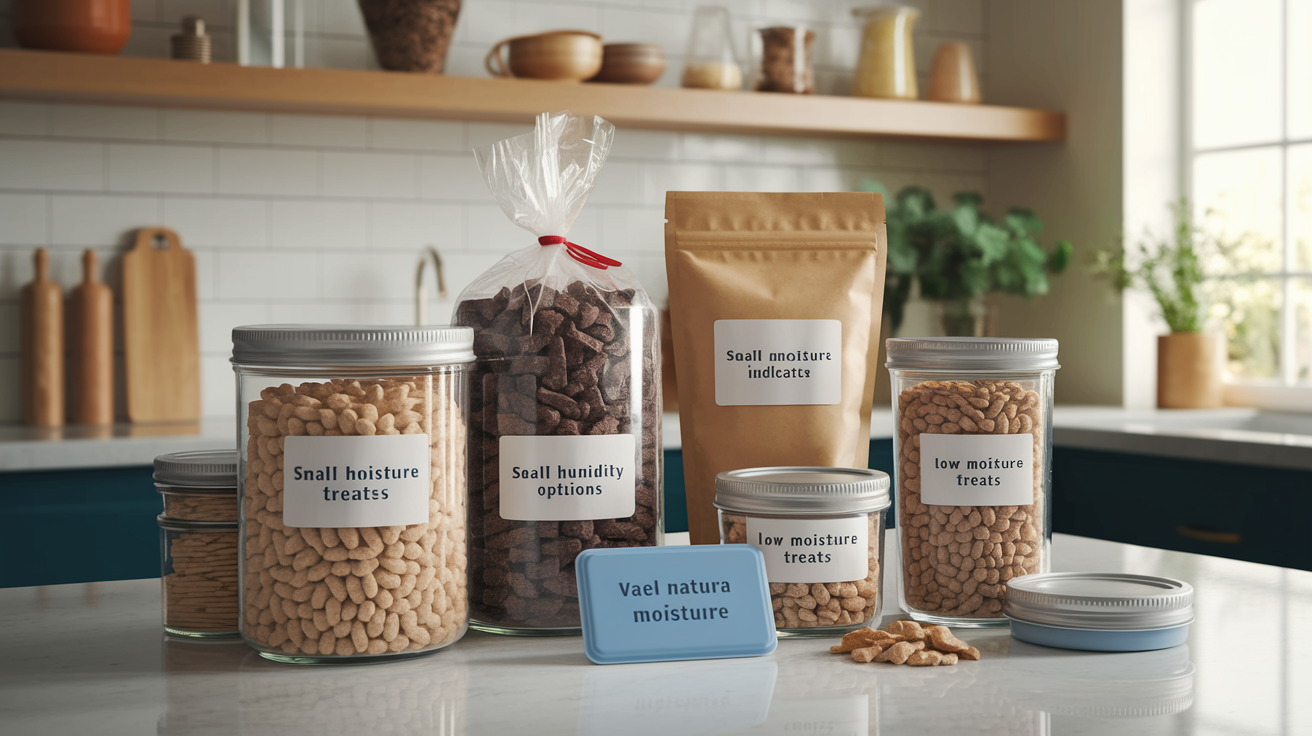
Low moisture treats with under 12 percent water content stay shelf stable for several months when stored in an airtight container at room temperature, away from direct sunlight and heat sources that speed up fat oxidation and protein degradation. Freeze dried and air dried options have the longest shelf life because removing moisture prevents bacterial growth and mold development. But once you open a package, exposure to humidity can bring moisture back and shorten usability. If you notice a rancid smell, color change, or soft texture in previously crispy treats, toss them immediately. Fat oxidation produces compounds that may irritate your dog’s digestive system.
Homemade treats made from lean meat or vegetables should be refrigerated if you’re planning to use them within one week or frozen in single session portions if you batch prepare for longer periods. Vacuum sealing or using freezer safe silicone bags removes air that causes freezer burn and preserves texture. Labeling each batch with the preparation date helps you rotate stock and use older treats first. Small batch production, where you prepare only what you’ll use in five to seven days, maintains peak freshness and nutritional value, especially for recipes that include fresh produce or unsalted proteins that don’t have the preservatives found in commercial formulas.
Final Words
Here’s the short version: low-calorie treats mean under 3 kcal per piece. Keep fat low, protein around 20–30%, and moisture under 12% for better shelf life and fewer extra calories.
Pick a format that fits your routine — commercial, freeze-dried, whole-food, or simple homemade bites. Break treats into pea-sized pieces, trim meal portions on heavy training days, and watch stool and weight.
Start by swapping one treat this week and count calories. With the right choices, low calorie training treats for dogs let you reward more without adding weight. You’ve got this.
FAQ
Q: What is the lowest calorie treat for dogs?
A: The lowest calorie treat for dogs is a single pea-sized whole food or tiny commercial piece under 3 kcal—think carrot slice, green bean, or a <3g freeze-dried meat bite. Healthy treats are low-fat, higher-protein.
Q: What is the 3-3-3 rule for dog training?
A: The 3-3-3 rule for dog training is three short sessions per day, three minutes each, for three weeks to build behavior—short, frequent rewards keep focus and avoid overfeeding.
Q: What do professional dog trainers use for treats?
A: Professional dog trainers use small, soft, high-value treats—tiny pieces of cooked chicken, freeze-dried meat, or commercial low-cal bites—delivered immediately and often, keeping treats under about 10% of daily calories.