
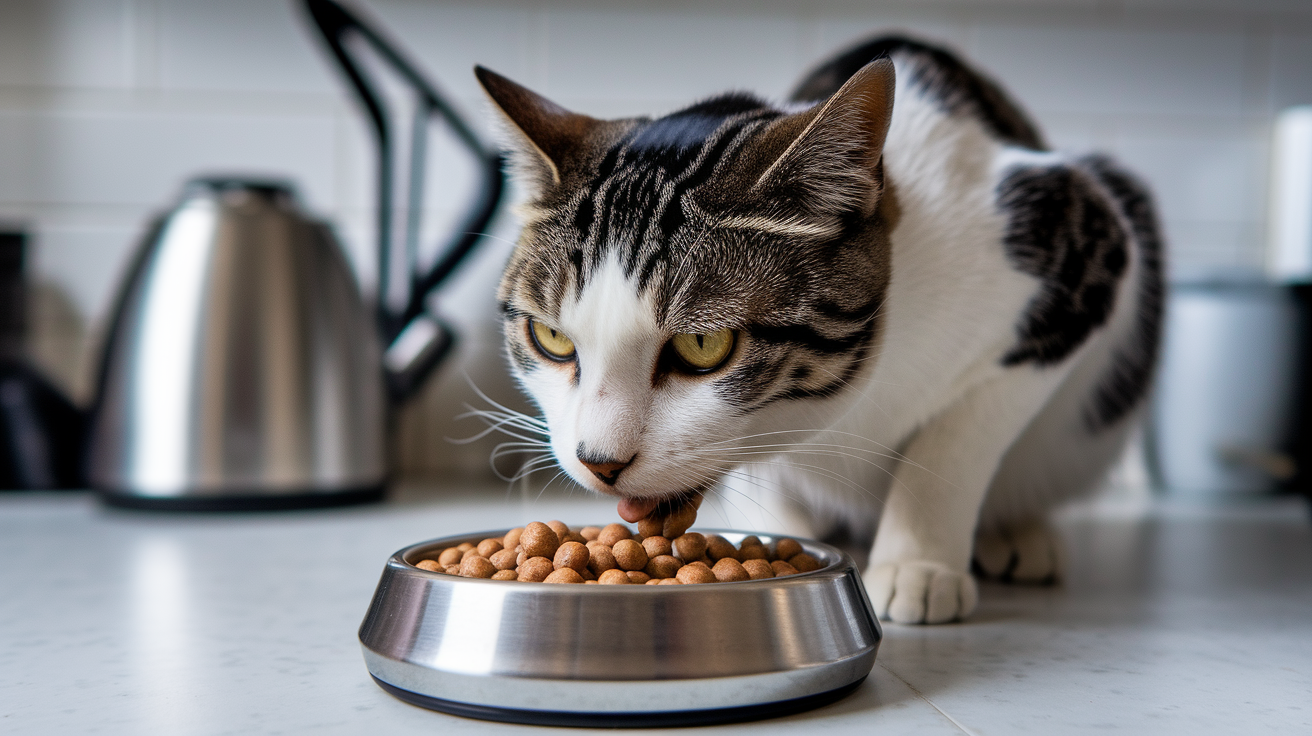
Most commercial cat foods pack too many carbs, and that can quietly push cats toward weight gain and diabetes.
Cats evolved as meat eaters, so a high-protein, low-carb plan matches their bodies and helps preserve lean muscle, steady blood sugar, and better hydration.
This post points you to the best brands, teaches a simple label check so you’ll spot hidden carbs, and gives feeding steps to switch safely and see real results.
Ready to pick a formula that actually fits your cat?
Core Benefits of a High‑Protein, Low‑Carb Cat Diet
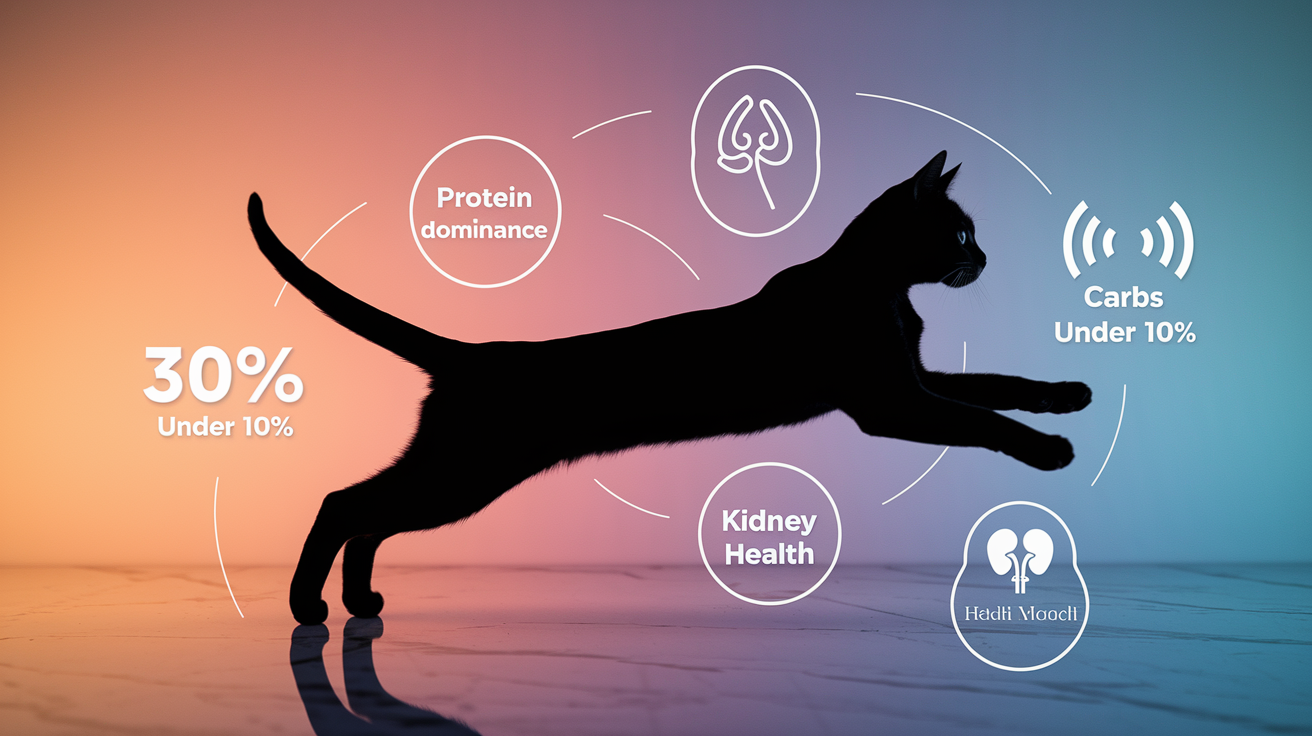
Cats are obligate carnivores. Their bodies evolved to run on animal protein, not plant starches. A high protein, low carb diet mirrors what a wild cat would eat: muscle meat, organs, bones. When you feed this way, you’re giving your cat the macronutrient ratios their system actually knows how to use. Protein should make up at least 30% of the diet, while carbohydrate levels should stay under 10% to prevent unnecessary weight gain and reduce diabetes risk.
Low carb diets support better blood sugar regulation, especially in cats prone to metabolic issues. Excess carbs turn into glucose, and when a cat’s body can’t use it all, it gets stored as fat. Over time, that can lead to obesity, insulin resistance, and diabetes. High protein formulas help maintain lean muscle mass, keep your cat feeling full longer, and reduce the need for large portions. Digestive health often improves too, since cats digest meat more efficiently than grains or starches.
Wet foods naturally deliver lower carbohydrate levels and higher moisture content than dry kibble. That extra hydration supports urinary tract health and helps prevent kidney problems down the line. Veterinarians who work with overweight or diabetic cats often recommend high protein, low carb diets as a first step. Some early stage diabetic cats have achieved remission after switching.
Weight control. Lower carbs reduce fat storage and help cats maintain a healthy body weight without constant hunger.
Muscle maintenance. High protein preserves lean tissue, especially important for senior cats or those recovering from illness.
Stable blood sugar. Less carbohydrate means fewer glucose spikes, reducing diabetes risk.
Digestive ease. Animal protein is easier for cats to break down and absorb than plant based fillers.
Hydration. Wet high protein foods increase water intake, supporting kidney and urinary tract function.
Understanding Protein Content and Carb Levels in Cat Food Labels
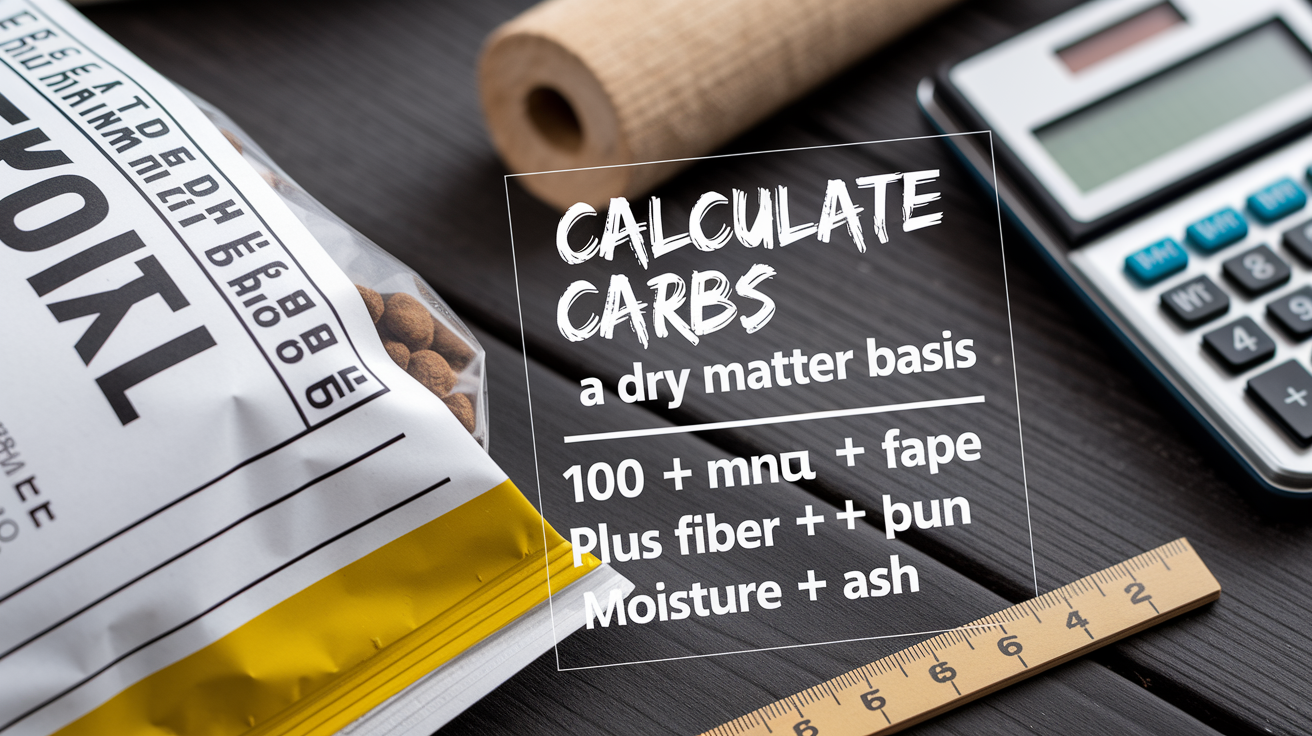
When you flip over a cat food bag or can, you’ll see a “guaranteed analysis” panel. It lists crude protein percentage, crude fat, fiber, moisture, and sometimes ash. The word “crude” just means it’s a basic measure, not a perfect one. What you won’t see on most labels is carbohydrate content, because pet food companies aren’t required to list it. That’s the first trap.
To find the carb percentage, you need to do a little math. Subtract the protein, fat, fiber, moisture, and ash percentages from 100. The number left over is carbohydrates. And because wet food can be 75% moisture while kibble is around 10%, you need to convert everything to a dry matter basis (the food with all water removed) to compare apples to apples.
Here’s how to calculate carbohydrate percentage on a dry matter basis.
Write down the guaranteed analysis numbers from the label: protein, fat, fiber, moisture, and ash. If ash isn’t listed, estimate 3% for canned food or 6% for dry food.
Add up protein, fat, fiber, moisture, and ash. For example: 10% protein + 5% fat + 1.5% fiber + 78% moisture + 3% ash = 97.5%.
Subtract the total from 100 to find carbs. In this case: 100 minus 97.5 = 2.5% carbs as fed.
Find the dry matter percentage. Subtract moisture from 100. If moisture is 78%, dry matter is 22%.
Divide the as fed carb percentage by the dry matter percentage. 2.5 divided by 22 = 0.1136.
Multiply by 100. 0.1136 times 100 = 11.36% carbs on a dry matter basis.
| Nutrient | As Fed % | Dry Matter % |
|---|---|---|
| Protein | 10% | 45.5% |
| Fat | 5% | 22.7% |
| Moisture | 78% | 0% |
| Carbohydrates | 2.5% | 11.4% |
How to Compare Wet vs Dry Protein Levels
You can’t compare a wet food’s 10% protein guarantee to kibble’s 35% protein guarantee without adjusting for moisture. The wet food might actually have more protein once you remove the water. A canned food with 10% protein and 78% moisture has about 45% protein on a dry matter basis. A dry food with 35% protein and 10% moisture has about 39% protein on a dry matter basis. The wet food wins, even though the label looks lower. Always do the dry matter conversion before deciding which formula offers more protein or fewer carbs.
Best High‑Protein, Low‑Carb Ingredients for Cats
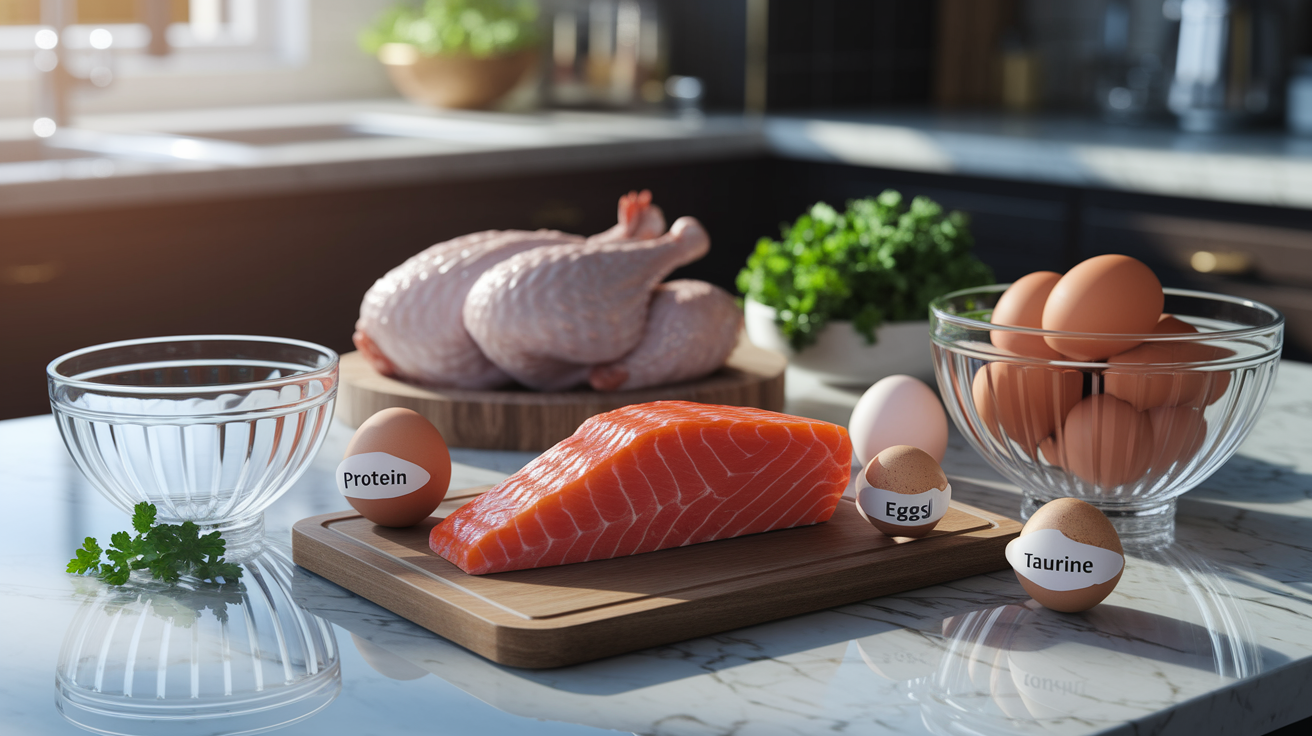
The first ingredient on the label should be a whole animal protein: chicken, turkey, salmon, beef, or another named meat. Not “poultry by product” or “meat meal” without a species listed. Organ meats like liver, heart, and kidney add amino acids and natural taurine, which cats must get from food since they can’t make it themselves. These ingredients have high biological value, meaning your cat’s body can actually use most of what it digests.
Grain free options help keep carb levels down by skipping corn, wheat, soy, and rice. But watch out for what replaces the grains. Some brands swap in peas, lentils, chickpeas, potatoes, or tapioca to bind kibble together. Those are all high in starch and carbs. A grain free food loaded with pea protein and potato starch isn’t much better than one with corn. Check the full ingredient list, not just the grain free claim.
Here’s what to look for in a high protein, low carb formula.
Whole chicken or chicken thigh. Turkey. Salmon, pollock, or other named fish. Beef or lamb. Chicken liver or other organ meats. Fish meal or chicken meal (concentrated protein, not a filler if it’s from a named source). Egg.
Avoid foods that list corn gluten meal, wheat gluten, soy protein isolate, or unnamed “animal digest” in the first five ingredients. These are cheap fillers that add protein numbers on paper but don’t give your cat the amino acids they need. If a food uses peas or potatoes, make sure they’re listed after the first three or four ingredients, not leading the lineup.
Comparison of Popular High‑Protein, Low‑Carb Cat Food Formulas
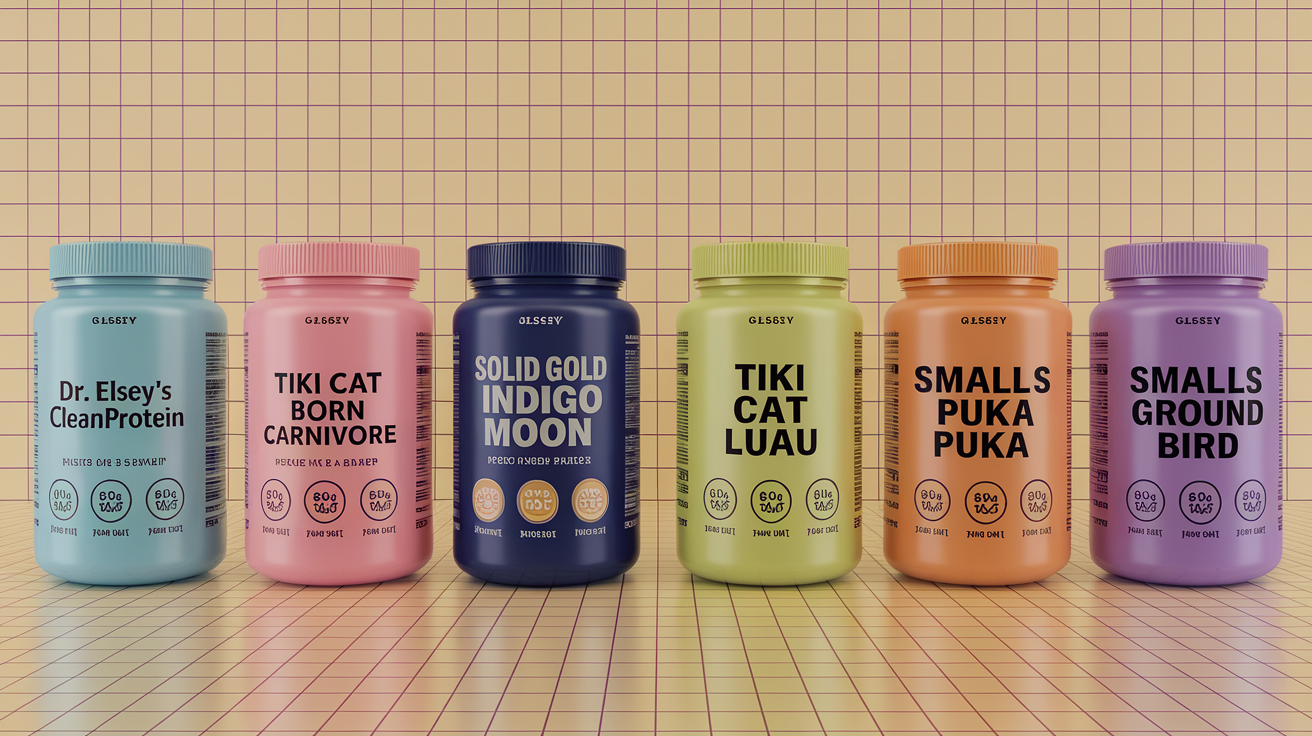
Different brands take different approaches to high protein, low carb feeding. Some focus on very high meat content, others on novel proteins, and a few try to balance protein with affordability.
| Brand | Protein % | Carb Estimate | Format | Key Feature |
|---|---|---|---|---|
| Dr. Elsey’s Cleanprotein | 90% animal based | Very low | Dry | 100% grain and gluten free |
| Tiki Cat Born Carnivore | 47% guaranteed | Low | Dry | Baked to preserve nutrients |
| Solid Gold Indigo Moon | 42% crude | Moderate | Dry | Fresh caught Alaskan fish |
| Tiki Cat Puka Puka Luau | 16% min (approx 70% DM) | Very low | Wet | Grain and gravy free |
| Smalls Ground Bird | 48% dry matter | ~5% DM | Fresh frozen | Lightly cooked, human grade |
| Raised Right | ~59% DM | ~4% DM | Fresh frozen | Full traceability and lab testing |
If you’re managing weight, look at the fresh frozen options or wet foods with very low carb counts. They keep your cat full without the starch load. If you’ve got a picky eater who won’t touch wet food, Dr. Elsey’s and Tiki Cat Born Carnivore offer high protein kibble with fewer carbs than most dry foods. Solid Gold Indigo Moon falls in the middle, good for cats who like fish and don’t need the absolute lowest carb count.
Wet vs Dry High‑Protein, Low‑Carb Cat Foods
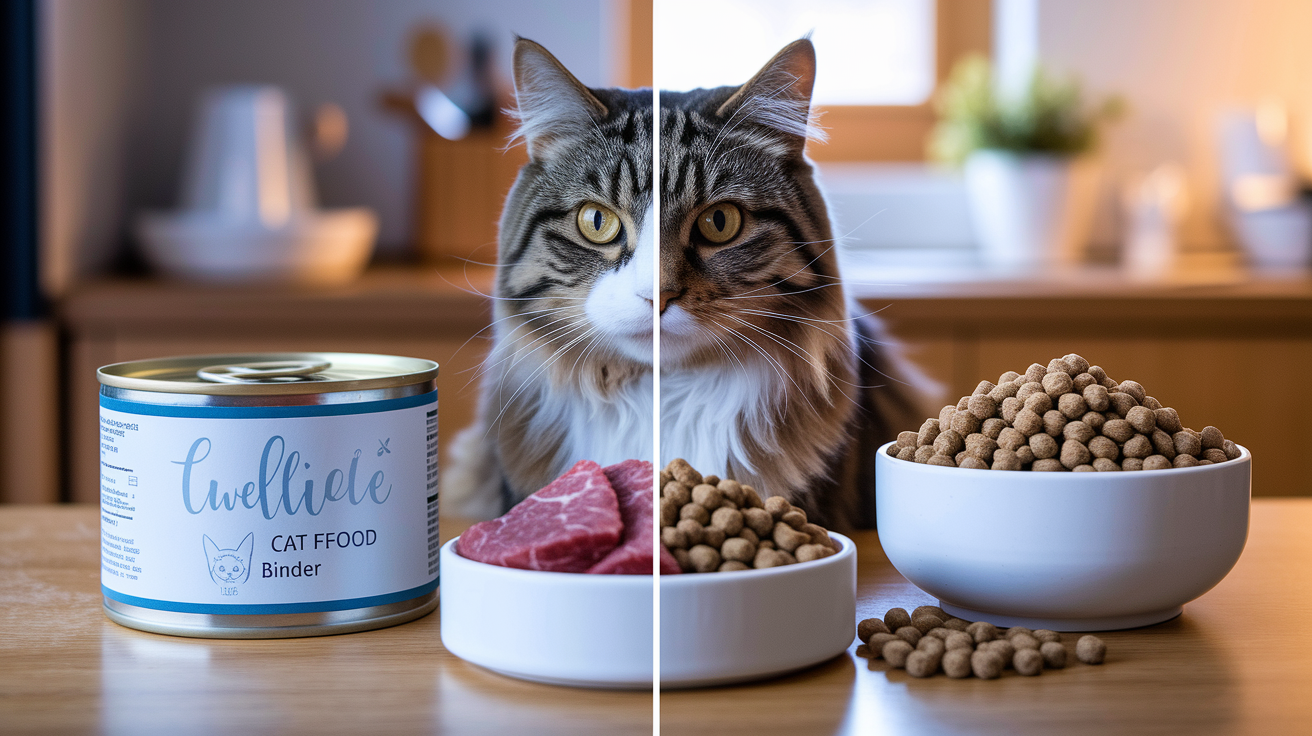
Wet food has one huge advantage: it’s mostly water. That built in moisture helps cats stay hydrated, which is especially important since they don’t have a strong thirst drive. A hydrated cat has healthier kidneys, a lower risk of urinary crystals, and better digestion. Wet foods also tend to be lower in carbohydrates because they don’t need starch to hold their shape the way kibble does.
Dry food can still be high in protein, but it almost always contains more carbs. Kibble needs a binder to keep it from crumbling, and that’s usually a starch: potato, tapioca, peas, or grains. Even grain free kibble can hit 20 to 30% carbs on a dry matter basis. That’s fine for some cats, but not ideal for weight loss or diabetes management. Dry food is convenient though, and if you measure portions carefully, a high protein kibble can work for a healthy, active cat.
Canned foods like Tiki Cat and Weruva offer the lowest carb counts and highest moisture, making them a go to for diabetic or overweight cats. Fresh frozen options like Smalls and Raised Right take it one step further with minimal processing and even lower carb loads, but they require freezer space and a willingness to thaw meals daily.
Wet food pros. High moisture, naturally low carb, easier portion control, supports hydration.
Wet food cons. More expensive per calorie, requires refrigeration after opening, some cats prefer crunch.
Dry food pros. Convenient, longer shelf life, satisfies chewing instinct, easier to free feed.
Dry food cons. Higher carb content, less hydrating, easier to overfeed, can contribute to weight gain.
Feeding Guidelines for High‑Protein, Low‑Carb Diets

Portion control matters more than the formula itself when it comes to weight management. Even the best high protein, low carb food can cause weight gain if you feed too much. Start by checking the feeding guidelines on the package, then adjust based on your cat’s body condition and activity level. Active cats may need more, couch potatoes need less.
When switching to a new food, go slow. Cats have sensitive stomachs, and a sudden change can lead to vomiting or diarrhea. A gradual transition gives their digestive system time to adjust and helps you spot any issues before you’ve committed to a full bag or case.
Here’s a safe 7 day transition plan.
Days 1 to 2. Mix 25% new food with 75% old food.
Days 3 to 4. Mix 50% new food with 50% old food.
Days 5 to 6. Mix 75% new food with 25% old food.
Day 7. Feed 100% new food.
Monitor stool, appetite, and energy throughout. If your cat gets loose stool or refuses to eat, slow down the transition and stay at the current ratio for a few extra days.
Wet foods typically range from 20 to 40 calories per ounce depending on the brand. Weruva recommends about 1 ounce per pound of body weight per day, so a 10 pound cat would get 10 ounces daily, split into two or three meals. Tiki Cat often suggests one 2.8 ounce can per 10 pounds of body weight. If you’re mixing wet and dry, subtract the wet food calories from the daily total and fill the rest with kibble. Use a kitchen scale or measuring cup to keep portions consistent, and track your cat’s weight every two weeks to make sure you’re on the right path.
High‑Protein, Low‑Carb Diets for Special Health Needs
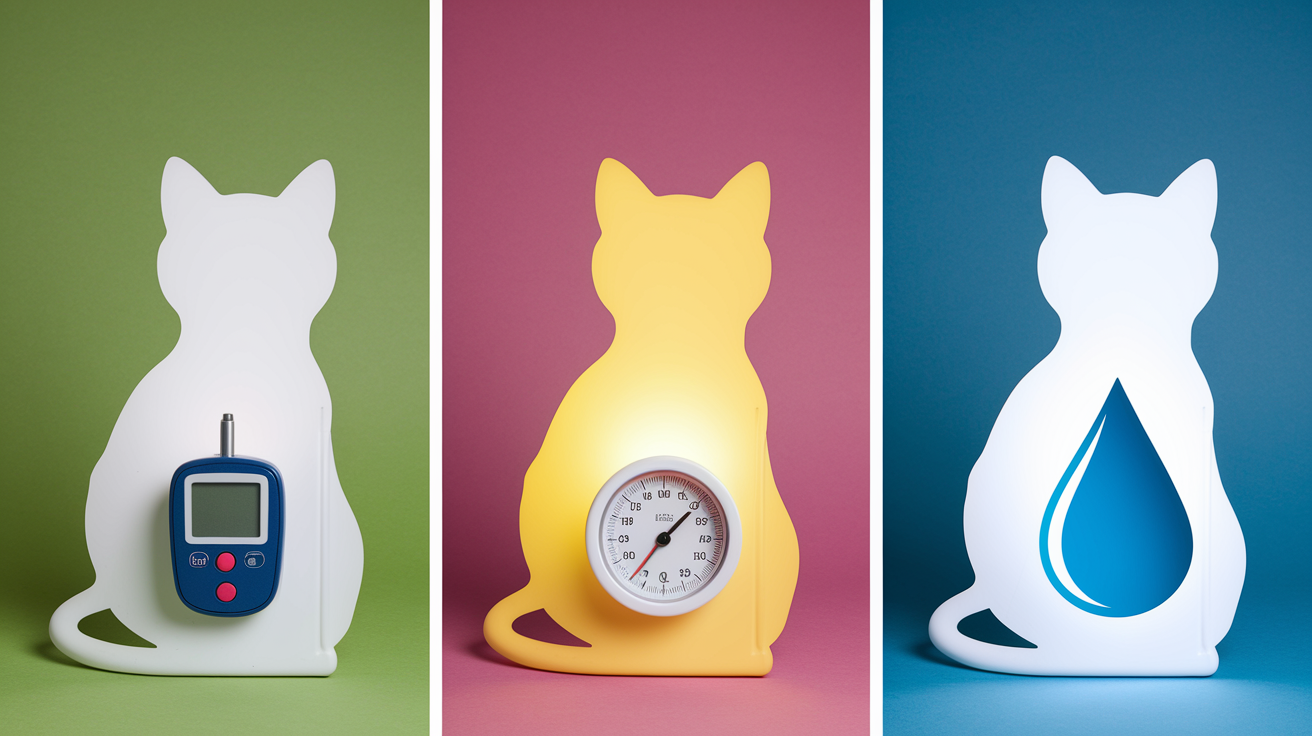
Diabetic cats benefit most from diets with under 10% carbohydrates on a dry matter basis. Lower carbs mean fewer blood sugar spikes, which can reduce or even eliminate the need for insulin in early stage cases. Some cats achieve remission when switched to a high protein, low carb wet food and carefully monitored portions. Prescription diets like Hill’s m/d, Royal Canin Diabetic, and Purina Pro Plan Veterinary DM are formulated specifically for diabetes management, but many standard low carb wet foods work just as well when combined with regular glucose monitoring.
Overweight cats need calorie control more than a special formula. High protein, low carb foods help because protein keeps them full longer, reducing begging and snacking. Wet foods with high moisture content add volume without adding calories, so your cat feels satisfied even on a smaller portion. Senior cats often do well on these diets too, since high protein supports muscle maintenance as metabolism slows down. Urinary tract health improves with wet foods due to the extra water intake, which dilutes urine and reduces crystal formation.
Indoor cats tend to gain weight more easily because they’re less active. A high protein, low carb diet combined with portion control and regular playtime helps keep them lean. Active or outdoor cats can usually handle slightly higher carbs without issue, but protein should still be the priority.
| Need | Protein Level | Carbs Target | Format Recommendation |
|---|---|---|---|
| Diabetic | 40%+ DM | Under 10% DM | Wet or fresh, avoid kibble |
| Overweight | 35%+ DM | Under 15% DM | Wet, portion controlled dry okay |
| Senior | 40%+ DM | Under 15% DM | Wet or soft dry, easy to chew |
| Urinary health | 35%+ DM | No specific target | Wet for hydration |
Cost, Availability, and Quality Standards in High‑Protein, Low‑Carb Foods
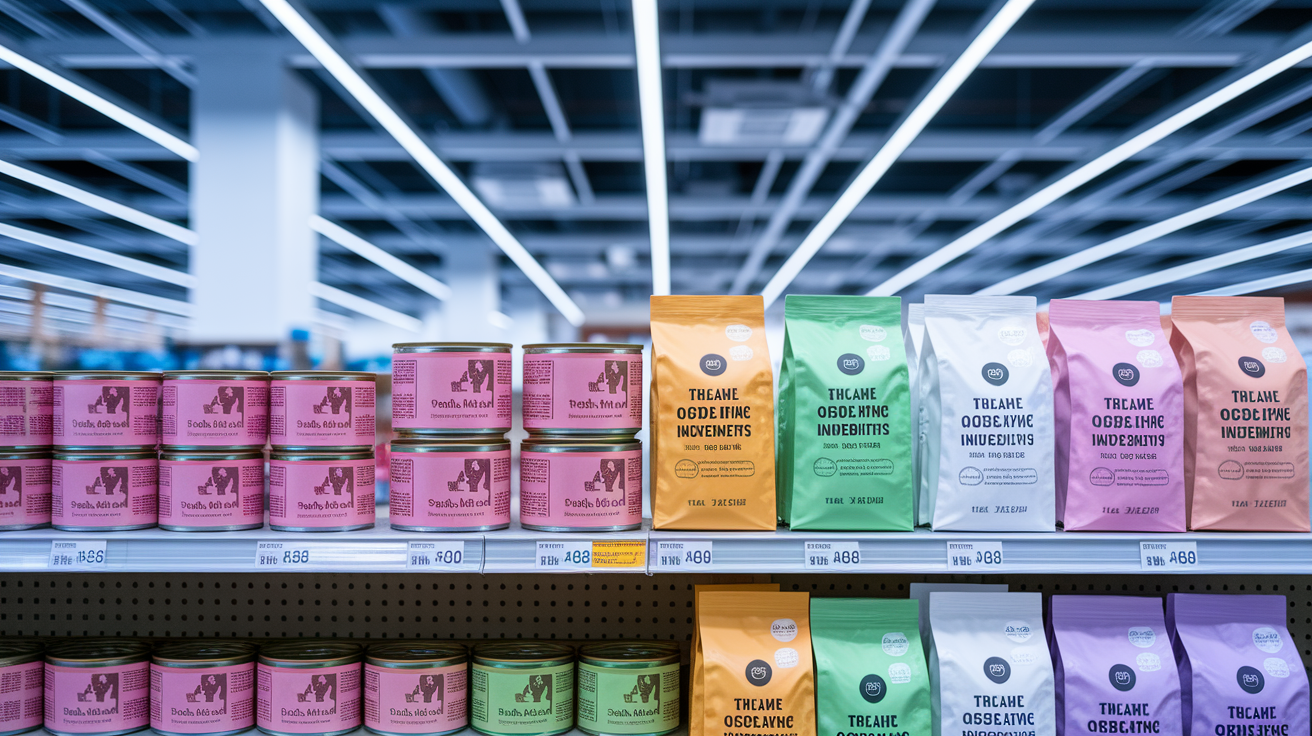
Prices for high protein, low carb cat food range from around $1.64 per day for budget wet options like Dave’s Pet Food to over $5 per day for premium fresh foods like Tiki Cat or Smalls. Fresh subscription services like Smalls and Raised Right typically cost $3 to $4 per day for an average sized cat. Dry foods usually cost less per meal than wet, but you’re often feeding more volume to meet calorie needs, which can even out the difference.
Quality standards vary. Brands like FirstMate manufacture in their own facilities in Canada using traceable North American ingredients, with no recall history. Raised Right uses human grade ingredients with full lab testing for safety. Tiki Cat and Weruva focus on named proteins and grain free formulas, avoiding artificial preservatives, dyes, and flavors. Budget brands may use more by products and fillers, but some still deliver decent protein and low carbs if you read the label carefully.
Here’s a rough breakdown of cost tiers.
Budget tier, $1.50 to $2.50 per day. Dave’s, some Fancy Feast pates, basic grain free canned. Higher carbs, simpler protein sources, but can work for healthy cats.
Mid tier, $2.50 to $4 per day. Tiki Cat, Weruva, Wellness CORE, Blue Buffalo Wilderness. Lower carbs, better ingredients, widely available.
Premium tier, $4 plus per day. Smalls, Raised Right, Just Food for Cats. Human grade, fresh or freeze dried, highest protein and lowest carbs, subscription model.
Dry food range, $0.75 to $2 per day. Dr. Elsey’s, FirstMate, Tiki Cat Born Carnivore. Convenient, but higher carbs than wet options.
Homemade, Raw, and Fresh High‑Protein, Low‑Carb Alternatives
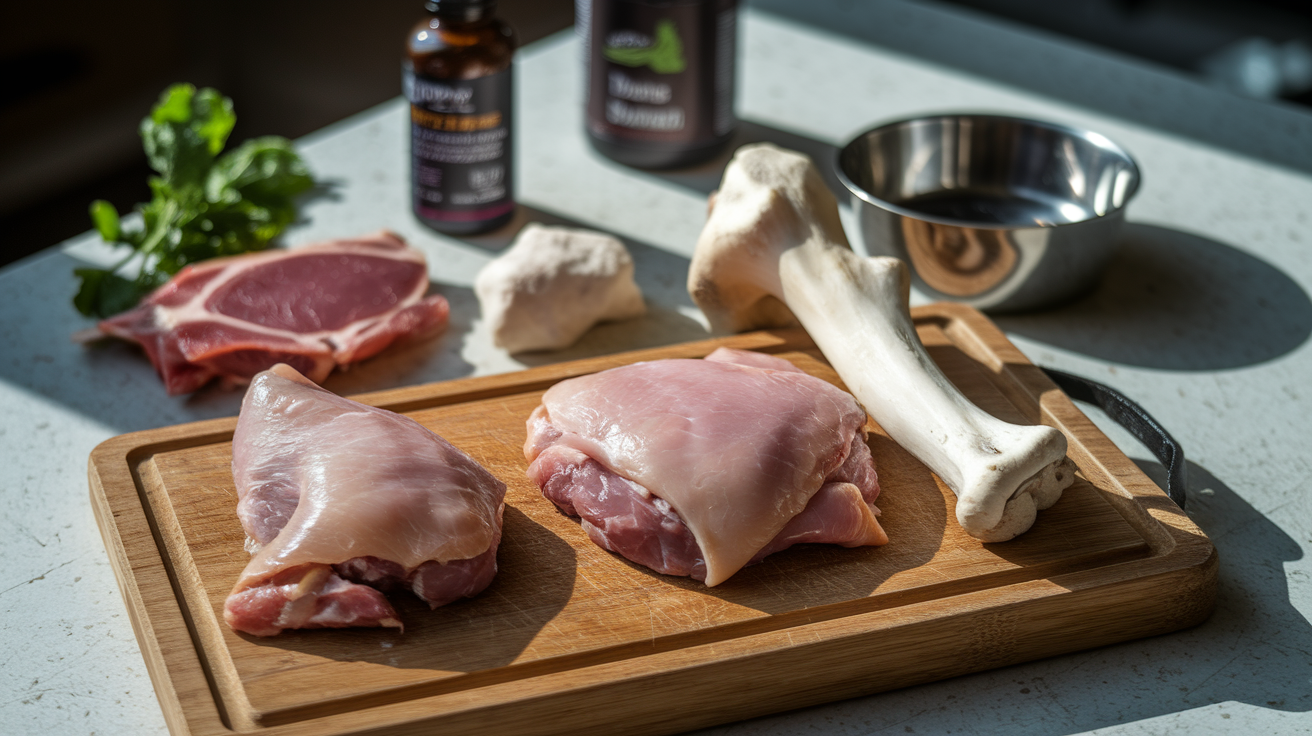
Raw diets offer the lowest carbohydrate content because they’re built around muscle meat, organs, and bones with no starch binders or fillers. Wild cats eat less than 10% carbs on a dry matter basis, getting only what’s in the stomach contents of their prey. A properly balanced raw diet mimics that ancestral eating pattern and can be a good fit for cats who thrive on minimal processing. Brands like Raised Right use human grade ingredients with full traceability and lab testing to reduce food safety risks.
Fresh cooked options like Smalls lightly cook meat to reduce bacterial load while keeping nutrient density high. These foods come frozen and require daily thawing, but they deliver 50 to 60% protein on a dry matter basis with carbs around 4 to 5%. Smalls also offers freeze dried puffs as toppers to help picky cats transition from kibble to wet food. Just Food for Cats works with veterinarians to create custom formulations for cats with special health needs, though their carb count is higher than Smalls or Raised Right.
If you’re making food at home, supplementation is required to prevent nutritional deficiencies. Cats need specific nutrients that aren’t always present in enough quantity when you’re just feeding meat and veggies. Work with a veterinary nutritionist or use a tested recipe from a trusted source.
Common supplements required in homemade diets.
Taurine. Essential amino acid that prevents heart disease and blindness, must be added since cooking reduces natural levels.
Omega 3 fatty acids. Supports skin, coat, and anti inflammatory response, often from fish oil.
Calcium. Balances phosphorus in meat, usually from ground bone or calcium carbonate.
Final Words
You’ve seen what makes a high‑protein, low‑carb approach work: lots of animal protein, carbs kept low (aim under about 10%), and wet food to help with hydration and urinary health.
You also learned label-reading basics, which ingredients to prefer, and why slow transitions and portion control matter for weight and digestion.
If you want to try high protein low carb cat food, pick a high‑meat wet or low‑carb formula, switch slowly over 7–10 days, watch weight and stool, and check with your vet as needed. Small, steady steps pay off.
FAQ
Q: What cat food is high in protein and low in carbs? What is high in protein but low in carbs?
A: The cat foods high in protein but low in carbs are wet, meat-based formulas with 30%+ protein and under about 10% carbs (dry matter). Look for chicken, turkey, salmon, or organ meats first.
Q: Is high-protein good for overweight cats? Is high-protein cat food good for diabetic cats?
A: High-protein, low-carb diets can help overweight and diabetic cats by increasing fullness, preserving muscle, and stabilizing blood sugar; vets often recommend wet, low-carb formulas and gradual transition with monitoring.