
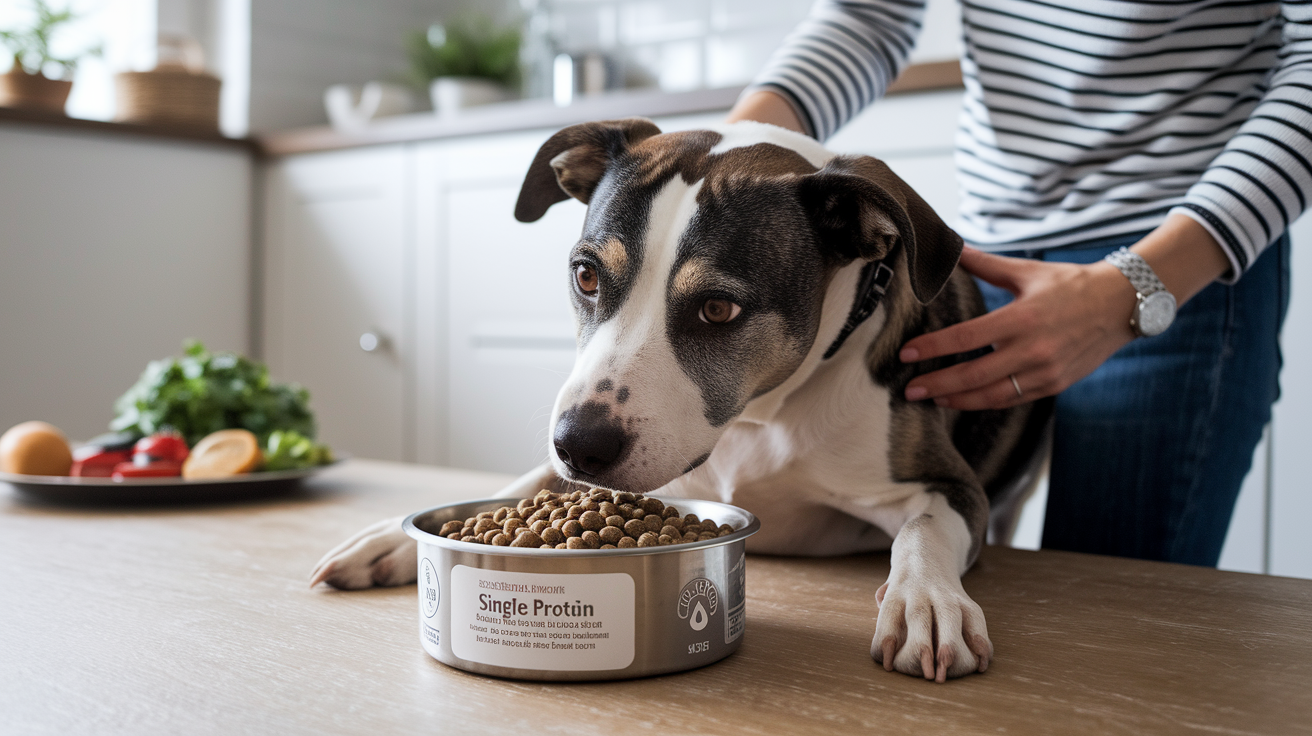
Think swapping to a grain-free bag will stop your dog’s itching?
Most dog food allergies — about 95 percent — come from animal proteins, not grains.
Limited ingredient diets strip meals down to one or two proteins and a single carb, so you can cut the number of possible triggers and actually figure out what helps.
In this post you’ll find proven limited-ingredient formulas, tips for picking a true novel protein, and a simple, safe plan to use them so you can stop guessing and start seeing results.
Choosing and Understanding Limited Ingredient Diets for Dog Allergy Relief

Your dog’s immune system can turn on them, mistaking a harmless protein in their food for something dangerous. When that happens, the body cranks out IgE antibodies that trigger histamine and other inflammatory stuff every single time your dog eats that protein. About 95 percent of food allergies in dogs come from proteins. Beef, chicken, dairy, wheat, eggs, lamb, soy, and gluten are the usual suspects. The weird thing? This reaction can pop up after your dog’s eaten the same food for months or even years without any trouble. Some dogs inherit a genetic setup that makes them allergy prone. Others just get sensitized through eating the same things over and over. All that immune activity creates inflammation that shows up as itchy skin, stomach problems, or both.
Limited ingredient dog food strips things down to one or two animal proteins and one carb source. You’re looking at maybe six whole food ingredients total in these recipes. When you cut out everything unnecessary, you shrink the number of potential triggers hitting your dog at every meal. A cleaner label makes it way easier to figure out which specific protein or carb is causing the mess. These formulas get made on separate production lines so cross contamination from other proteins doesn’t happen. They also skip fillers like corn and artificial preservatives like BHA, which can irritate sensitive stomachs even when allergies aren’t the main issue.
When you’re picking a limited ingredient formula, you’ll want to avoid these six most common allergens:
- Beef
- Chicken
- Dairy products
- Wheat and gluten
- Eggs
- Soy
The protein should be something your dog’s never eaten before. That’s called a novel protein. Duck, rabbit, venison, buffalo, kangaroo, and pheasant work well because most commercial foods stick to chicken or beef. Game meats and less common options reduce the chance your dog’s immune system already has antibodies ready and waiting. The carb source matters too. Novel carbs like squash, amaranth, millet, and quinoa tend to be gentler on sensitive digestive systems. Sweet potatoes and peas show up in tons of grain free foods, but some dogs still react to them. Even grain free formulas can cause trouble if they’ve got starches that break down into sugars, feeding yeast and triggering itching.
Talk to your vet before you switch to a limited ingredient diet, especially if your dog’s showing signs like intense itching around the head and face, constant paw licking, ear infections, vomiting, diarrhea, or unexplained weight loss. Most food allergies appear after age two. Your vet can help rule out environmental allergies to pollen, dust, and chemicals, which actually cause more than 90 percent of dog allergies overall. A limited ingredient diet won’t fix environmental triggers, but it can help you figure out whether food’s contributing to the problem. Avoidance is the only reliable solution once you identify a food sensitivity. A simplified diet lets you control exactly what goes into your dog’s bowl while you’re figuring out what works.
Identifying Allergies and Using Limited Ingredient Diets as a Diagnostic Tool

Food allergies and food intolerances look similar but they’re not the same thing. A true food allergy involves the immune system producing IgE antibodies and histamine, which causes extreme itchiness affecting the skin, paws, and ears. Food intolerances happen when the digestive system can’t properly break down or absorb certain substances, leading to vomiting, diarrhea, and gas. Intolerances don’t involve the immune system. They make your dog temporarily sick or uncomfortable, but they don’t trigger the inflammatory cascade that causes scratching and skin infections. Environmental allergies to pollen, mold, and dust mites cause itchy paws and body but usually spare the face and ears. If your dog’s itching concentrates around the head, mouth, and ears, food’s a more likely suspect.
An elimination diet is the most reliable way to confirm food allergies and nail down the exact trigger. Here’s how it works:
Pick one novel protein and one carb your dog’s never eaten. Bison with barley, rabbit with squash, or venison with quinoa are examples. The protein has to be completely new to your dog’s diet history.
Feed only that combination for eight to twelve weeks. No treats, no table scraps, no flavored medications, no rawhide, nothing else. Even a small bite of something else can restart the whole process.
Monitor symptoms every week. Take notes on scratching frequency, stool quality, energy level, and any skin changes. Improvement usually shows up within four to six weeks if food was the problem.
After symptoms improve, reintroduce one old ingredient at a time. Add the suspect food back into meals for seven to fourteen days. If symptoms return within days to two weeks, you’ve found a trigger.
Remove the problem ingredient and wait for symptoms to settle again. This confirms the connection between that specific food and your dog’s reaction.
Repeat the reintroduction process with other ingredients. Some dogs react to multiple proteins or carbs. Testing one at a time builds a complete picture of what’s safe.
Symptom patterns during elimination diets tell you whether food’s the real culprit. If itching and digestive issues improve during the novel protein phase and return when you reintroduce chicken, you know chicken’s a problem. If symptoms don’t improve at all after twelve weeks on a strict limited ingredient diet, food probably isn’t the trigger. Environmental allergies, contact allergies, or other skin conditions may be causing the trouble instead. Digestive symptoms like vomiting and diarrhea during the elimination phase suggest your dog might have an intolerance to the novel protein or carb you picked, not just the old ingredients.
Work with your vet throughout the elimination diet process, especially if symptoms are severe or your dog’s losing weight. Veterinary dermatologists and allergists specialize in complex cases and can run additional tests to rule out infections, parasites, and autoimmune conditions. Some vets recommend prescription hydrolyzed protein diets, where proteins are broken into pieces too small to trigger an immune response. These diets bypass the guessing game but cost more than over the counter limited ingredient foods. Your vet can also help you avoid nutritional gaps during long elimination trials. A limited ingredient diet must still provide complete and balanced nutrition with all 23 essential vitamins and minerals required by AAFCO standards for your dog’s life stage.
Comparing Limited Ingredient vs Hypoallergenic and Grain Free Dog Food

Limited ingredient dog food, hypoallergenic formulas, and grain free diets are three different approaches that people often confuse. Limited ingredient means fewer total components, usually one protein and one carb, but those ingredients aren’t necessarily hypoallergenic. A limited ingredient chicken and rice formula still contains chicken, which is one of the most common allergens. Hypoallergenic dog food specifically avoids known common allergens like beef, chicken, dairy, wheat, and soy. Hypoallergenic formulas often use hydrolyzed proteins, where the protein molecules are broken apart so small the immune system can’t recognize and react to them. Limited ingredient foods don’t always use hydrolyzed proteins, so they may still trigger allergies if the protein source is one your dog reacts to.
Grain free dog food removes wheat, corn, rice, barley, and oats, but it doesn’t automatically help with allergies. Only about 10 percent of food allergies in dogs come from grains. Most reactions trace back to animal proteins. Grain free formulas typically replace grains with potatoes, sweet potatoes, peas, and lentils. According to holistic veterinarian Judy Morgan, starches in potatoes and legumes break down into sugars that can feed yeast and cause itching, even when grains are removed. So a grain free food might worsen skin issues if yeast overgrowth is part of the problem. A dog with a true wheat allergy benefits from grain free food, but a dog allergic to chicken won’t improve just because you remove grains.
Here’s how these three categories differ:
Limited Ingredient: Fewer ingredients overall, making it easier to identify triggers. Protein and carb sources vary and may still be common allergens. Good for elimination diets when you choose novel proteins.
Hypoallergenic: Specifically formulated to exclude common allergens. Often includes hydrolyzed proteins. Usually more expensive. Best for dogs with confirmed multiple allergies.
Grain Free: Removes all grains. Replaces them with starches like potato or legumes. Helpful only if grains are the actual allergen. Not designed to address protein allergies.
Marketing uses these terms loosely. A food labeled “limited ingredient” might still contain chicken fat, fish oil, or vague terms like “poultry,” hiding specific proteins that cause reactions. Veterinary prescription diets face stricter quality controls and clearer definitions than over the counter products. When choosing any formula, read the full ingredient list and look for whole, named proteins like “deboned lamb” or “rabbit” rather than generic “meat meal” or “poultry by product.”
Navigating Ingredient Labels When Choosing Limited Ingredient Dog Food

The first ingredient listed on any dog food label should be a whole animal protein, not a protein meal or by product. Whole proteins like “deboned turkey” or “lamb” tell you exactly what your dog’s eating. Protein meals, like “chicken meal,” are rendered products where moisture’s been removed. While meals aren’t necessarily low quality, they concentrate protein and can sometimes include parts your dog hasn’t been exposed to before, like organs and bones. By products are parts of an animal besides muscle meat, which might include liver, kidneys, and other organs. By products vary in quality and are harder to track during an elimination diet because you don’t know exactly which organ tissues are included batch to batch.
Hidden allergens sneak into limited ingredient formulas more often than you’d expect. Chicken fat appears in many dog foods as a cheap, stable fat source, even in formulas marketed as beef or lamb. If your dog’s allergic to chicken, chicken fat can still trigger a reaction. Fish oil shows up frequently as an omega 3 supplement, problematic for dogs with fish sensitivities. Vitamin and mineral premixes add dozens of micro ingredients to meet AAFCO requirements, and while the amounts are small, sensitive dogs sometimes react to specific vitamins or their carriers. Vague terms like “poultry” hide the true protein source. Poultry could mean chicken, turkey, duck, or a rotating mix depending on what’s cheapest that month. Botanicals, probiotics, and prebiotics get added to many limited ingredient foods to support digestion, but they’re still additional ingredients that can cause sensitivities.
In practical terms, “limited ingredient” has no legal definition. Manufacturers typically count only major protein, carb, and fat sources when they claim a formula is limited. A food might have six main ingredients but thirty total ingredients once you include vitamins, minerals, and preservatives. Taste of the Wild Prey Limited Ingredient line, for example, lists four major ingredients like beef, lentils, tomato pomace, and sunflower oil, but the full label includes more. Triumph Pet Food Wild Spirit Limited Ingredient Lamb & Brown Rice contains six major ingredients: deboned lamb, lamb meal, brown rice, whole barley, peas, and chicken fat. That chicken fat matters if your dog can’t tolerate chicken. When you’re using food as a diagnostic tool, every ingredient counts.
| Hidden Ingredient | Why It’s a Problem |
|---|---|
| Chicken fat | Appears in beef, lamb, and fish formulas. Triggers reactions in chicken allergic dogs even when chicken isn’t the main protein. |
| Fish oil | Added for omega 3s. Problematic for dogs with fish sensitivities. Hard to avoid because it’s in most premium foods. |
| Natural flavor | Vague term that can include proteins from any animal source. May introduce allergens you’re trying to eliminate. |
Product Types: Limited Ingredient Dry Food, Wet Food, and Raw Food
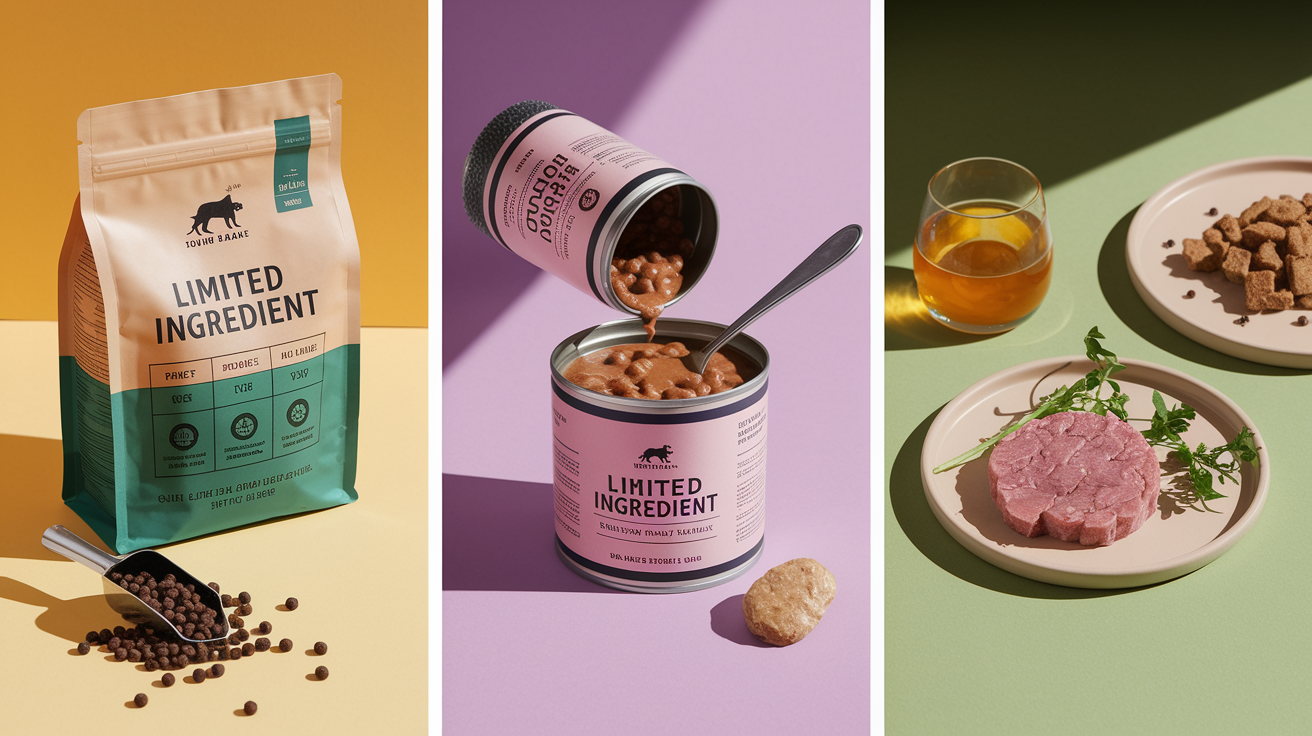
Dry kibble is the most convenient and affordable option, but it typically contains more carbs than wet or raw food. Limited ingredient dry foods have to balance protein, fat, and carbs to create a shelf stable kibble that meets calorie needs. Even with a simplified ingredient list, kibble requires some starches to bind the formula and create the shape. Kibble also includes preservatives, though natural options like mixed tocopherols (vitamin E) are safer than artificial ones like BHA. Dogs with severe allergies sometimes do better on kibble because it’s consistent batch to batch and easier to control during strict elimination diets. Kibble tends to have fewer calories per cup than commercial formulas loaded with fillers, so you may need to feed slightly more to maintain your dog’s weight.
Wet food contains more animal protein and less carb than kibble, and it doesn’t require preservatives because it’s sealed in cans or pouches. Higher moisture content can help dogs stay hydrated and makes the food more palatable for picky eaters. Wet limited ingredient formulas often have cleaner labels because they don’t need binding agents or shelf stable additives. The tradeoff is cost. Wet food’s more expensive per meal, and opened cans need refrigeration. Wet food works well for dogs with both food allergies and sensitive stomachs because the soft texture is easier to digest. You can also mix wet food with kibble to increase protein without switching formulas entirely.
Raw food gives you the tightest control over ingredients. When you prepare complete and balanced raw meals, you know exactly what goes into the bowl. No fillers, no artificial colors, no hidden allergens. Raw food provides extra moisture and keeps nutrients intact because there’s no high heat processing. Some owners use raw limited ingredient diets during elimination trials, choosing a single novel protein like rabbit or bison and adding a simple carb like squash. The downside is preparation time, cost, and the need to ensure the diet meets all nutritional requirements. Unbalanced raw diets can cause deficiencies over time, especially in calcium, vitamin D, and certain B vitamins. If you choose raw, work with a veterinary nutritionist to confirm the meals are complete.
Here’s a quick comparison:
Dry kibble: Most affordable. Consistent. Requires preservatives. Higher carb content. Easy to measure and store.
Wet food: Higher protein. No preservatives needed. More expensive. Requires refrigeration after opening. Better hydration.
Raw food: Complete ingredient control. No processing or additives. Requires careful planning for nutritional balance. Higher cost and prep time.
Freeze dried and air dried: Middle ground between kibble and raw. Minimal processing. Lightweight and shelf stable. Expensive but convenient for travel and portion control.
Managing Long Term Allergies With Limited Ingredient Dog Food

Once you identify your dog’s triggers and find a limited ingredient formula that works, the next step is maintaining that improvement over time. Dogs can develop new allergies or intolerances as they age, so ongoing vigilance matters. Monitor your dog’s stool quality, coat condition, energy level, and skin health every week. If itching or digestive upset returns, check whether the formula changed. Manufacturers sometimes reformulate products without obvious labeling updates. A protein source that worked for years might suddenly include a new fat or a different processing method. Keep a food journal with batch numbers and purchase dates so you can trace any changes.
Quality ingredients affect how well your dog absorbs nutrients. Whole proteins, healthy fats like omega 3 fatty acids from fish or flaxseed, and digestible carbs support complete nutrition even on a simplified diet. Omega 3s reduce inflammation throughout the body, which can calm allergic responses and improve coat health. Human grade limited ingredient foods meet human consumption quality standards at every production step, ensuring consistency and reducing contamination risks. Human grade doesn’t automatically mean better, but it often signals stricter sourcing and handling. Probiotics and prebiotics sometimes appear in limited ingredient formulas to support digestive health. These can help if your dog’s gut was damaged by chronic inflammation, but they’re also additional ingredients that sensitive dogs might react to. Add them cautiously if your dog’s stable on a very simple diet.
Preventing future flare ups requires managing treats, table scraps, and non food items your dog chews. Treats are a common source of hidden allergens. Look for single ingredient treats that match your dog’s safe protein, like freeze dried rabbit or dehydrated sweet potato. Avoid rawhide, dental chews with multiple ingredients, and flavored medications that contain beef or chicken. Children and other household members need clear instructions not to feed the dog anything outside the approved list. Even small bites can restart the allergic reaction cycle. If your dog gets into something they shouldn’t, don’t panic. One exposure usually won’t cause permanent harm, but symptoms may return for a few days to a week. Return to the strict limited ingredient diet and watch for the reaction to settle.
Final Words
You can spot common triggers, pick a single or novel protein, and use an elimination trial to find what’s bothering your dog. Limited ingredient diets cut exposure so reactions show up sooner.
Read labels closely for hidden allergens, choose a carb and format you can stick with, and watch stool, skin, and energy during the transition.
Work with your veterinarian if symptoms are severe or don’t improve.
Trying limited ingredient dog food for allergies with patience and a plan often brings relief — and a calmer, happier dog.
FAQ
Q: What is the best food for dogs with allergies and the best dog food with the least amount of ingredients?
A: The best food for dogs with allergies and lowest‑ingredient options are limited ingredient diets with one novel protein (duck, rabbit, venison) and one simple carb (squash, millet), labeled complete and used under vet guidance.
Q: Is limited ingredient dog food good for allergies?
A: Limited ingredient dog food is often helpful for allergies because it cuts exposure to likely triggers—especially proteins—and works well for elimination trials, though individual results vary and a vet can help guide the process.
Q: What food should I avoid for a dog with skin allergies?
A: Foods to avoid for a dog with skin allergies include common protein allergens—beef, dairy, chicken, eggs, lamb—and frequent culprits like wheat, soy, corn, plus artificial preservatives and fillers that may worsen symptoms.