
Is your cat getting the right amount of wet food each day, or are you guessing with cans on the counter?
Wet food portions aren’t one-size-fits-all, they depend on your cat’s weight, age, and how many calories are in each can.
In this post I’ll show a simple, step-by-step way to turn calories into cans per day, plus real examples for kittens, adults, seniors, and weight changes.
You’ll learn which label numbers matter, how to adjust for spayed or nursing cats, and a quick checklist to test if the amount you’re feeding is working.
Daily Wet Food Portions for Cats by Weight and Age
Feeding amounts depend on your cat’s weight, age, and the calorie content of the food you choose. Most wet foods contain 70-90 calories per standard 3-ounce can, but the exact number varies by brand and formula. Start by checking the label for calorie information, then match portions to your cat’s specific needs.
| Cat Weight (lbs) | Adult Cat (cans/day) | Kitten (cans/day) | Senior Cat (cans/day) |
|---|---|---|---|
| 5 | 1.5-2 | 3-3.5 | 1.5 |
| 8 | 2.5-3 | 5-5.5 | 2-2.5 |
| 10 | 3-3.5 | 6-6.5 | 2.5-3 |
| 12 | 3.5-4 | 7-7.5 | 3-3.5 |
| 15 | 4-5 | 8-9 | 3.5-4 |
These numbers assume 3-ounce cans at roughly 90 calories each. If your cans are different sizes, convert accordingly. A 5.5-ounce can typically contains about 160-165 calories, roughly double a standard 3-ounce can. So if your 10-pound adult cat needs 3 standard cans daily, that translates to about 1.5 to 2 larger cans. Pouches vary widely. Some contain 1.4 ounces and 35-40 calories, others hold 3 ounces at 70-80 calories. Check the label for “kcal per can” or “kcal per 100g” and do the math based on your cat’s calorie needs.
Real-world examples help. Farmina recommends 3.25 cans per day for a 10-pound cat eating their N&D Prime formula in 2.5-ounce cans. A 5-pound kitten might get 3.5 cans of their 2.46-ounce kitten formula daily. An overweight 10-pound adult cat could receive 2.5 cans per day as part of a weight loss plan. These recommendations work because they’re based on the specific calorie content of each formula and the individual cat’s needs, not generic rules.
Calculating Your Cat’s Wet Food Needs Based on Calories
Start with a baseline. Most adult cats need about 20 calories per pound of body weight daily for maintenance. A 10-pound cat needs roughly 200 calories to maintain weight, though individual metabolism varies. This baseline gives you a starting point before adjustments.
Think of calorie calculation as putting together a simple formula. First, you need to know if your cat’s current weight is healthy or if you’re working toward an ideal weight. Use the ideal weight as your baseline number. A cat who weighs 12 pounds but should weigh 10 pounds gets calculations based on 10 pounds, not 12.
Here’s the step-by-step process:
- Determine your cat’s ideal body weight in pounds
- Calculate baseline calories using 20 calories per pound as the adult maintenance starting point
- Apply life stage multipliers. Kittens need 2x the baseline, pregnant or nursing cats need 1.25 to 1.5x baseline, senior cats need about 0.9x baseline
- Apply status adjustments. Spayed or neutered cats experience roughly a 30% drop in metabolism, so reduce by 30%. Cats with hyperthyroidism may need significantly more
- Check the wet food label for calories per can or pouch, then divide your cat’s total daily calorie needs by the per-can calories to get the number of cans needed
Let’s work through complete examples. A standard spayed adult cat weighing 10 pounds needs 200 calories (10 pounds × 20 calories). Reduce by 30% for spay status: 200 × 0.7 = 140 calories daily. If you’re feeding a food with 70 calories per 3-ounce can, that’s 140 ÷ 70 = 2 cans per day. If your brand has 90 calories per can, it’s 140 ÷ 90 = about 1.5 cans daily.
For a growing kitten, the math changes. A 5-pound kitten needs 100 calories baseline (5 × 20), then multiply by 2 for growth: 100 × 2 = 200 calories per day. Using 60-calorie cans of kitten formula, that’s 200 ÷ 60 = roughly 3.5 cans daily. A pregnant cat weighing 8 pounds needs 160 calories baseline (8 × 20), then multiply by 1.4 for pregnancy: 160 × 1.4 = 224 calories daily. With 80-calorie cans, that’s 224 ÷ 80 = about 2.8 cans, rounded to 3 cans.
The sections ahead will reference this calculation method when discussing weight management, activity levels, and combination feeding. Once you understand how to calculate your specific cat’s needs, adjusting for different situations becomes straightforward. You’re not guessing. You’re working from actual calorie requirements matched to your cat’s individual metabolism and life circumstances.
Life Stage Feeding Requirements and Schedules
Life stage determines both how many calories your cat needs and how often you should offer meals. A kitten burning through growth energy needs different portions and timing than a senior cat with a slower metabolism. Use the calorie calculation method from the previous section, then structure meals around your cat’s developmental stage.
Kitten Feeding Requirements and Schedule
Apply the 2x calorie multiplier when calculating portions for kittens. A 6-pound kitten needs about 240 calories daily (6 pounds × 20 calories × 2), compared to 84 calories for an adult cat of the same weight. Growth demands consistent fuel, so divide those calories across 3 to 4 meals until your kitten reaches 6 months old. After 6 months, transition gradually to 2 to 3 meals per day as growth slows.
Look for wet foods with an AAFCO statement confirming they’re complete and balanced for growth or all life stages. Kitten-specific formulas contain higher protein and fat levels to support development. Feed at consistent times. 7am, noon, 5pm, and 9pm works for many households. By 6 months, you can drop the midday feeding if your schedule requires it.
Adult Cat Maintenance Feeding and Timing
Cats between 1 to 7 years typically do well on baseline calculations without multipliers, though you’ll adjust down by 30% if they’re spayed or neutered. A twice-daily schedule works for most adults. Morning around 7 to 8am and evening around 6 to 7pm. This timing mirrors natural hunting patterns and keeps cats satisfied without begging.
Split the daily portion evenly between meals. If your calculation shows 2.5 cans needed, serve 1.25 cans at each feeding. Remove uneaten food within 2 hours. Leaving wet food out longer risks bacterial growth, especially in warm rooms. Cats typically finish meals within 15 to 20 minutes when portions match their needs.
Senior Cat Nutritional Adjustments and Meal Frequency
Senior cats, typically 10+ years old, need about 10% fewer calories due to reduced activity. Apply the 0.9x multiplier to your baseline calculation. A 10-pound senior needs roughly 126 calories daily if spayed (10 × 20 × 0.7 × 0.9). Wet food benefits aging cats because it’s easier to chew when dental issues develop and provides hydration when kidney function declines.
Many seniors prefer 2 to 3 smaller meals rather than two larger portions. Their digestion slows, and smaller amounts prevent discomfort. Warming food for 10 to 15 seconds in the microwave increases scent appeal, helpful when appetite fades or nasal congestion reduces smell sensitivity. Aim for slightly warm to touch temperature, not hot.
Pregnant and Nursing Cat Needs and Feeding Approach
Pregnant cats need 25 to 50% more calories than maintenance levels, depending on litter size and pregnancy stage. A pregnant 8-pound cat might need 224 to 280 calories daily instead of the typical 112. Nursing demands even more. Some cats need double their normal intake to produce enough milk.
Feed pregnant and nursing cats 3 to 4 times daily with free access to food during nursing’s peak demands. Use nutrient-dense formulas designed for growth or all life stages. After weaning, gradually transition back to maintenance portions over 1 to 2 weeks to avoid digestive upset. Reduce portions by about 15 to 20% every few days until you reach pre-pregnancy amounts.
Scheduled feeding with wet food gives you clear data on what your cat actually eats. Free feeding with dry food makes portion control guesswork. With scheduled meals, you notice appetite changes within days, catching potential health issues early.
Adjusting Wet Food Amounts for Weight Management
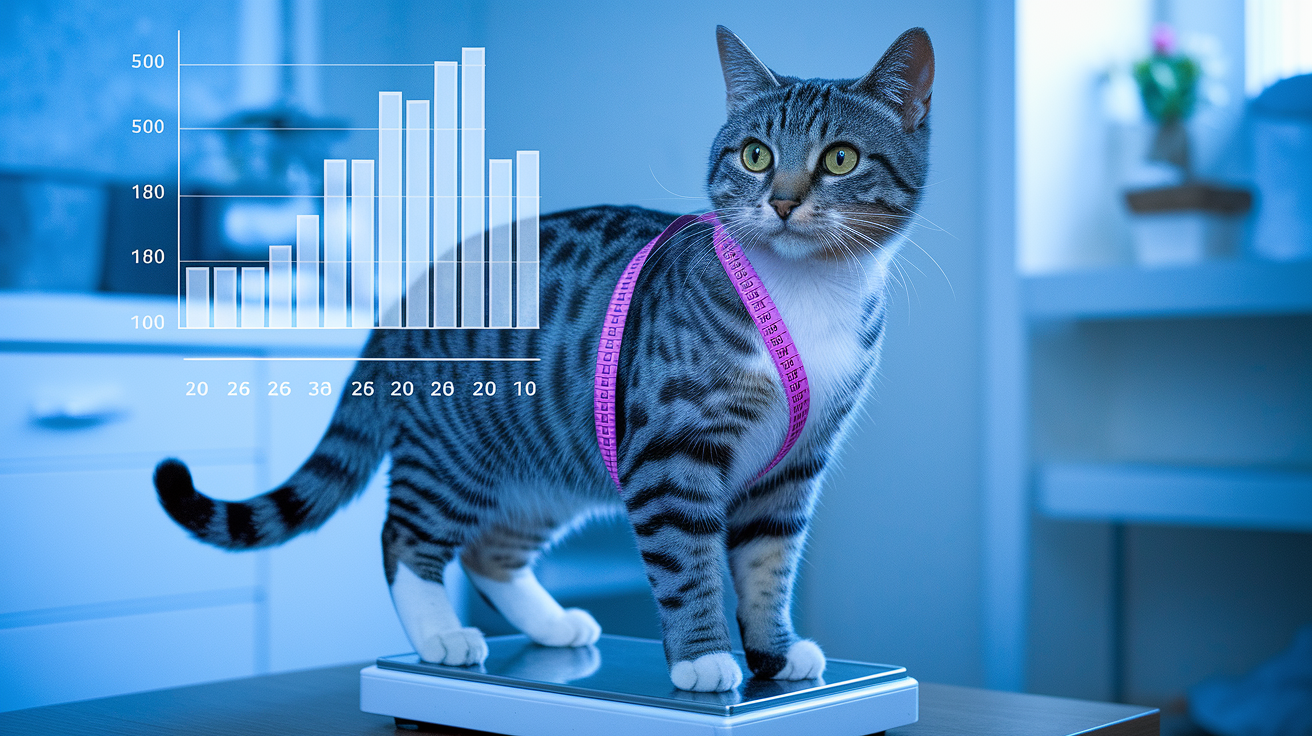
Recognizing when your cat needs more or less food starts with honest assessment. Can you feel ribs easily with light pressure? Does your cat have a visible waist when viewed from above? If ribs disappear under fat or your cat’s belly hangs low, weight loss makes sense. If ribs protrude and hip bones jut out sharply, weight gain matters. Your vet can score body condition on a 9-point scale, removing guesswork.
Weight loss requires patience and precision. Calculate your cat’s baseline calories using ideal weight, not current weight. Then reduce by 15 to 20% for gradual loss. A 12-pound cat who should weigh 10 pounds needs about 98 to 112 calories daily (10 × 20 × 0.7 × 0.8 for a 20% reduction). If you’re using 80-calorie cans, that’s 1.25 to 1.4 cans per day. Compare this to the 2.5 cans that same cat might eat at maintenance weight. The real example: that overweight 10-pound cat getting 2.5 cans of Farmina’s 2.46-ounce formula instead of 3.25 maintenance cans represents about a 23% reduction. Weight should drop about 1 to 2% of body weight per week. Half a pound per month for a 10-pound cat. Faster loss risks health complications.
Weight gain strategies flip the approach. Use current weight for calculations, then increase portions by 10 to 15%. An underweight 7-pound cat who should weigh 9 pounds needs roughly 126 to 140 calories daily (7 × 20 × 0.9 to 1.0) to maintain current weight, so bump to 140 to 160 calories to add weight. Select higher-calorie wet foods when possible. Some premium formulas contain 110 to 120 calories per 3-ounce serving versus 70 to 80 in lighter formulas. Consider adding a third meal during weight gain phases to avoid overwhelming the digestive system with large portions. For cats struggling with weight management, weight management for cats offers guidance on selecting appropriate lower-calorie formulas.
Monitor these signs weekly:
- Body condition score: feel for rib coverage every week
- Visible waist: check the overhead view for definition
- Energy levels: weight loss shouldn’t reduce activity or playfulness
- Appetite satisfaction: cats shouldn’t beg constantly or seem distressed between meals
- Regular weigh-ins: use a home scale or vet visits, tracking changes in a notebook
Wet food’s lower calorie density helps weight management naturally. The high water content means cats get satisfying volume without excess calories. A cup of wet food typically contains 150 to 200 calories, while the same volume of dry food might pack 400 to 500 calories. Just don’t underestimate portions. Too few calories triggers muscle loss alongside fat loss, weakening your cat rather than improving health.
Activity Level and Indoor vs Outdoor Cat Feeding Differences
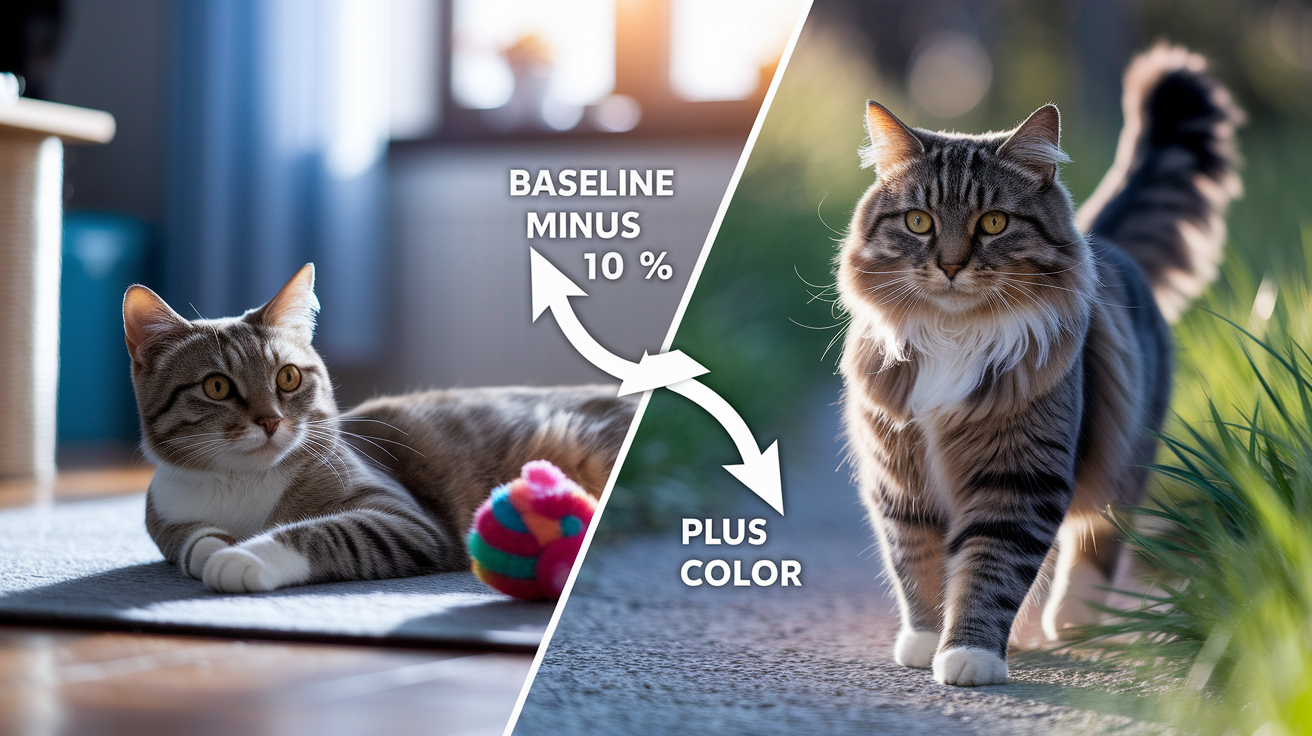
Activity burns calories, plain and simple. A cat sleeping 18 hours daily needs less food than one patrolling outdoors or playing intensely. Start with your baseline calculation from the calorie section, then adjust based on how your cat actually spends their day.
| Activity Level | Calorie Adjustment | Daily Wet Food Example (10-lb cat) |
|---|---|---|
| Sedentary/Indoor | -10-20% from baseline | 2-2.5 cans (140-175 calories) |
| Moderate | Baseline amount | 2.5-3 cans (175-210 calories) |
| Active | +10-20% above baseline | 3-3.5 cans (210-245 calories) |
| Outdoor/Working | +20-30% above baseline | 3.5-4 cans (245-280 calories) |
Assess activity honestly. “Active” means your cat plays vigorously multiple times daily, chases toys for 15 to 20 minutes at a stretch, or has regular outdoor access with hunting behavior. “Moderate” describes cats with short play sessions once or twice daily and normal movement around the house. “Sedentary” fits cats who mostly sleep, ignore toys, and move primarily for food and litter box trips. Most indoor cats fall into sedentary or moderate categories, even when owners think their cats are more active than they are.
Watch for signs you’ve matched activity level correctly. Cats getting appropriate portions maintain stable weight, show interest in brief play without exhaustion, and don’t beg constantly between meals. Overestimating activity leads to gradual weight gain over months. Underestimating means weight loss and potentially reduced muscle mass. Seasonal adjustments matter for cats with outdoor access. A cat burning 280 calories daily during active summer months might need only 210 in winter when snow or cold weather reduces roaming. Check weight monthly and adjust portions by 10 to 15% if you see trending changes over 6 to 8 weeks.
Combining Wet Food with Dry Food in Your Cat’s Diet
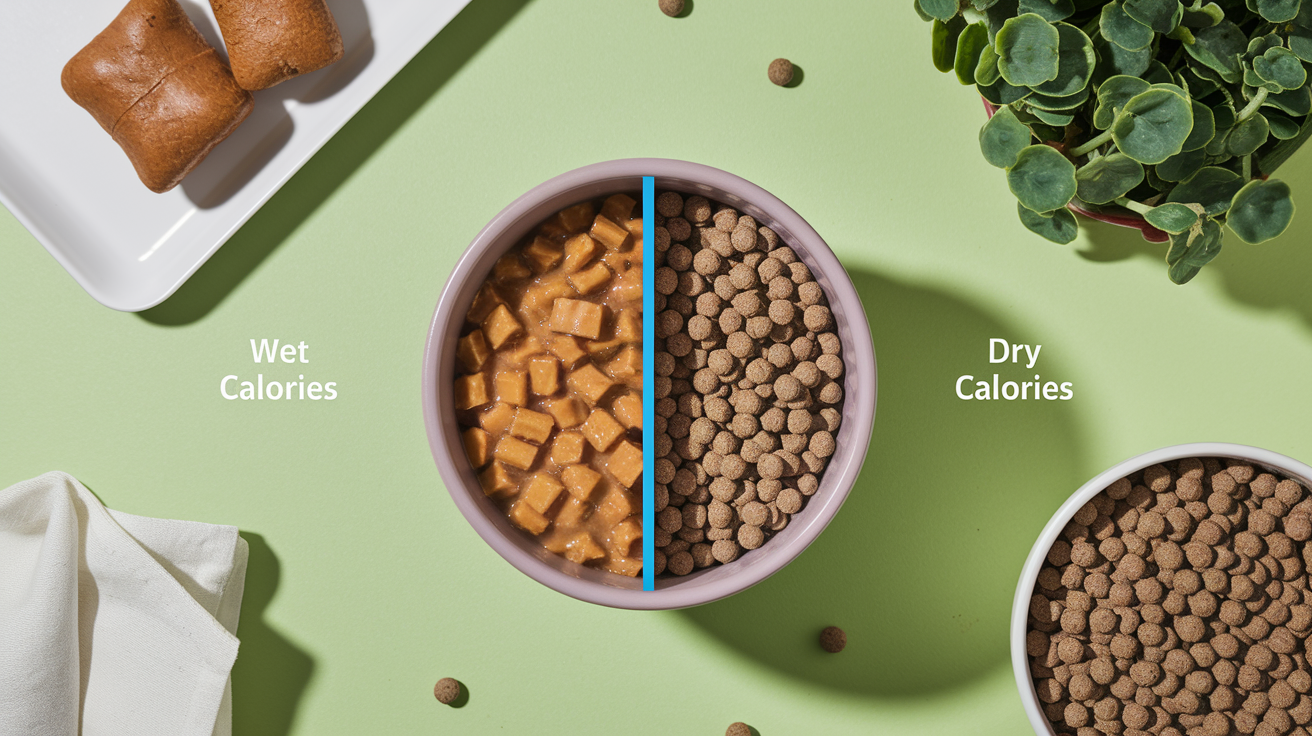
Mixing wet and dry food offers flexibility. You get cost savings and convenience from dry food while keeping hydration and palatability benefits from wet food. Dental health might improve slightly from dry food’s texture, though it’s not a substitute for proper dental care. The key is managing total calories from both sources so you don’t accidentally overfeed.
Use the 2/3 wet to 1/3 dry guideline as a starting ratio. Calculate your cat’s total daily calorie needs first, then split accordingly. A 10-pound spayed cat needing 250 calories would get roughly 165 calories from wet food and 85 calories from dry food. If wet food provides 80 calories per 3-ounce can, that’s about 2 cans (160 calories). If dry food contains 340 calories per cup, 85 calories equals 1/4 cup. This prevents the common mistake of adding dry food on top of full wet portions, which can push cats 30 to 40% over their calorie needs.
You can structure meals several ways depending on your schedule. Some people feed wet food in the morning and evening, leaving a small portion of dry food out for midday nibbling. Others mix wet and dry in the same bowl at each feeding. A few households do wet-only at dinner and dry-only at breakfast. What matters is hitting your total calorie target across 24 hours.
Keep these practices consistent:
- Calculate total daily calories using the baseline formula before dividing between food types
- Read labels on both wet and dry food to know exact calorie content
- Measure dry food with an actual measuring cup, not by eyeballing or using random scoops
- Adjust the wet to dry ratio based on your cat’s preferences, your budget, and health needs (cats with urinary issues benefit from more wet food for hydration)
When changing the ratio between wet and dry food, make adjustments gradually over 5 to 7 days. Sudden shifts can cause digestive upset even when total calories stay the same. If you’re moving from all dry to 2/3 wet, start by replacing 1/3 of the dry with wet for two days, then shift to half and half, then finally reach your target ratio. Monitor stool consistency. Loose stools mean you’re transitioning too fast.
Fresh water access stays critical even with wet food’s moisture content. Wet food contains roughly 70% more water than dry food, but cats still need a separate water source, especially if they’re eating any dry food at all.
Special Health Conditions and Therapeutic Wet Food Feeding
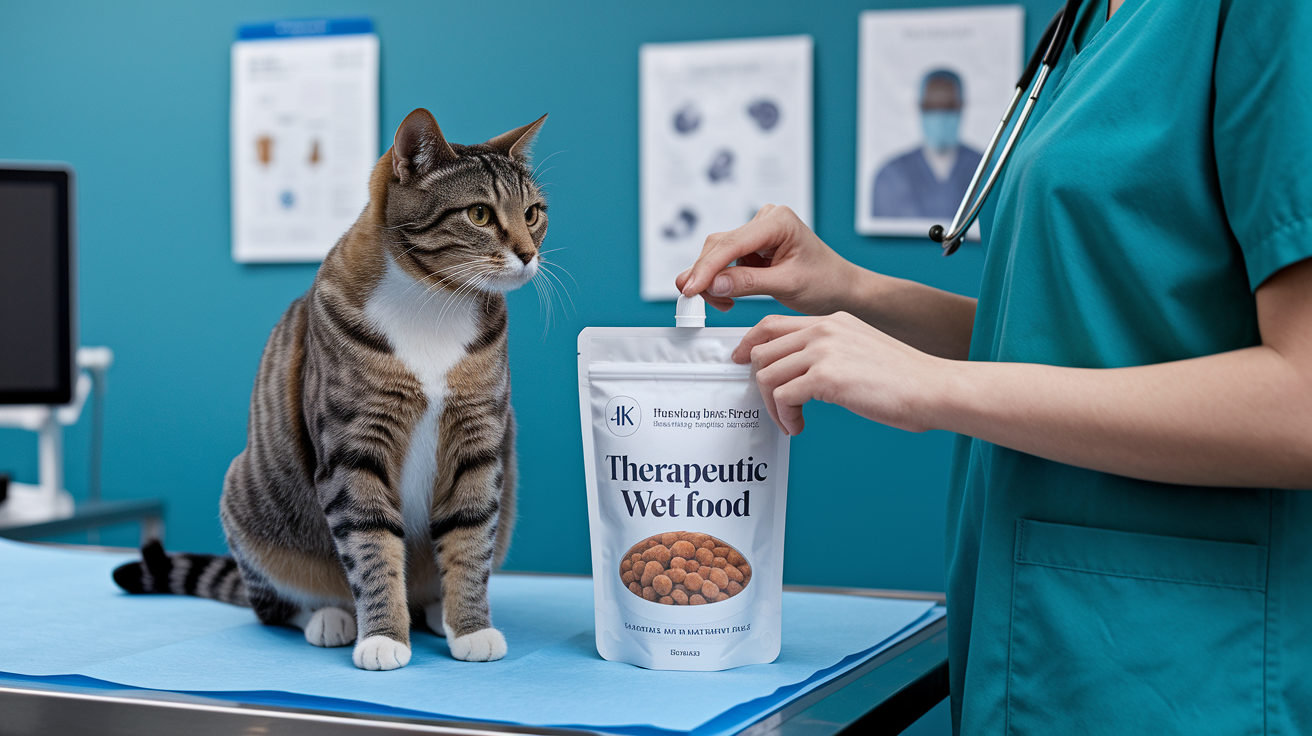
Medical conditions change feeding rules. When your cat has a diagnosis requiring therapeutic food, veterinary-provided portions typically override standard calculation methods. Prescription diets are formulated differently than regular foods, with altered nutrient profiles that affect how much to feed.
Diabetes demands consistency above all else. Feed the same amount at the same times daily, coordinating meals with insulin injections. Your vet calculates specific portions based on your cat’s weight, insulin dose, and blood glucose levels. A typical approach might be splitting daily food into two equal meals timed with insulin. Half the total at 8am with the morning injection, half at 8pm with the evening dose. Diabetic cats often need high-protein, low-carbohydrate wet foods, and portions might be slightly higher than standard maintenance to account for insulin-driven metabolism changes.
Kidney disease cats benefit significantly from therapeutic wet foods designed to reduce kidney workload. These foods are typically restricted in phosphorus and protein while maintaining high moisture content. Portions sometimes exceed normal feeding amounts because the foods are less calorie-dense. A 10-pound cat with kidney disease might eat 3.5 to 4 cans of renal-support wet food daily, compared to 2.5 cans of regular adult food. The higher moisture dilutes waste products and reduces kidney strain, making increased volume worthwhile.
Hyperthyroidism flips typical portion guidance. Cats with overactive thyroids burn calories rapidly and may need 30 to 50% more food than healthy cats. A 9-pound hyperthyroid cat could easily require 200 to 250 calories daily, equivalent to 3 to 4 cans of wet food, just to maintain weight. These cats often have voracious appetites yet continue losing weight. Once treatment begins (medication or radioactive iodine), portion needs drop as metabolism normalizes. Close veterinary monitoring prevents overfeeding during the adjustment period.
Urinary tract issues, including crystals and FODL (feline lower urinary tract disease), respond well to therapeutic wet foods formulated for specific pH levels and mineral content. These foods often require specific portions to maintain urine dilution targets. Your vet might recommend slightly increased portions compared to maintenance to encourage higher water intake through food.
Follow your veterinarian’s specific feeding instructions with prescription foods. These aren’t situations for DIY adjustments. Therapeutic diets factor in disease progression, medication interactions, and treatment goals that general calculations can’t account for. Schedule regular follow-ups to adjust portions as your cat’s condition changes, weight fluctuates, or treatment protocols shift.
Reading Cat Wet Food Labels for Accurate Portion Control
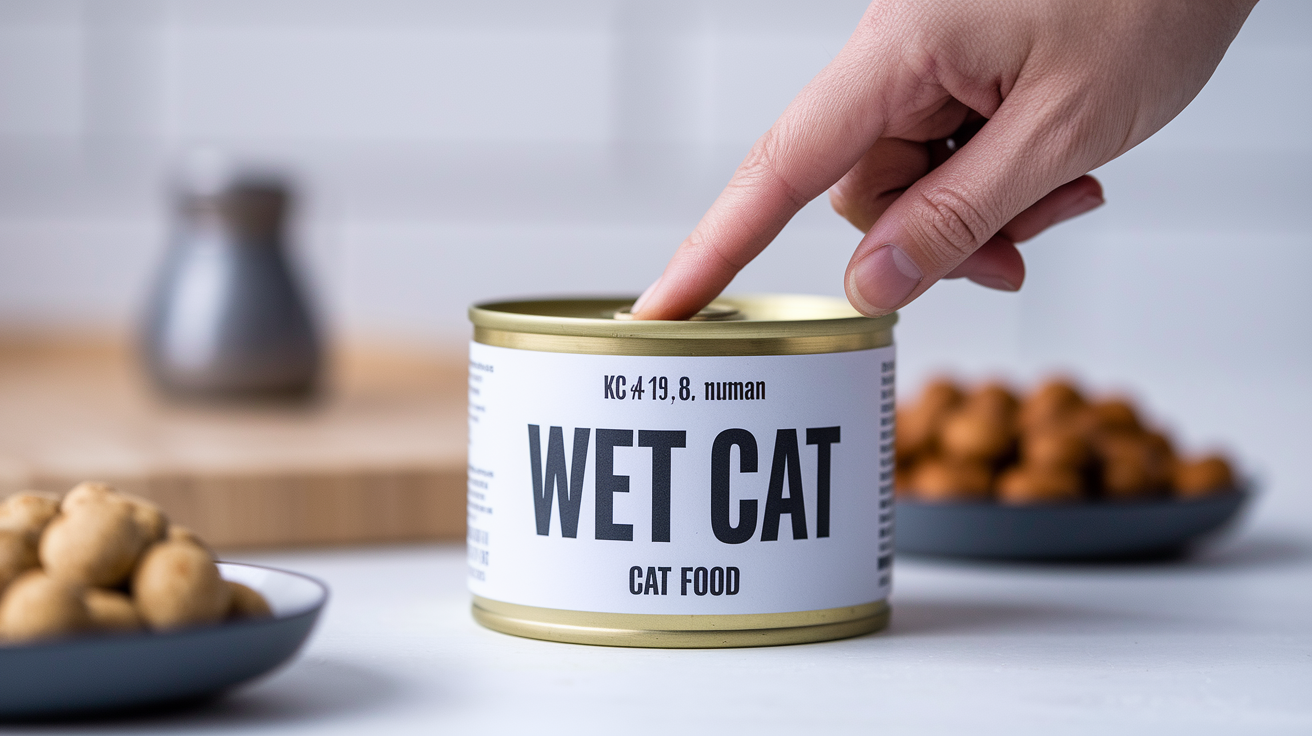
Labels contain the numbers you need, but you have to know where to look. The guaranteed analysis, calorie content, and AAFCO statement give you everything necessary to calculate portions accurately. The manufacturer’s feeding chart is a starting point, nothing more.
Key elements to find and use:
- AAFCO statement confirming the food is “complete and balanced” for your cat’s life stage (kitten, adult maintenance, all life stages)
- Calorie content listed as “kcal per can” or “kcal per kg,” essential for your daily portion calculations
- Guaranteed analysis showing minimum protein and fat percentages, maximum fiber
- Feeding guidelines from the manufacturer, typically based on cat weight
- Life stage designation (kitten, adult, senior, all life stages)
- Can or pouch size in ounces, since 3-ounce and 5.5-ounce cans require different portion math
Calorie content is often listed as kcal per kilogram, requiring conversion. If a label says 900 kcal/kg and each can contains 156 grams, divide 900 by 1000 to get 0.9 kcal per gram, then multiply by 156 grams to get roughly 140 calories per can. Or look for the simpler “kcal per can” line, which skips the math. That standard example of 90 calories per 2.5-ounce can becomes your baseline for calculating how many cans your cat needs daily based on their specific calorie requirements.
Manufacturer feeding charts suggest amounts like “feed 1 can per 3 to 4 pounds of body weight daily,” but these are broad generalizations. They don’t account for whether your cat is spayed, active, or trying to lose weight. Use the chart as a reference, then apply the personalized calculation method from earlier sections. A chart might suggest 3 cans for your 10-pound cat, but if your cat is sedentary and spayed, the math-based approach might show 2 to 2.5 cans is more appropriate.
Protein content affects satisfaction between meals. Higher protein foods (40 to 50% on a dry matter basis) tend to satisfy hunger better than high-carbohydrate foods, meaning cats feel full on slightly smaller portions. If your cat seems hungry on calculated portions but weight is stable, switching to a higher-protein formula sometimes helps without increasing total volume. For more detailed guidance on interpreting nutritional information panels, understanding pet food labels breaks down each section of the label.
Premium foods often pack more calories into smaller volumes due to higher fat content and better ingredient density. A 3-ounce can of budget food might contain 70 calories, while a premium formula could hold 110 calories in the same size can. This means you feed less volume with premium foods, which offsets some cost difference. Budget foods require larger portions to meet calorie needs, generating more stool volume and sometimes less satisfaction.
Practical Tips for Measuring and Serving Cat Wet Food Portions
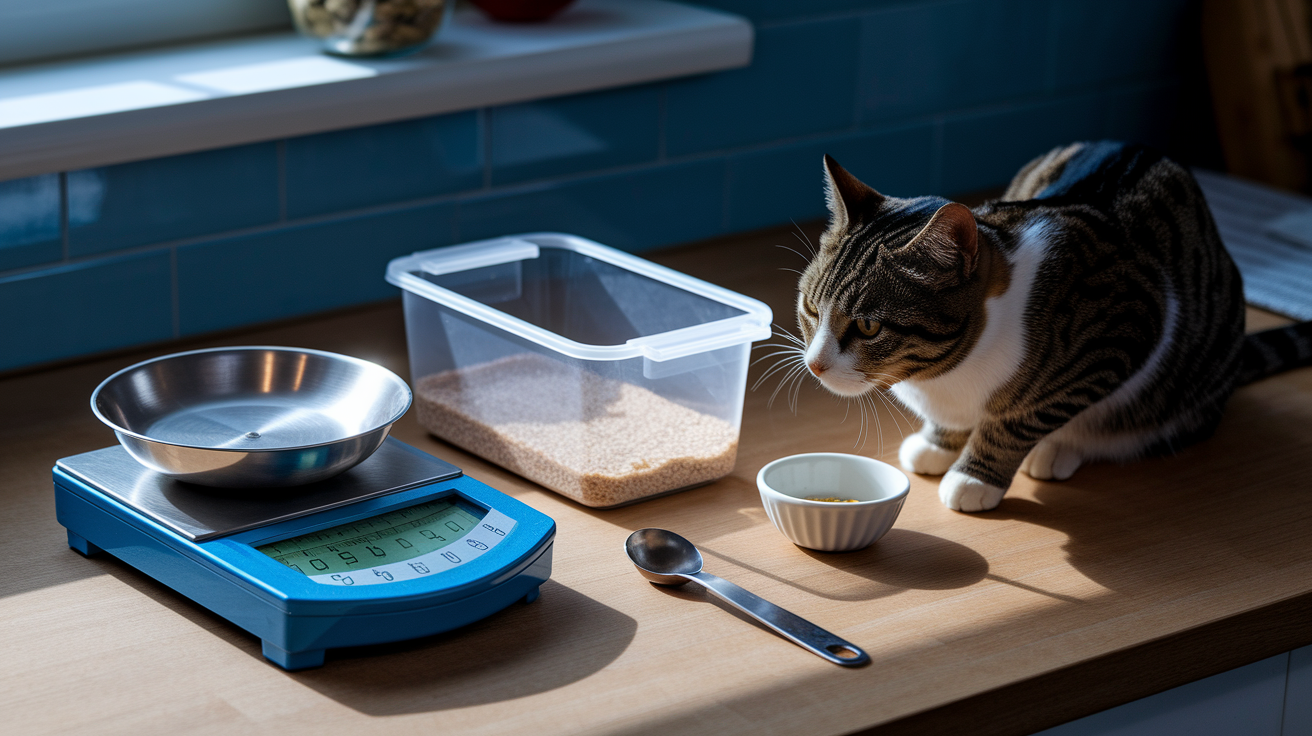
Consistency starts with measurement. Kitchen scales work best for precision. Weigh the entire can, scoop out the portion, then weigh again to see how much you removed. Digital scales reading to 0.1 ounce cost under $15 and eliminate guesswork. Measuring spoons work for pate-style foods if you level them carefully. Eyeballing rarely gives accurate results.
Serving techniques matter for acceptance and safety. Divide calculated daily portions into meals according to your schedule. If your cat needs 2.8 cans daily and you feed twice, that’s 1.4 cans per meal. Scoop partial cans into bowls, then refrigerate the remainder promptly. Room temperature food appeals to most cats, but some prefer it slightly warm. Microwave refrigerated food for 10 to 15 seconds, stir thoroughly, and check temperature with your finger. Aim for slightly warm, not hot. Warming releases aroma, especially helpful for cats with reduced smell from congestion.
Texture preferences vary individually. Pate styles work well for portion control since they’re easy to measure and divide. Chunks in gravy or shreds sometimes leave cats licking up gravy and ignoring solids, meaning they consume fewer calories than expected. If your cat does this consistently, switch to pate or count only the calories in the gravy they’re actually eating, then adjust portions upward. Some cats refuse pate entirely and only eat flaked or shredded textures. Match texture to preference when possible, adjusting can counts based on the specific food’s calorie content.
Best practices for daily feeding:
- Discard uneaten food after 2 hours at room temperature, sooner in hot weather
- Serve food in clean bowls washed daily with soap and water
- Store opened cans in the refrigerator in sealed containers, not the original can
- Avoid cross-contamination by using clean spoons for each serving
- Note appetite changes lasting more than 1 to 2 days. Sudden disinterest in food warrants vet contact
Portion adjustment based on eating behavior requires attention to patterns. If your cat consistently leaves food, reduce the next meal slightly but watch weight over two weeks. Some cats eat better with smaller, more frequent meals even when total daily calories stay the same. A cat eating 70% of three large meals might finish 100% of four smaller meals adding up to the same total.
Wet Food Storage and Freshness Management for Optimal Feeding
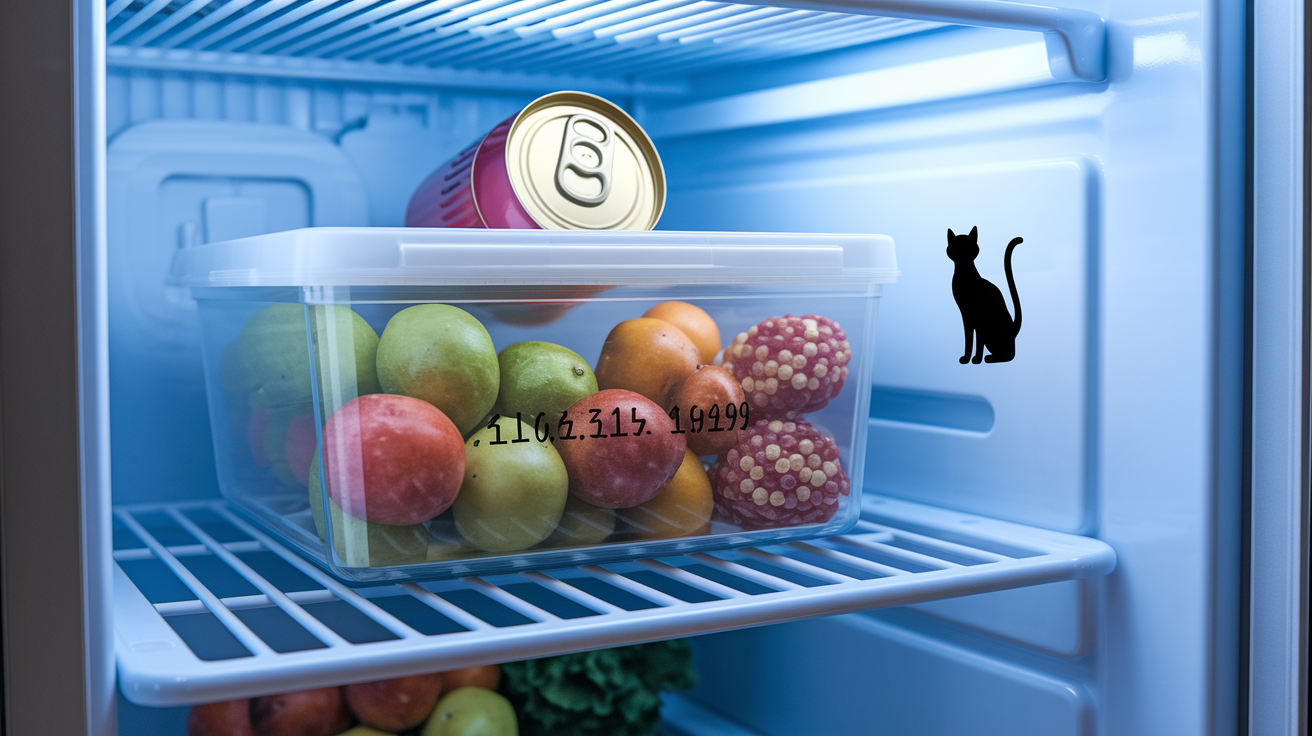
Proper storage prevents waste and protects your cat from foodborne illness. Unopened cans store easily in cool, dark places like pantries. Avoid garages or sheds where temperature swings are common. Check expiration dates when buying and rotate stock so older cans get used first.
Opened cans require refrigeration immediately. Transfer food to a sealed container or cover the can with a tight-fitting plastic lid or plastic wrap. Refrigerate at 37°F or below. Food quality degrades over time even in the fridge. Opened wet food must be discarded after 3 days maximum. Beyond that, bacterial growth risks increase even if food smells fine.
Room temperature sitting time matters significantly. Bacteria multiply rapidly on wet food left in bowls. The 2-hour rule is firm: uneaten food goes in the trash after sitting out for 2 hours, sooner on hot days when room temperature exceeds 75°F. This might feel wasteful, especially with picky eaters, but it prevents digestive upset from contaminated food. If your cat regularly ignores food, serve smaller portions more frequently rather than leaving large amounts hoping they’ll eventually eat.
Safety rules for daily handling:
- Seal opened cans or pouches before refrigerating
- Write the date on containers when opening
- Observe food before serving. Discard if it smells off or looks discolored
- Bring refrigerated food to room temperature or warm slightly before serving for better acceptance
Preventing waste connects directly to accurate portioning. If you constantly throw away uneaten food, your portions exceed your cat’s needs. Buy can sizes matching your cat’s daily requirements. A cat eating 1.5 cans daily does better with 3-ounce cans than 5.5-ounce cans, since you’re not refrigerating partial large cans multiple times. Single-serve pouches eliminate storage issues but typically cost more per ounce. Balance convenience against budget constraints.
Monitoring Your Cat’s Response to Wet Food Feeding Amounts
Ongoing observation tells you whether calculated portions are working for your individual cat. Initial calculations provide a starting point based on averages, but metabolism varies. Some cats maintain weight on 15% fewer calories than formulas suggest, others need 15% more. Watch your cat’s body and behavior to fine-tune amounts.
Indicators your portions are appropriate:
- Consistent appetite without begging between meals or food refusal
- Stable weight over 3 to 4 weeks (weigh monthly at home or during vet visits)
- Healthy coat that’s smooth and shiny without excessive shedding or dullness
- Normal stool quality. Formed, not hard pellets or loose/watery
- Maintained energy levels with interest in play and normal activity
- Complete or near-complete meal consumption within 20 to 30 minutes
Adjust portions gradually when monitoring reveals issues. Weight trending up over 4 to 6 weeks suggests overfeeding by 10 to 20%. Reduce daily calories by 10 to 15%, wait two weeks, and check weight again. Weight dropping steadily over the same period indicates underfeeding. Increase portions by 10 to 15% and monitor. Track changes weekly in a notebook. Memory is unreliable over months. Small adjustments of a quarter-can per day add up over time without shocking the system.
Feeding problems require different approaches than simple portion adjustments. Picky eating might respond to texture changes, warming food, or adding a small amount of low-sodium chicken broth for moisture and flavor. Food refusal lasting more than 24 hours warrants investigation. Check that food hasn’t spoiled, verify it’s the usual flavor, and rule out health issues if the problem continues. Rapid consumption where cats inhale food and seem constantly hungry could mean portions are genuinely too small, especially for growing kittens or active cats. Verify your calculations against the cat’s current weight and activity level. Consider increasing meal frequency rather than portion size. Three smaller meals might satisfy better than two larger ones.
Contact your veterinarian when appetite changes persist beyond 2 to 3 days, weight drops or gains more than 10% of body weight over two months despite appropriate portions, or behavior changes accompany eating issues (lethargy, hiding, vomiting, diarrhea). These signal potential health problems requiring diagnosis rather than feeding adjustments.
Treats and Snacks: Factoring Extra Calories into Daily Wet Food Portions
The 10% rule keeps treats from derailing nutrition. Treats should provide no more than 10% of total daily calories, with the remaining 90% coming from complete and balanced wet food. This protects nutrient balance while leaving room for training rewards or bonding moments.
Calculate treat calories and reduce wet food portions proportionally. A 10-pound cat needs about 200 calories daily before adjustments. Ten percent is 20 calories. If you give 20 calories in treats, reduce wet food from the calculated 2.5 cans (225 calories) down to about 2.3 cans (205 calories) to keep the total at 225. Check treat packaging for calorie information. Many commercial treats contain 2 to 4 calories each. Five treats at 4 calories each means reducing wet food by one-third of a can.
Choose treat types that support rather than undermine health. Freeze-dried meat treats provide protein without fillers or excessive calories. Small pieces of plain cooked chicken, turkey, or fish (no seasonings, bones, or skin) make low-calorie options. Some cats respond well to wet food itself as a training reward. Use a different flavor than their regular meals so it feels special. Place a small spoonful on a separate plate after successful litter box use, taking medication, or cooperating with grooming.
Treat management strategies:
- Pre-portion daily treat allowance in a small container each morning
- Select treats providing 2 to 3 calories each rather than 10 to 15 calorie options
- Use wet food as training rewards, counting those calories against the daily portion
- Avoid high-carbohydrate human foods like bread, crackers, or cereal
Table scraps and supplementation create problems. Human food varies wildly in calories, often contains seasonings or ingredients that are unsafe for cats (onions, garlic, excessive salt), and lacks the complete nutrition cats need. A bite of cheese might seem harmless but contains 25 to 30 calories. Over 10% of a small cat’s daily needs. Vitamin or mineral supplements without veterinary guidance risk creating imbalances, especially if your cat is eating complete and balanced food. Talk to your vet before adding anything beyond basic commercial treats to your cat’s diet.
Multi-Cat Household Wet Food Feeding Strategies
Each cat requires individual calculations. A 6-pound kitten, 10-pound adult, and 12-pound senior living together need three different portion amounts based on separate formulas. Calculate requirements individually using weight, age, activity level, and health status for each cat. Don’t average portions across cats or assume “close enough” works. A kitten underfed by 20% loses critical growth support, while an adult overfed by 20% gains unwanted weight.
Physical separation solves most feeding challenges. Feed cats in different rooms with closed doors for 20 to 30 minutes, giving each cat access only to their pre-measured portion. This prevents food stealing and allows monitoring of individual intake. Some households use bathrooms, bedrooms, or large closets. Other options include elevated feeding stations for mobile cats paired with floor stations for cats with arthritis who can’t jump. Timed feeders work when schedules make simultaneous supervised feeding difficult.
Portion control requires pre-measuring each cat’s specific calculated amount into separate bowls before feeding time. Label bowls if needed. Supervise meals initially until you’re confident each cat eats only their portion. Remove all bowls after 30 minutes regardless of whether food remains. This establishes routine and prevents all-day grazing where you can’t track who ate what. Clean bowls between feedings to prevent cross-contamination and food residue buildup.
Preventing competition and monitoring health:
- Establish consistent feeding locations that don’t change daily
- Feed all cats simultaneously to reduce anxiety about others getting food first
- Address food aggression with a veterinary behaviorist if one cat guards multiple bowls or displays threatening behavior
- Monitor each cat’s consumption and body weight individually with monthly weigh-ins
- Consider microchip-activated feeders for cats requiring prescription diets, preventing other cats from accessing specialized food
Physical separation initially takes effort but becomes routine quickly. Most cats learn their feeding location within 3 to 5 days and wait at the correct spot when they hear food preparation. The investment in individual monitoring pays off when you catch weight changes or appetite loss early, often signaling health issues before other symptoms appear.
Final Words
Start with your cat’s weight, age, and calorie needs, then convert that daily calorie target into cans or pouches using the kcal-per-can on the label.
This article walked through the quick calculation method, the weight-and-age feeding chart, life-stage schedules, activity and weight-management tweaks, mixing wet and dry, reading labels, safe storage, measuring tips, treats, and multi-cat strategies.
Use these steps to answer how much wet food to feed a cat and tweak portions while watching appetite and weight. Small, steady changes and a vet check when needed will keep feeding simple and effective.
FAQ
Q: How much wet food should a cat eat a day?
A: The amount of wet food a cat should eat a day depends on weight, age, activity, and calories per can; for example, a 10‑lb spayed/neutered adult needs about 3.25 three‑ounce (≈90 kcal) cans for maintenance.
Q: What is the 3-3-3 rule for cats?
A: The 3-3-3 rule for cats describes settling-in: 3 days to adjust and hide, 3 weeks to explore and bond, and about 3 months to feel fully at home.