
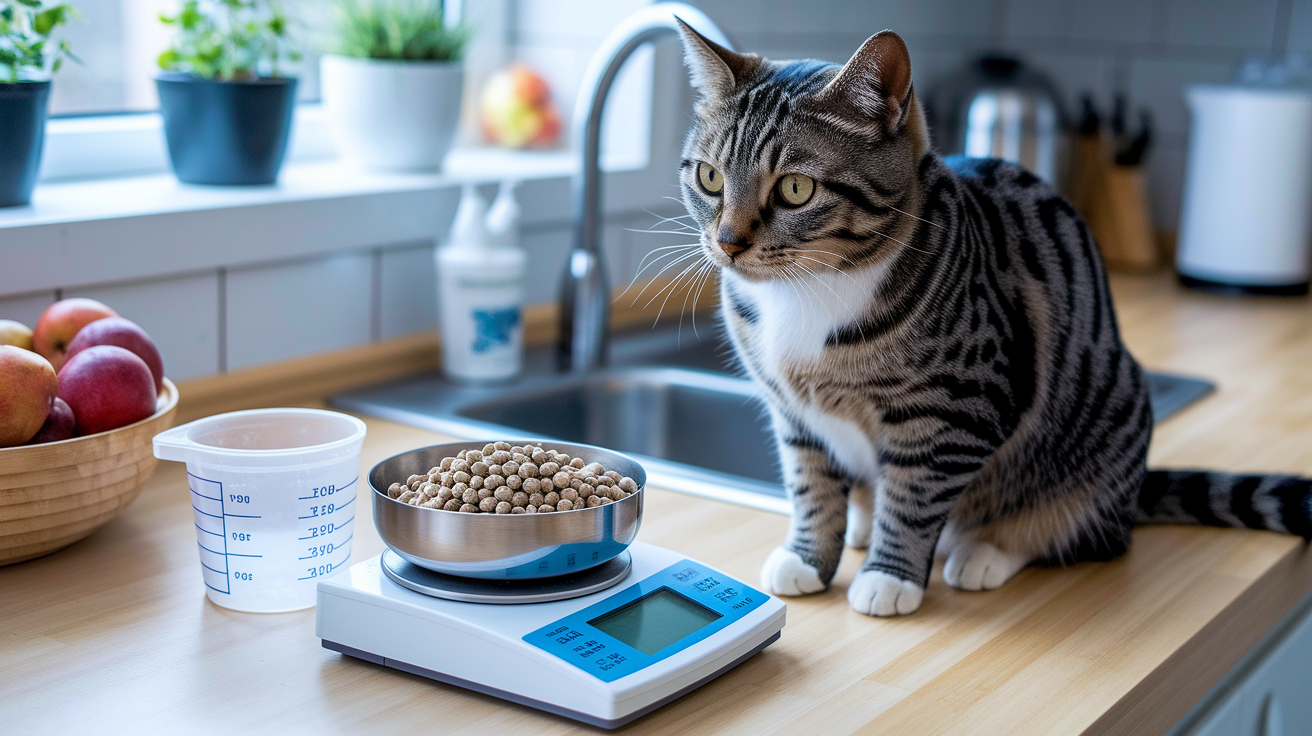
Think eyeballing your cat’s food is close enough?
A University of Guelph study found owners missed by 48% too little to 152% too much, and that kind of error adds up fast.
This short guide shows easy, practical ways to measure portions at home, because a cup can fool you while a digital kitchen scale gives the real number, so you can hit the right calorie target, manage weight, and simplify feeding for one or several cats.
You’ll get step by step tips for dry and wet food and a simple twice-weekly check to keep portions on track.
Practical Methods for Accurately Measuring Cat Food Portions
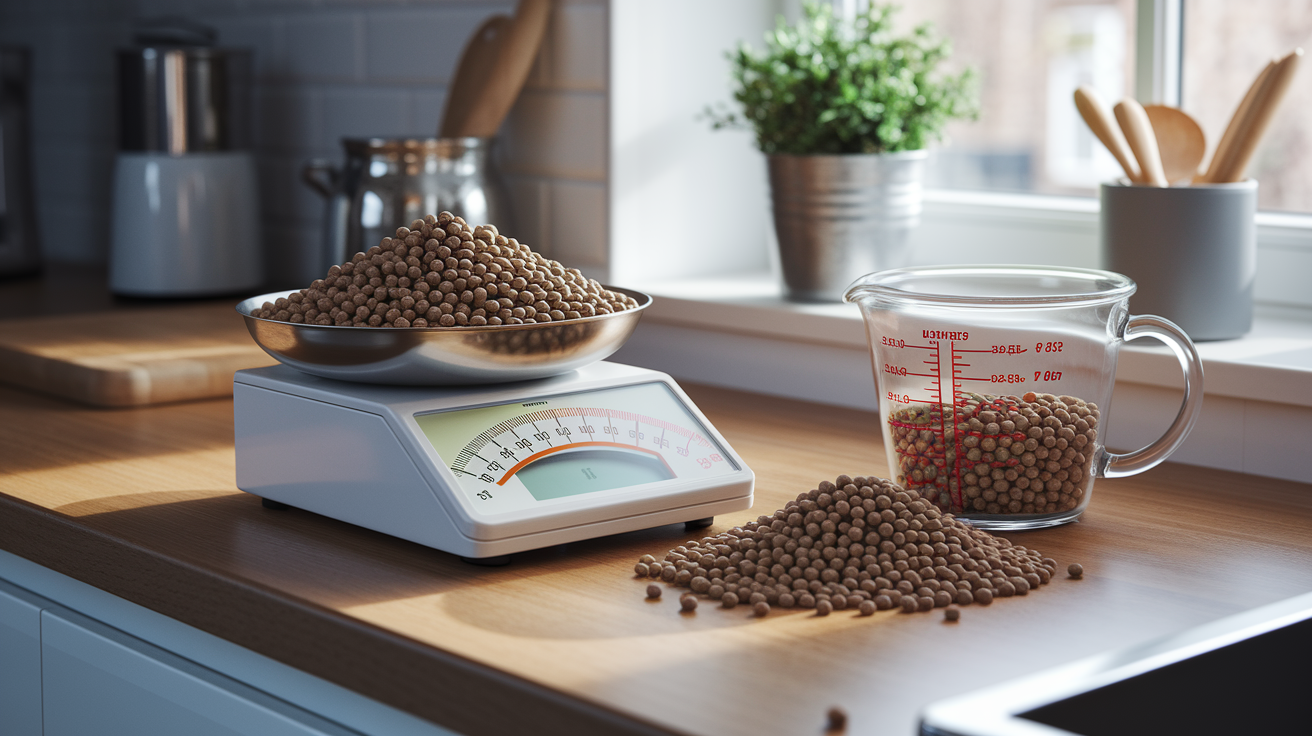
Most cat owners just scoop and eyeball it. But there’s a University of Guelph study that caught people making wild mistakes with measuring cups. Errors ranged from 48 percent too little to 152 percent too much. A digital kitchen scale beats cup measurements every time because food density changes depending on the brand, formula, and how the kibble’s shaped.
Measuring cups are quick and don’t need much cleanup, but that same cup can hold anywhere from 80 to 130 grams. It all depends if you’re scooping loose or packing it tight. Digital scales show you the exact weight in grams or ounces, no guessing involved. They do take up counter space though. Here’s a quick process that works with any food type:
Check the feeding guide on your cat’s package for how much they need daily, either in cups or grams. If you’re using a dry measuring cup, level the food flush with the rim every time. For a kitchen scale, put the empty bowl on it, hit tare to zero, then add food till you hit your target grams. Split the daily total by however many meals you’re doing. You can pre-measure the whole day’s food in the morning and keep it in a container to make individual feedings faster. Every two weeks, check your cat’s body condition and tweak portions by 10 to 20 percent if you’re seeing weight changes.
Weighing matters most when you’re managing weight, feeding multiple cats with different needs, or using calorie-dense food where a little extra volume means a lot of extra calories.
Understanding Cat Food Portion Sizes Based on Calories and Body Weight
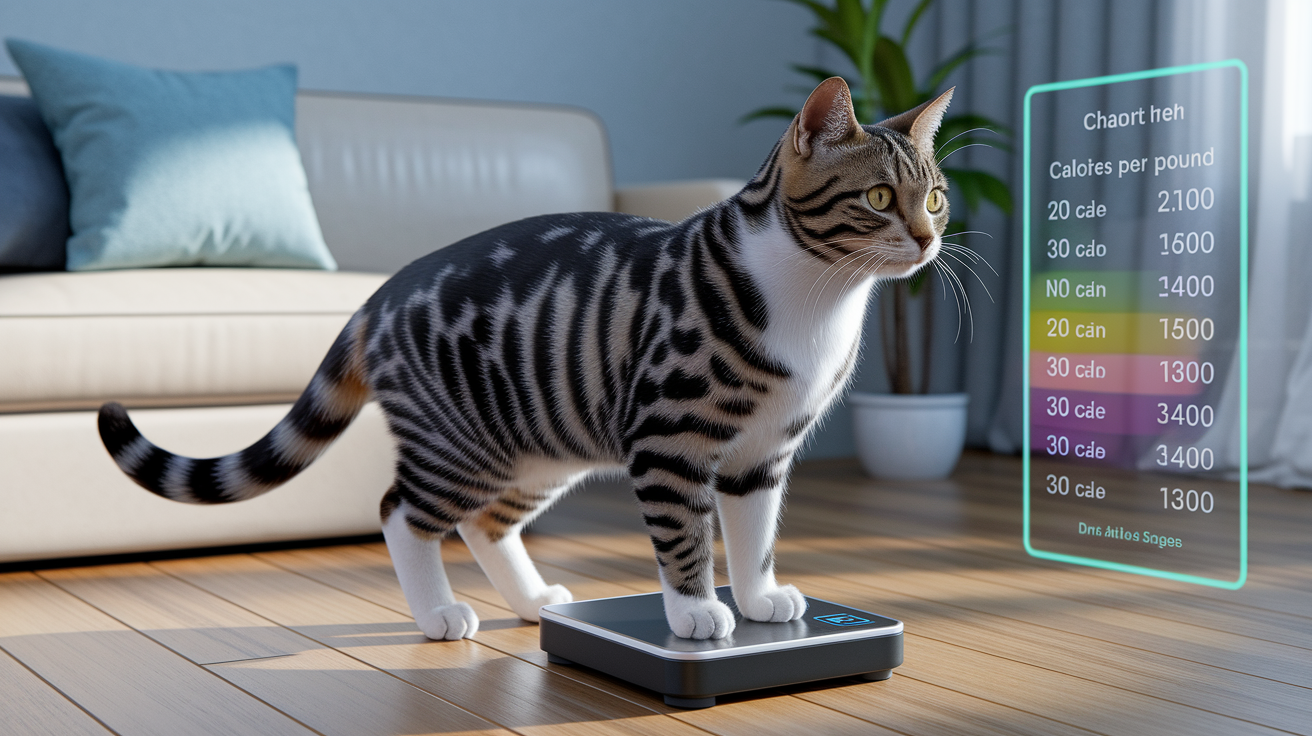
Portion size comes down to how many calories your cat needs daily. That changes based on age, activity, and whether they’re maintaining, losing, or trying to gain. Indoor cats need about 20 calories per pound of ideal body weight. Active or outdoor cats need closer to 30. So a 10-pound indoor cat needs roughly 200 calories a day, while an active 10-pounder needs around 300.
To figure out your cat’s calorie needs, multiply their ideal weight (not their current weight if they’re heavy) by the right calorie-per-pound number. Once you’ve got the daily target, divide by the calories per cup or per can on your food’s label. High-quality dry food usually has 300 to 500 calories per cup. That means a 10-pound indoor cat would need one-third to one-half cup daily. Wet food averages 70 to 100 calories per 3-ounce can, so that same cat would need 3 to 4 cans on an all-wet diet.
| Cat Type | Calories Needed Per Pound | Example for 10-lb Cat | Notes |
|---|---|---|---|
| Indoor or less active adult | 20 calories | 200 calories/day | Most common baseline |
| Active or outdoor adult | 30 calories | 300 calories/day | Can be 20-30% higher than indoor |
| Kitten (up to 12 months) | 50-60 calories | 500-600 calories/day | Up to twice adult needs per pound |
| Senior (7+ years, less active) | 15-20 calories | 150-200 calories/day | Monitor for decreased activity |
Keep treats to 10 percent of daily calories or less. For a 200-calorie cat, that’s 20 calories from treats. Maybe two or three small commercial treats. If you give more, cut the main meal by the same calorie amount.
Measuring Dry Cat Food Portions With Accuracy (Tools & Techniques)
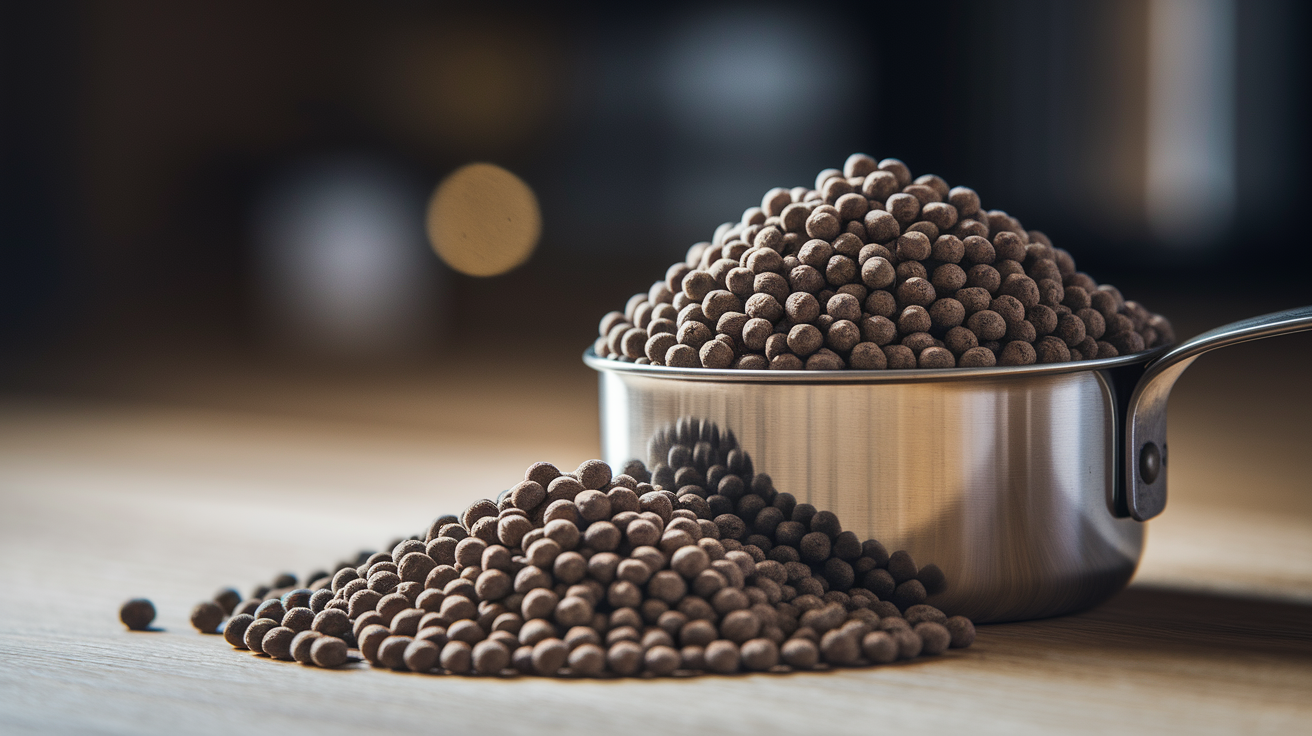
Dry food’s the easiest to overfeed. Kibble size, shape, and density shift all over the place between brands. One cup of a formula might weigh 90 grams, another 120, even though they take up the same space. Liquid measuring cups don’t work well for dry food since they’re built for liquids that settle evenly, not irregularly shaped kibble with air gaps.
Use a plastic dry-ingredient measuring cup that matches your exact portion. If you’re feeding one-third cup, use a one-third-cup measure instead of eyeballing part of a bigger scoop. Kibble density depends on ingredient ratios, how it’s made, and whether the pieces are round, triangular, or flat. Same volume can deliver very different calorie amounts.
Pre-measuring your cat’s full daily food once in the morning cuts down on variability. Scoop the total into a storage container, then split by eye at each meal. Even if individual meals aren’t perfect, the daily total stays accurate. Here’s how to measure dry food with minimal error:
Use a dry measuring cup that’s the same size as what you’re measuring. Scoop kibble loosely without packing or shaking the cup to settle pieces. Level the top with a straight edge like a butter knife to remove any mounding. Pour the measured amount into your cat’s bowl without tossing in extra “just in case.” Repeat the same technique every feeding so your scooping stays consistent.
If your cat’s gaining weight on the portion listed on the bag, the kibble might be denser than average or your technique might be adding a bit extra. Switching to a kitchen scale for two weeks shows you the actual gram weight you’ve been feeding. Makes it easier to adjust based on what’s working, not what the package says should work.
Measuring Wet Cat Food Portions by Weight for Precision
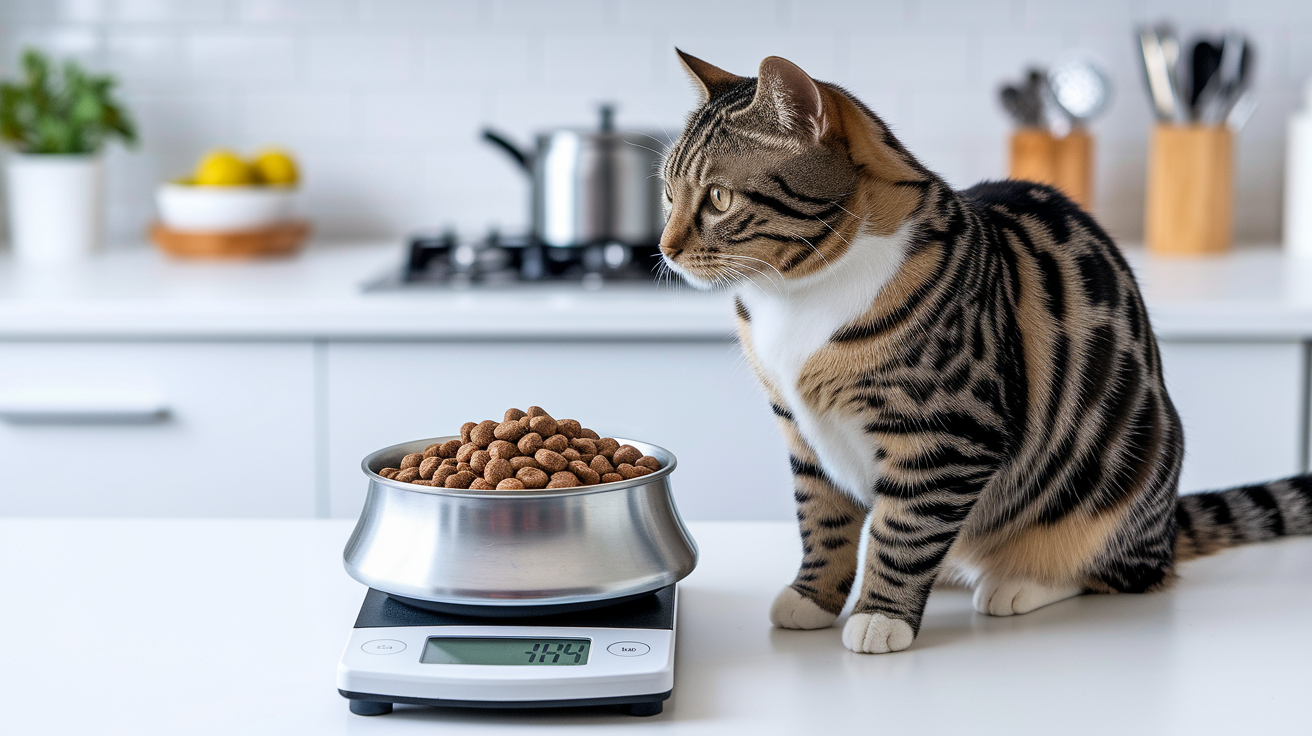
Wet food’s messy to measure by volume. It sticks to measuring cups and doesn’t settle evenly. A digital kitchen scale eliminates the mess and gives you consistent gram-based portions that match the feeding guide. Most wet food cans list both total can weight and calories per can, so you can portion by weight or by percentage of a can.
A 3-ounce can is roughly 85 grams. If your cat needs 2.5 cans daily, that’s about 210 grams total. Divide by number of meals, put an empty bowl on the scale, press tare to zero, then spoon food till you hit the target weight. Weighing matters most when you’re feeding partial cans or mixing wet with dry, because visual estimates of “half a can” tend to drift higher over time.
Weigh the empty bowl first, tare the scale to zero, then add food until you hit the gram amount. Use the calorie info on the label to calculate portion size if the feeding guide only lists cups or cans. Store leftover wet food in the fridge in a sealed container and use within 2 to 3 days. If you’re feeding multiple cats, weigh each portion separately so one doesn’t eat another’s share.
Some cats eat wet food more slowly than dry, so portioning by weight also helps you track how much was actually eaten versus what got left in the bowl. If you’re mixing wet and dry, weigh or measure each separately, then add the calories together to make sure the combined total matches your cat’s daily target.
Adjusting Cat Food Portions for Life Stage, Activity, and Health Factors
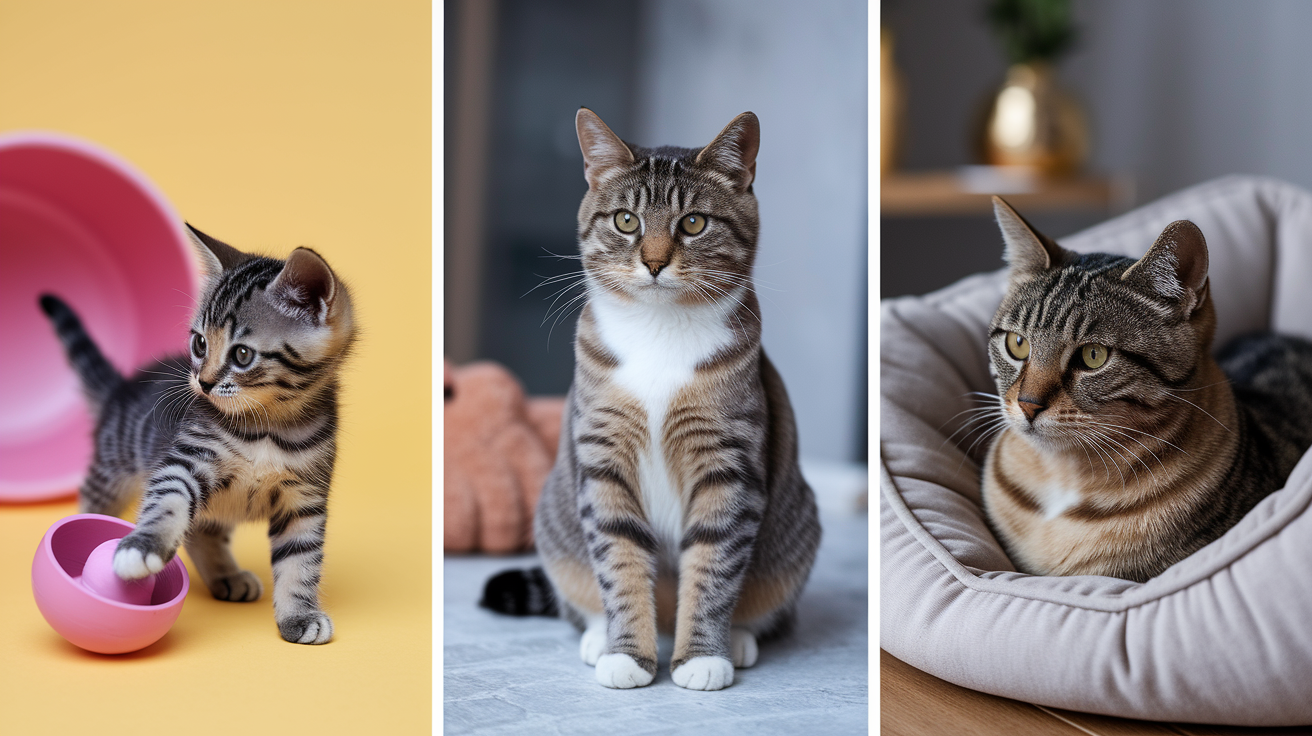
Kittens, adults, and senior cats need different calorie amounts per pound, and portion sizes shift as cats move through life stages or change activity levels. Kittens need 50 to 60 calories per pound to support rapid growth. Most adult cats need 20 to 30 calories per pound to maintain weight. Seniors often need fewer calories as metabolism slows and activity decreases, but some stay just as active and need the same portions they ate in middle age.
Over 50 percent of cats in the United States are overweight or obese. Portion size is the single biggest thing you can control. If your cat’s overweight, calculate portions based on their target weight, not their current weight. A 15-pound cat with a target weight of 11 pounds should eat as if they already weigh 11 pounds. That creates a slow, safe calorie deficit. Adjust portions gradually by 10 to 20 percent and wait 2 to 3 weeks before making another change, because the body needs time to show results.
Activity level can shift portions by 20 to 30 percent. A cat who spends the day napping needs fewer calories than one who climbs, plays, and patrols. Indoor cats almost always need portions on the lower end of the feeding guide range. Outdoor cats usually need portions on the higher end.
Kitten, Pregnant, and Nursing Cat Portions
Kittens grow fast and need calorie-dense food in frequent small meals. Feed kitten-specific formulas that deliver 50 to 60 calories per pound, divided into three or four meals daily until six months old, then two meals after that. A 3-pound kitten needs about 150 to 180 calories a day. That’s roughly one-third to one-half cup of dry kitten food or two to three small cans of wet kitten food.
Pregnant and nursing cats need a lot more calories to support their own bodies plus growing kittens. Calorie needs can double or triple during late pregnancy and peak lactation. Feed a high-quality kitten formula during pregnancy and nursing because it’s formulated for higher energy density. Let the cat eat as much as she wants during nursing. Monitor her body condition and adjust portions if she starts losing too much weight.
Transition from kitten to adult food at 12 to 18 months by gradually reducing portion sizes over 2 to 3 weeks. Kittens don’t need the sudden calorie drop that happens when you switch cold to adult portions. Step down slowly to avoid hunger and begging.
Adult, Indoor, Outdoor, and Active Cats
Adult indoor cats are the most common overfed group. They’re less active than outdoor cats but often get the same portion sizes. Start with 20 calories per pound of ideal body weight and adjust based on whether your cat maintains, gains, or loses weight over 2 to 3 weeks. A 10-pound indoor cat needs about one-third to one-half cup of dry food or 2 to 3 cans of wet food daily.
Outdoor and active indoor cats burn more energy through climbing, running, and temperature regulation. These cats need closer to 30 calories per pound. A 10-pound outdoor cat might need one-half to two-thirds cup of dry food or 3 to 4 cans of wet food daily. If your cat has outdoor access only part of the time, portion for the activity level they maintain most days.
Mixed feeding (combining wet and dry) works well for cats who like variety, but it takes more careful portioning. It’s easy to overfeed when using two food types. Calculate the total daily calories first, then decide what percentage comes from each format. Maybe one can of wet food plus a quarter-cup of dry.
Senior Cats and Cats With Medical Conditions
Senior cats (7 years and older) often need fewer calories as metabolism slows and activity drops. But some seniors stay active and maintain their adult portions. Monitor body condition every few weeks and adjust portions by 10 to 20 percent if you notice weight changes. Senior cats are also more prone to kidney disease, diabetes, and hyperthyroidism. All of those can change appetite and calorie needs.
Cats with medical conditions need portion guidance from a vet. Diabetic cats benefit from consistent portion sizes at consistent meal times to match insulin doses. Cats with kidney disease might need specialized low-protein diets portioned to maintain muscle without overloading the kidneys. Hyperthyroid cats often lose weight despite eating large amounts and may need higher-calorie portions while the condition’s being treated.
If your senior cat suddenly starts eating more, eating less, losing weight, or gaining weight, check with a vet before adjusting portions. Weight changes in older cats can signal underlying health issues that need treatment, not just portion tweaks.
Using Body Condition Score to Evaluate Whether Portions Are Correct
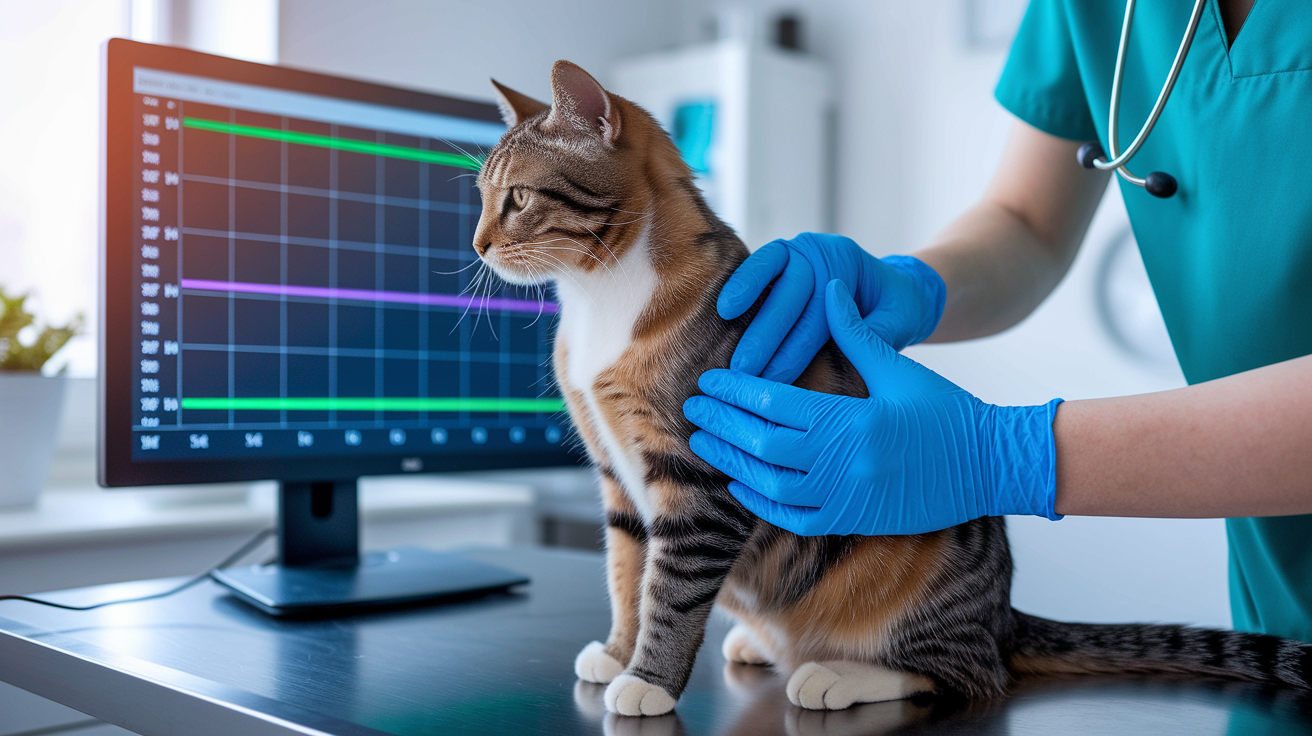
The best way to know if your cat’s portions are right is to check their body condition every week or two. Scale weight alone doesn’t tell you whether they’re carrying healthy muscle or excess fat. Stand over your cat and look down at their back. You should see a visible waist, a slight inward curve between the ribs and hips. Run your hands along their sides with light pressure. You should feel ribs easily without pressing hard, but ribs shouldn’t be visible through the fur when you’re just looking.
From the side, a healthy cat has a slight abdominal tuck. The belly pulls up slightly from the rib cage toward the hips rather than hanging down or forming a pouch that sways when they walk. Some cats, especially those who were spayed or neutered, develop a small primordial pouch that hangs low. That doesn’t mean they’re overweight. That pouch is normal as long as the cat still has a waist and you can feel ribs with light touch. Quick body condition checklist:
Ribs are easily felt with light fingertip pressure but not visible when standing still. Waist is visible when viewed from above, creating a slight hourglass shape. Abdomen has a slight tuck when viewed from the side, not a straight line or sagging pouch. Spine and hip bones can be felt but aren’t prominent or protruding. Cat moves easily without labored breathing or obvious discomfort.
If your cat fails more than one of these checks, adjust portions by 10 percent and check again in 2 to 3 weeks. Increase portions by 10 percent if ribs are highly visible or the cat feels bony. Decrease portions by 10 percent if you can’t feel ribs without pressing or if there’s no visible waist. Weigh your cat weekly at the same time of day to track trends. Daily weight fluctuates based on hydration and whether they’ve just eaten or used the litter box.
Tools That Improve Accuracy When Measuring Cat Food Portions
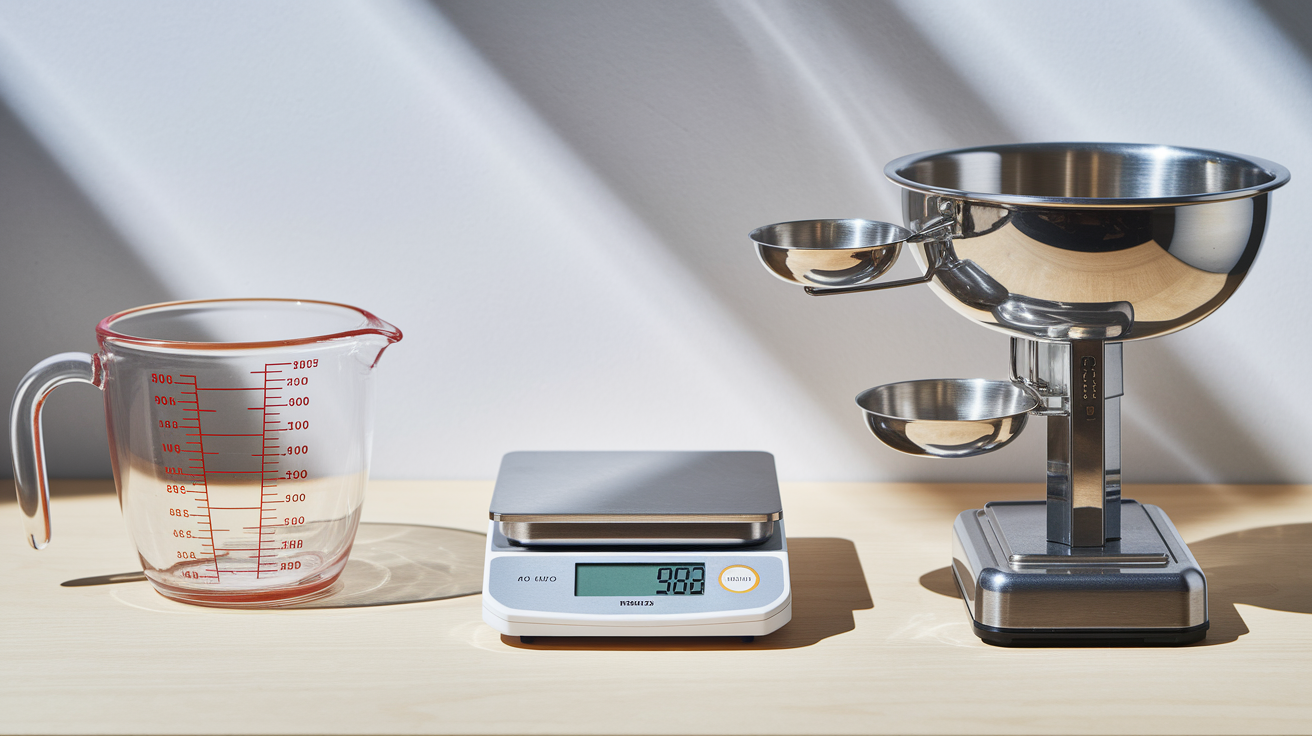
The three main tools for portioning cat food are dry measuring cups, digital kitchen scales, and automated feeders with integrated weighing scales. Each has a best-use scenario depending on how many cats you feed, whether you’re managing weight, and how much time you want to spend measuring. Measuring cups are fast and easy to clean but introduce the most variability. Digital scales are the most accurate but require an extra step at every meal. Automated feeders with scales take the guesswork out of portioning but cost more upfront.
| Tool | Accuracy Level | Best Use Case |
|---|---|---|
| Dry measuring cup (matched to portion size) | Moderate (±10-20% variability) | Healthy-weight cats on consistent kibble; quick daily feeding |
| Digital kitchen scale | High (±1-2 gram accuracy) | Weight management, mixed feeding, calorie-dense foods, multi-cat homes |
| Automated feeder with integrated scale (e.g., SureFeed Microchip Pet Feeder Connect) | High (LED indicates target weight reached) | Feeding 2-3 times daily, portion tracking via app, preventing food stealing in multi-cat homes |
Digital scales work for both dry and wet food. Let you portion by gram weight, which matches the feeding guides on many premium food labels. The SureFeed Microchip Pet Feeder Connect includes built-in scales that flash an LED light when you’ve added the correct gram amount, then logs each meal in the Sure Petcare app so you can track whether your cat’s eating the full portion. Weighing food manually can feel tedious when you’re feeding two or three times a day. But it’s the most reliable way to catch portion creep before it turns into weight gain.
Final Words
You now have quick, practical steps for measuring portions: when cups are okay and when a kitchen scale is worth it, how to convert calories to cups or grams, and simple dry- and wet-food routines you can use in under a minute.
We also covered adjusting amounts for kittens, adults, seniors, and active cats, plus checking progress with a body condition score and small, safe changes over a few weeks.
Try a one-week test of weighing meals and watching stool and weight — it’s the easiest way to see the benefits of how to measure cat food portions.
FAQ
Q: How do I measure my cat food?
A: Measuring cat food means weighing meals on a kitchen scale for best accuracy; if you use a cup, pick one and level it, pre-measure the day’s total, and track treats too.
Q: What is the 3-3-3 rule for new cats?
A: The 3-3-3 rule for new cats is a simple settling timeline: three days to hide and observe, three weeks to explore and accept routines, three months to feel fully comfortable.
Q: How many grams is a 1 2 cup of cat kibble?
A: A 1/2 cup of cat kibble is roughly 50–70 grams depending on kibble size and brand; the most reliable approach is to check the bag or weigh it on a kitchen scale.
Q: What is the 25 rule for cat food?
A: The 25 rule for cat food usually means limiting extras (treats, toppers) to no more than 25% of daily calories; many vets recommend keeping treats closer to 10% for weight control.