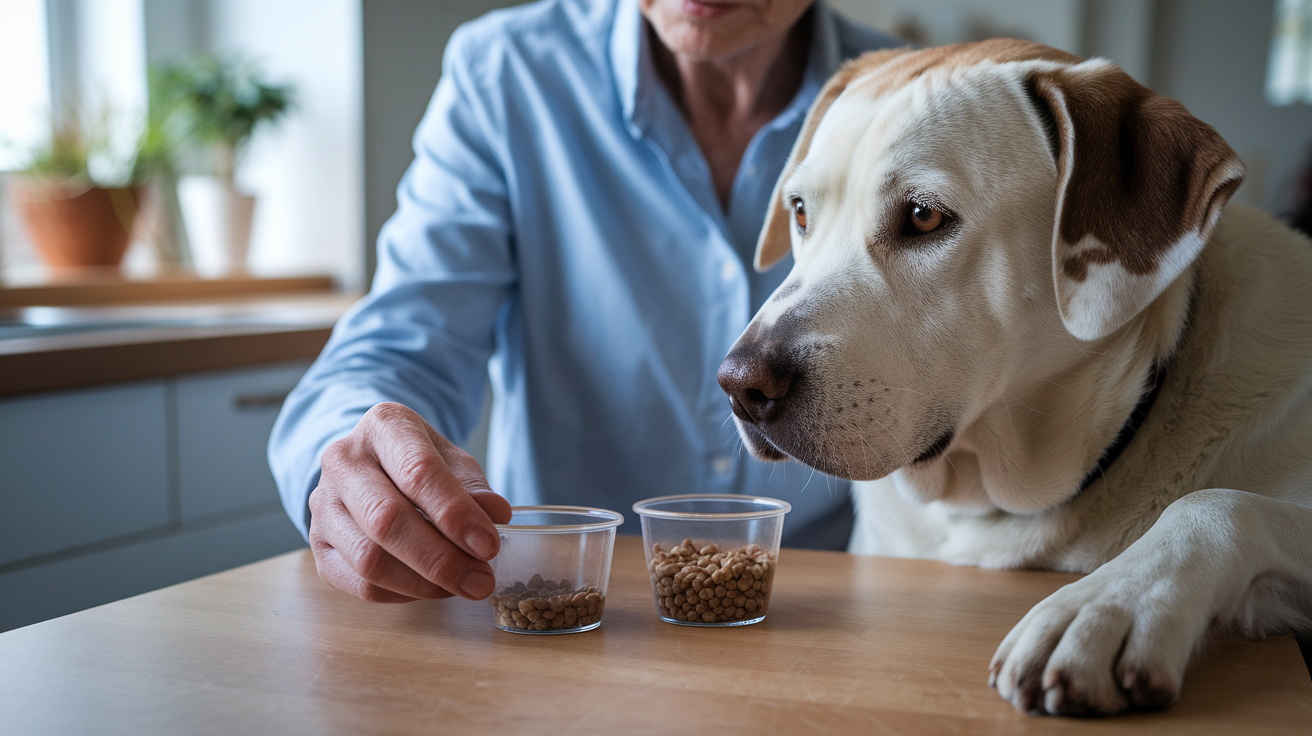
Still using the feeding chart on the bag for your senior dog?
That’s often why older dogs quietly gain weight.
Seniors burn about 20 to 30 percent fewer calories, nap more, and move less, so their bowl should match current weight and activity—not what they ate in their prime.
This post gives simple, weight-based portions, an easy calorie method, and clear rules to tweak amounts so you can feed the right amount without guesswork.
No extreme plans, just practical portions, two meals, and what to watch as you adjust.
Weight‑Based Senior Dog Feeding Amounts (Complete Chart + Exact Portions)
Senior dogs burn about 20 to 30% fewer calories than they did in their prime. Their metabolism slows down, they nap more, and those daily romps around the yard turn into leisurely sniffs. Most feeding guidelines on dog food bags are written for adults in their peak years, so if you’re still using those numbers, your senior’s probably eating too much. You want to match what goes in the bowl to their current weight and energy level, not what they used to be.
Think of it as a gentle downshift. A medium dog around 40 pounds might need somewhere between 1⅓ and 2 cups per day now, split into two meals. That’s about one quarter to one third less than an active adult the same size.
| Weight Range (lbs) | Weight Range (kg) | Cups per Day (Senior Dog) |
|---|---|---|
| 18–23 lbs | 8.2–10.4 kg | 1–1⅓ cups |
| 24–45 lbs | 10.9–20.4 kg | 1⅓–2¼ cups |
| 46–65 lbs | 20.9–29.5 kg | 2⅓–3 cups |
| 66–85 lbs | 29.9–38.6 kg | 3–3⅔ cups |
| 86–105 lbs | 39.0–47.6 kg | 3¾–4⅓ cups |
| 106–125 lbs | 48.1–56.7 kg | 4⅓–4¾ cups |
| Over 125 lbs | Over 56.7 kg | Add ¼ cup per extra 10 lbs (4.5 kg) |
These are starting points. If your senior’s still pretty spry for their age, try the higher end. If they’re mostly napping, go lower. You can tweak by 10 to 20% based on how they look and feel over a few weeks. Just keep an eye on their weight, energy, and stool quality as you adjust.
How Senior Dog Nutrition Changes With Age and Weight
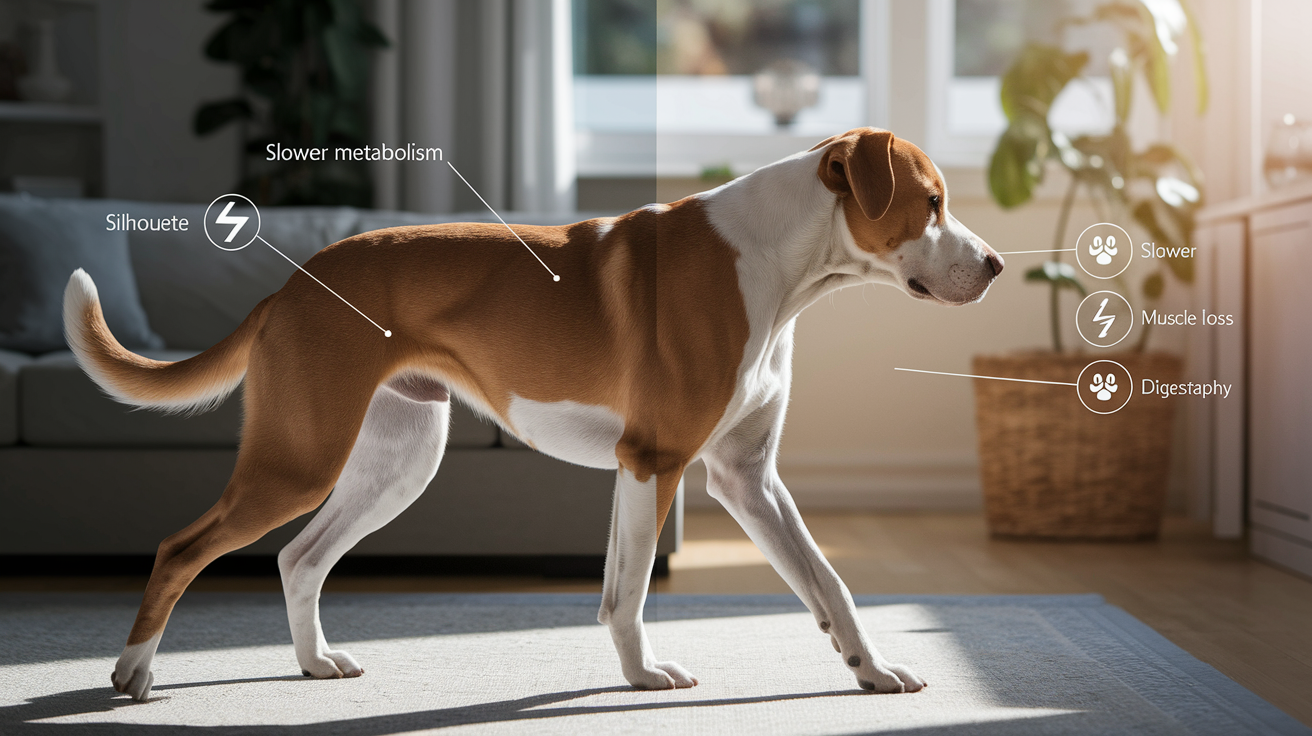
Dogs hit their senior years around 7 for large breeds, 10 for medium, and 12 for small ones. That’s when metabolism starts slowing down. They burn fewer calories just lying there, and most naturally move less. Which means they need less food to stay the same weight. Keep feeding like you always have, and the pounds creep on until your vet starts mentioning joint stress.
Muscle mass changes too. Seniors lose lean muscle over time, especially if they’re couch surfing more than walking. Muscle burns calories even at rest, so as it disappears, their daily needs drop further. Some very old dogs actually start losing weight despite normal portions, which usually means they need something more calorie dense or slightly bigger servings to stay stable.
Digestion slows down. Senior dogs can struggle with certain ingredients, and they’re way more prone to upset stomachs, gas, or loose stools if the food’s too rich or you switch it too fast. They do best on moderate protein, easy carbs, and enough fiber to keep things moving without overwhelming their system.
Here’s what helps seniors do well:
- Fewer total calories to match slower metabolism and lower energy output
- Moderate protein to keep muscle without overworking kidneys
- Better digestibility from quality stuff that’s easier to break down
- Joint support nutrients like glucosamine, omega 3s, or lower calorie density to ease hip and knee strain
- Softer textures like smaller kibble, tender pieces, or wet food if teeth or gums are giving them trouble
Calculating Senior Dog Food Portions Using Calories (RER Formula)
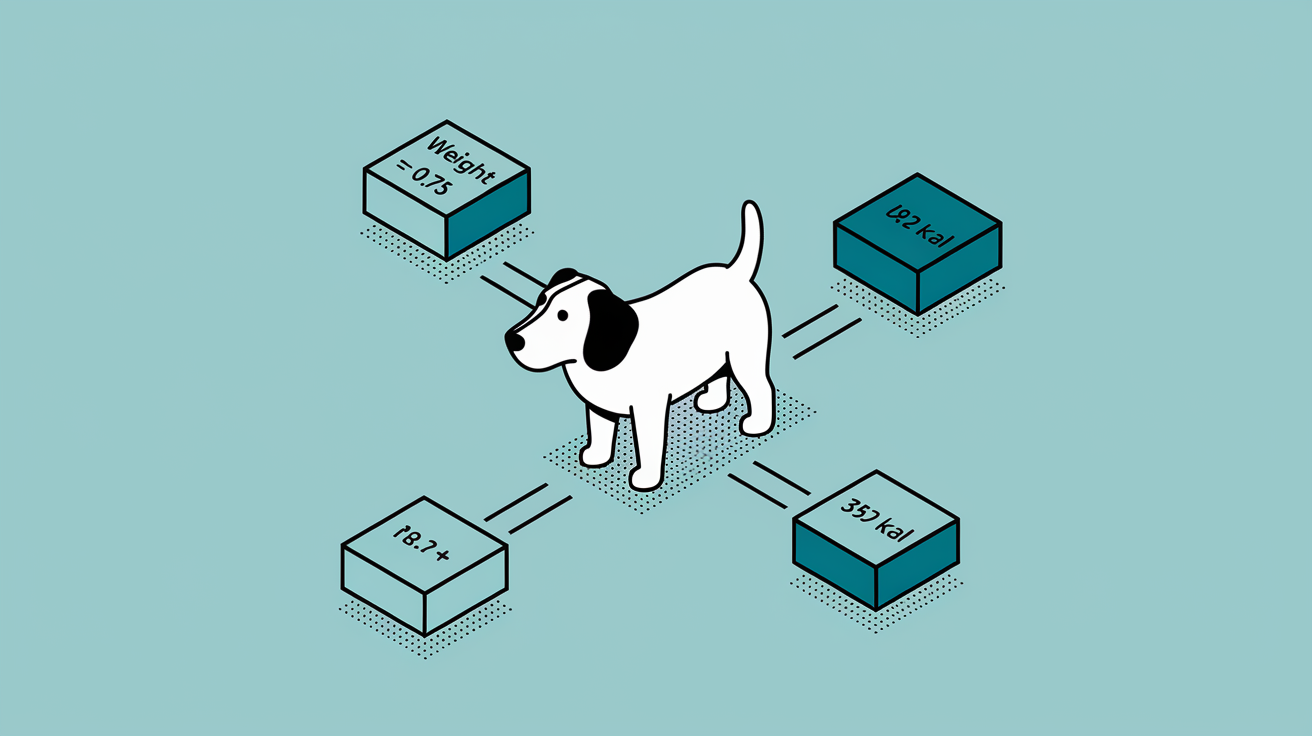
If you want more precision than a chart can give, you can calculate exactly how many calories your senior needs based on their current weight. The starting point’s called Resting Energy Requirement, or RER. It’s the calories your dog burns just existing. Lying around, breathing, digesting.
Step by Step RER Example
Here’s how it works for a 10 kg (22 lb) senior. Take the weight in kilograms and raise it to the power of 0.75. For 10 kg, that’s 10^0.75, which equals about 5.62. Multiply that by 70, and you get an RER of 393 calories per day. That’s baseline, no activity yet.
Next, apply a multiplier for lifestyle. Most seniors are less active, so you’d use around 1.2 for sedentary or 1.4 for moderate activity. If your dog’s neutered (most are), the standard multiplier’s 1.6, but that’s usually too high for seniors. Many vets say start closer to 1.2 or 1.4. A sedentary senior at 1.2 would need about 472 calories daily (393 × 1.2).
| Dog Weight (kg) | RER Calories | Senior Multiplier | Final Calories per Day |
|---|---|---|---|
| 10 kg (22 lbs) | 393 | 1.2 (sedentary) | 472 |
| 10 kg (22 lbs) | 393 | 1.4 (moderate activity) | 550 |
| 20 kg (44 lbs) | 662 | 1.2 (sedentary) | 794 |
| 30 kg (66 lbs) | 897 | 1.2 (sedentary) | 1,076 |
Once you’ve got total daily calories, flip your bag over and find the kcal per cup. Most dry foods run 300 to 450 calories per cup. If yours has 380 and your senior needs 472, divide 472 by 380. That’s about 1.2 cups per day. Split it into two meals, and you’re feeding just over half a cup twice daily. Simple way to get portions that actually match your dog’s current body.
Senior Dog Feeding Adjustments for Activity, Weight Gain, or Weight Loss

Not all seniors slow down the same way. Some 10 year old Beagles still want two walks and squirrel chasing. Others prefer three naps and a slow yard sniff. If your dog’s still fairly active, they’ll burn more and might need portions closer to the higher end. If they’re mostly sedentary, waiting around for dinner, feed closer to the lower end.
Weight changes are your clearest signal. If your senior’s gaining slowly over a few months, cut back about 10% and watch for two weeks. If they’re losing weight or looking bony along the ribs and spine, bump it up 10 to 15%. Very old dogs sometimes lose weight on normal portions because digestion isn’t absorbing as well, so a slight increase or switch to higher fat food can help.
Here’s when to adjust:
- Arthritis or joint pain: Cut portions slightly to keep weight down and ease hip and knee pressure
- Low energy or lethargy: Try a small increase or switch to more calorie dense food
- Recent weight loss: Bump portions 10 to 15% or add a high quality topper for extra calories
- Obesity or visible fat: Cut 10 to 20% and reduce treats, check progress weekly
- High activity levels: Stick to the higher end and consider moderate protein boost
- Recovering from illness or surgery: Temporary increase might help, check with your vet first
Why Breed Size Influences Senior Dog Feeding Needs
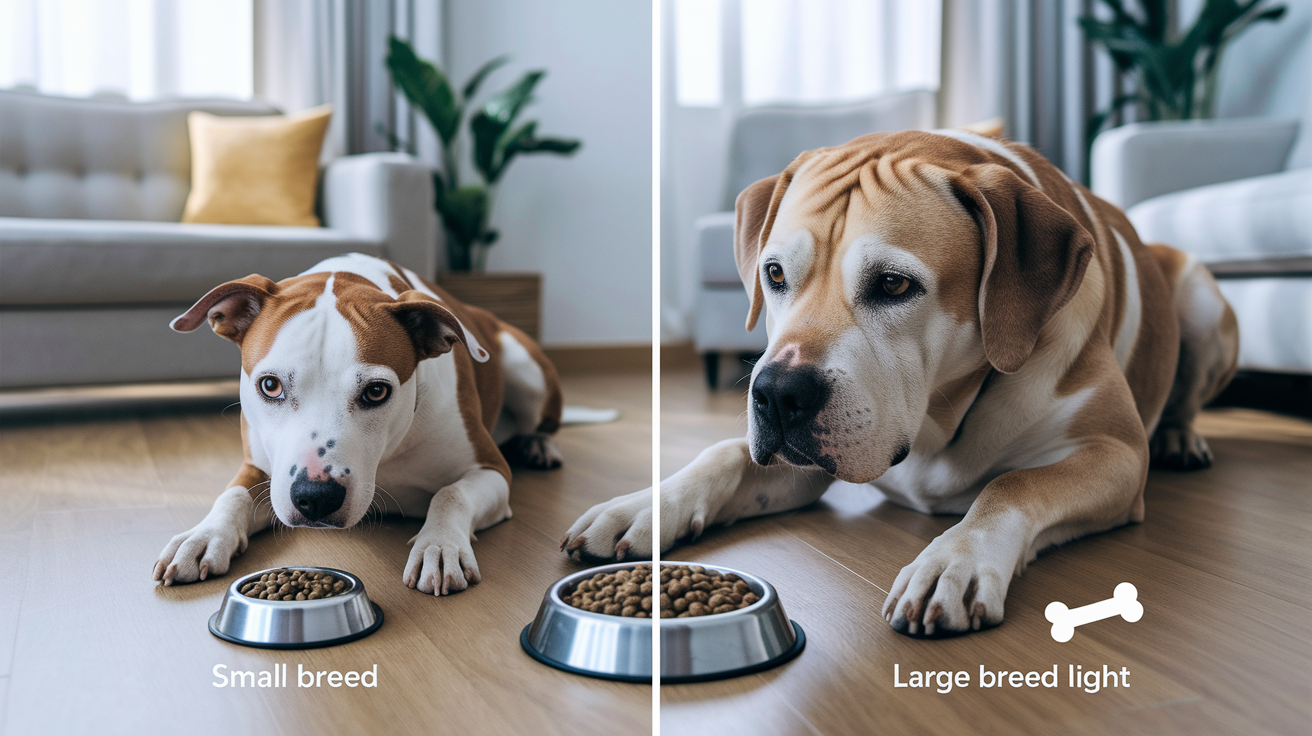
Small dogs like Chihuahuas and Yorkies have faster metabolisms per pound. They burn more calories relative to their size. Even in senior years, a 10 pound Pomeranian might need proportionally more food per pound than a 70 pound Golden. Doesn’t mean they eat more total food, just that their calorie needs per pound are higher because their little bodies work harder staying warm and keeping systems running.
Large and giant breeds like Great Danes and Bernese Mountain Dogs have slower metabolic rates, and their joints carry way more stress. Extra weight on a senior Great Dane can cause serious hip, knee, and elbow problems. Portion control becomes even more important. These dogs benefit from leaner body condition, and it’s safer to underfeed a bit than let them carry extra pounds into old age.
Key size related feeding considerations:
- Metabolism speed: Small breeds need calorie dense food in smaller volumes, large breeds need controlled portions to prevent overeating
- Joint stress: Big dogs are more prone to arthritis and hip problems, keeping weight low matters for mobility and comfort
- Calorie density needs: Toy and small breeds often do better with higher fat, nutrient dense formulas because they can’t eat large volumes
- Portion control importance: Giant breeds should be measured carefully, free feeding’s especially risky because weight gain happens fast and damages joints quickly
How to Measure Senior Dog Food Properly (Avoiding Overfeeding)

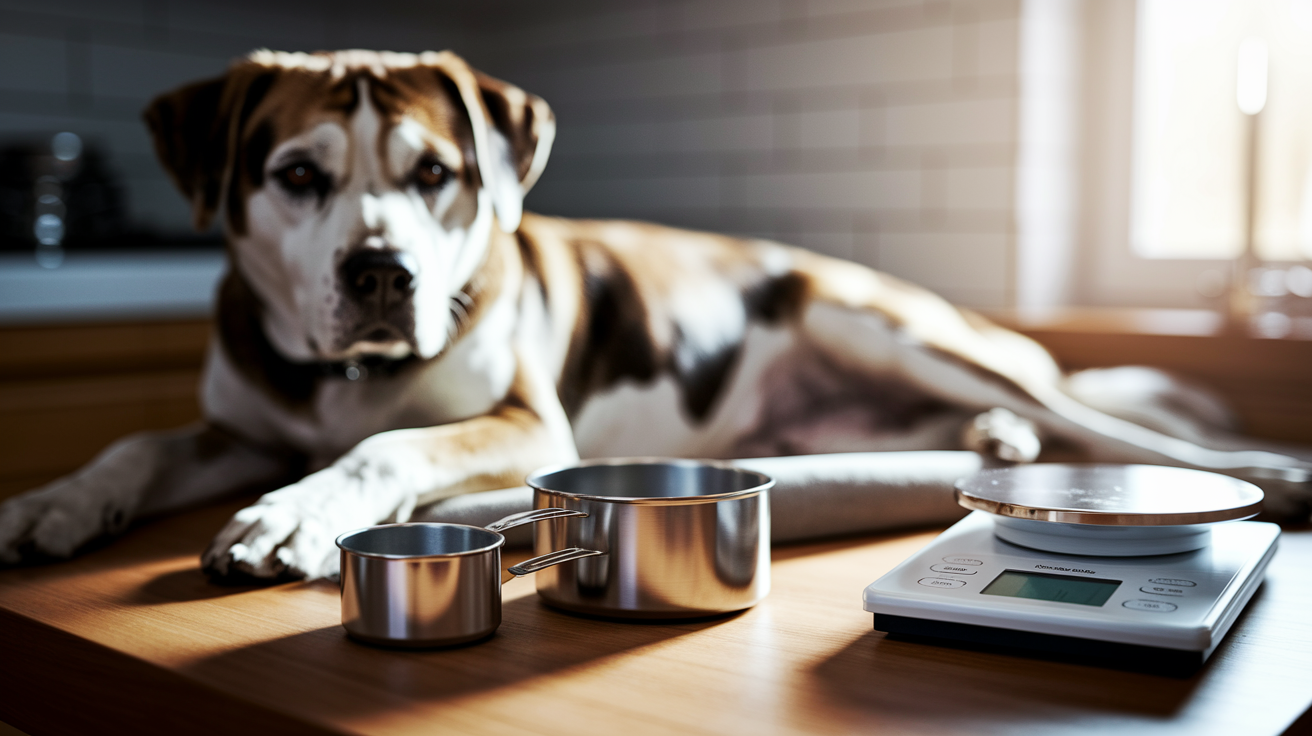
Eyeballing food’s one of the easiest ways to accidentally overfeed. A heaping scoop might look like one cup but could actually be one and a half. Over weeks that adds up to serious extra calories. Use a standard dry measuring cup, the baking kind, and level it off with a straight edge so you’re feeding the actual amount on the bag.
Free feeding (leaving food out all day) is especially risky for seniors because they’re less active and more likely to eat out of boredom. Scheduled meals, two per day for most, help you track exactly how much they’re eating. Makes it easier to notice if appetite drops or spikes, which can be an early sign something’s changing health wise.
Tools and methods that keep portions accurate:
- Standard measuring cup: Use a dry cup with clear markings, not a coffee mug or random scoop
- Gram scale: Weigh portions for even more precision, especially helpful for small dogs on tight calorie limits
- Level scoops: Fill the cup and scrape off the top so it’s flat, not rounded or heaping
- Meal timers or reminders: Feed at the same times daily to create routine and prevent extra snacks
- Pre portioned containers: Measure out the day’s food in the morning and split into two meals, makes it easy to see if you’re staying on track
Health Conditions That Change How Much a Senior Dog Should Eat
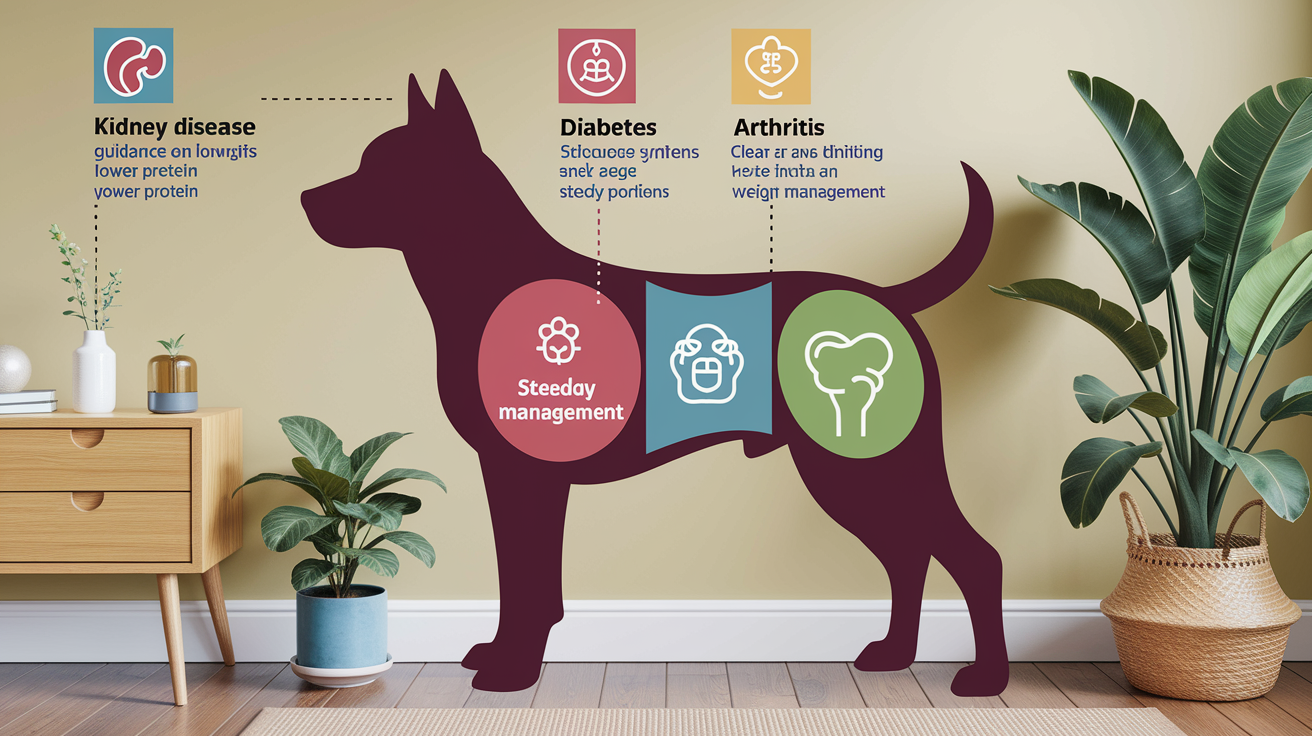
Kidney disease shows up a lot in older dogs, and it usually requires lower protein or specially formulated prescription diets. If your senior’s been diagnosed with kidney issues, your vet will recommend a specific food and portion plan. Sticking to it matters more than any general feeding chart. These dogs also need controlled phosphorus and sodium, so switching foods or adding extras without checking can cause problems.
Diabetes changes feeding routines completely. Diabetic dogs usually need consistent portions at exact times to match insulin doses. Some need reduced overall calories if they’re overweight. The food itself might need lower simple carbs and higher fiber to help manage blood sugar. Portions get adjusted based on glucose monitoring, not just weight.
Joint issues like arthritis don’t always require a diet change, but keeping your senior lean makes a huge difference in mobility and pain. Omega 3 fatty acids from fish oil can help reduce inflammation. Some foods include glucosamine or chondroitin to support cartilage. If your dog’s overweight and has arthritis, portion reduction’s one of the most effective things you can do. Even more than supplements.
How to adjust portions safely when health conditions are involved:
- Reduce portions if your dog’s overweight and dealing with joint pain, diabetes, or heart issues. Aim for gradual weight loss under vet guidance.
- Maintain current portions if your senior’s stable on a prescription diet. Don’t change amounts without rechecking with your vet first.
- Increase portions temporarily if your dog’s recovering from illness, surgery, or has lost weight rapidly. Monitor closely though.
- Switch diet entirely if diagnosed with kidney disease, liver issues, or severe allergies. Follow the vet’s prescribed food and portion plan exactly.
Monitoring Your Senior Dog’s Weight and Adjusting Portions Over Time
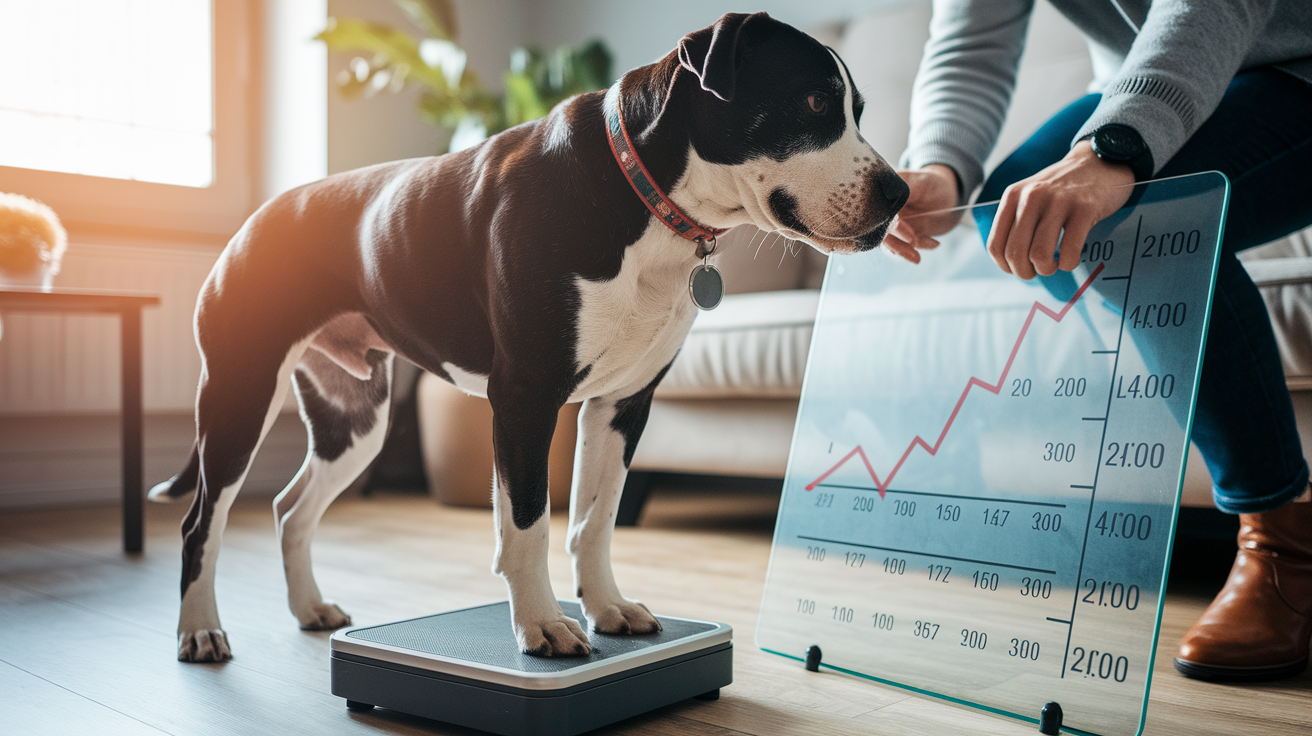
Weigh your senior at least once a month, either at home on a large scale or during quick vet visits. Weight changes happen slowly. It’s easy to miss a two or three pound gain over a few months if you’re just looking at them every day. A simple log or note in your phone helps you track trends and catch problems early.
Body condition’s just as important as the number on the scale. Run your hands along your dog’s ribs. You should be able to feel them easily without pressing hard, but they shouldn’t be sticking out visibly. From above, your dog should have a visible waist, a slight tuck between ribs and hips. From the side, the belly should tuck up slightly, not sag or hang. If your senior’s starting to look round or you can’t find ribs without pushing, time to cut portions back 10%.
Signs that your senior dog’s portions need adjusting:
- Visible ribs or hip bones: Portions might be too low, or they’re not absorbing nutrients well. Check with your vet.
- Gradual weight gain over weeks: Reduce portions 10%, monitor for two weeks, adjust again if needed.
- Sluggishness or low energy: Could mean too little food, too much food, or an underlying health issue. Track portion changes and energy together.
- Loose stools or diarrhea: Sometimes means portions are too large or food’s too rich. Try a slight reduction.
- Picky eating or leaving food: May signal overfeeding, dental pain, or nausea. Don’t just add tastier food without figuring out why.
- Coat changes or dull fur: Can indicate poor nutrition quality or absorption. May need portion increase or food upgrade.
Final Words
Use the weight-based chart as your starting point, then scale portions for a senior dog’s 20-30% lower calorie needs. Pick a cup amount from the chart, or calculate RER and convert to calories if you want a precise number.
Measure meals with a standard cup or kitchen scale, feed twice daily, and adjust 10-20% for activity, body condition, or health issues while watching stool and energy.
If you’re still unsure about how much to feed senior dog by weight, try the chart for two weeks and tweak based on results, and you’ll land on a steady, comfortable routine.
FAQ
Q: How much food should a 70 lb senior dog eat?
A: A 70 lb senior dog should eat about 3–3⅔ cups of typical kibble per day (senior feeding chart). Adjust portions 10–20% for activity or health and watch weight and stool.
Q: What is the 7 7 7 rule for dogs and what is the 90 10 rule for dogs?
A: The 7 7 7 rule isn’t a standard feeding guideline—people use it differently—check the context or your vet. The 90/10 rule means roughly 90% of calories from regular meals and no more than 10% from treats/extras.
Q: Is it better to feed a senior dog once or twice a day?
A: It’s better to feed a senior dog twice a day—two meals help steady energy, support digestion, and control weight; follow your vet’s guidance for any special medical needs.