
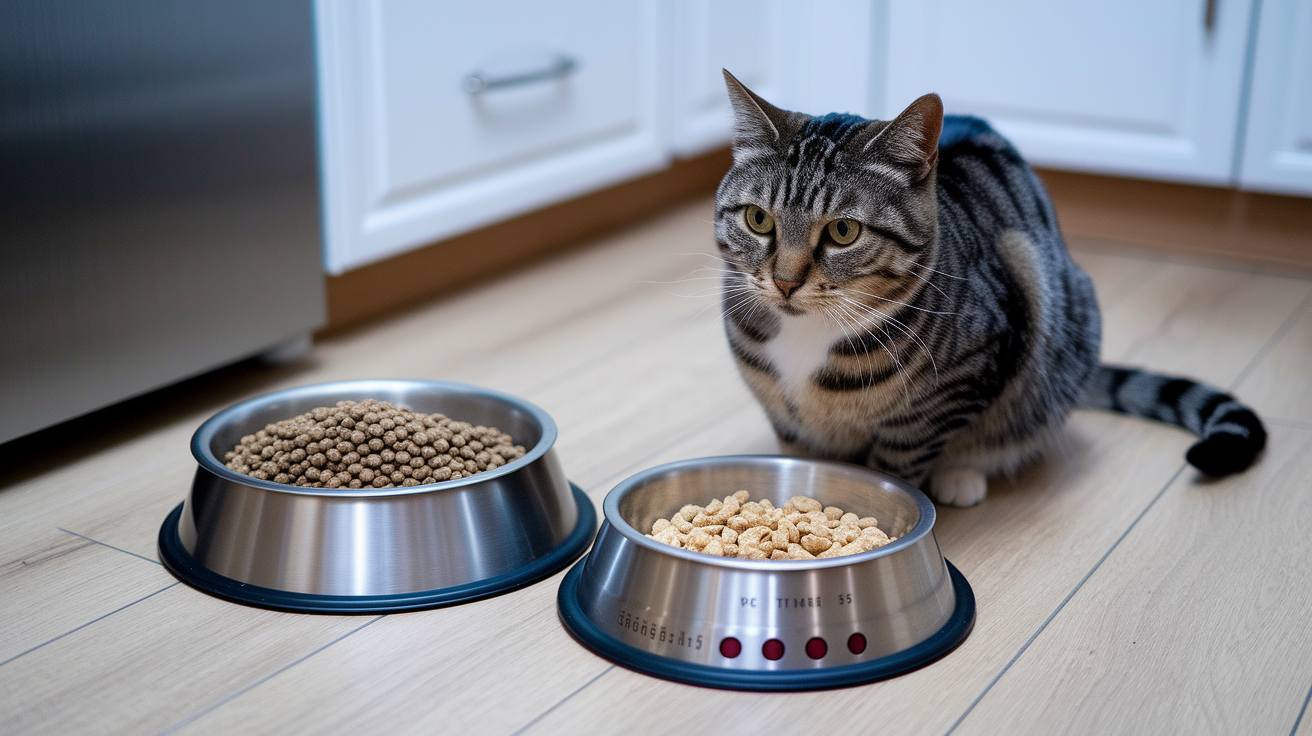
Free feeding vs scheduled feeding cats: which one really helps your cat stay healthy instead of just making your life easier?
Free feeding leaves dry food out all day so a cat can graze; scheduled feeding means measured meals at set times, making portion control and appetite checks simple.
For most cats, scheduled feeding works better. It helps manage weight, lets you use wet food safely, and flags appetite changes early.
But free feeding can fit some low-risk adults if you measure daily portions and watch the scale.
Understanding the Two Main Cat Feeding Methods
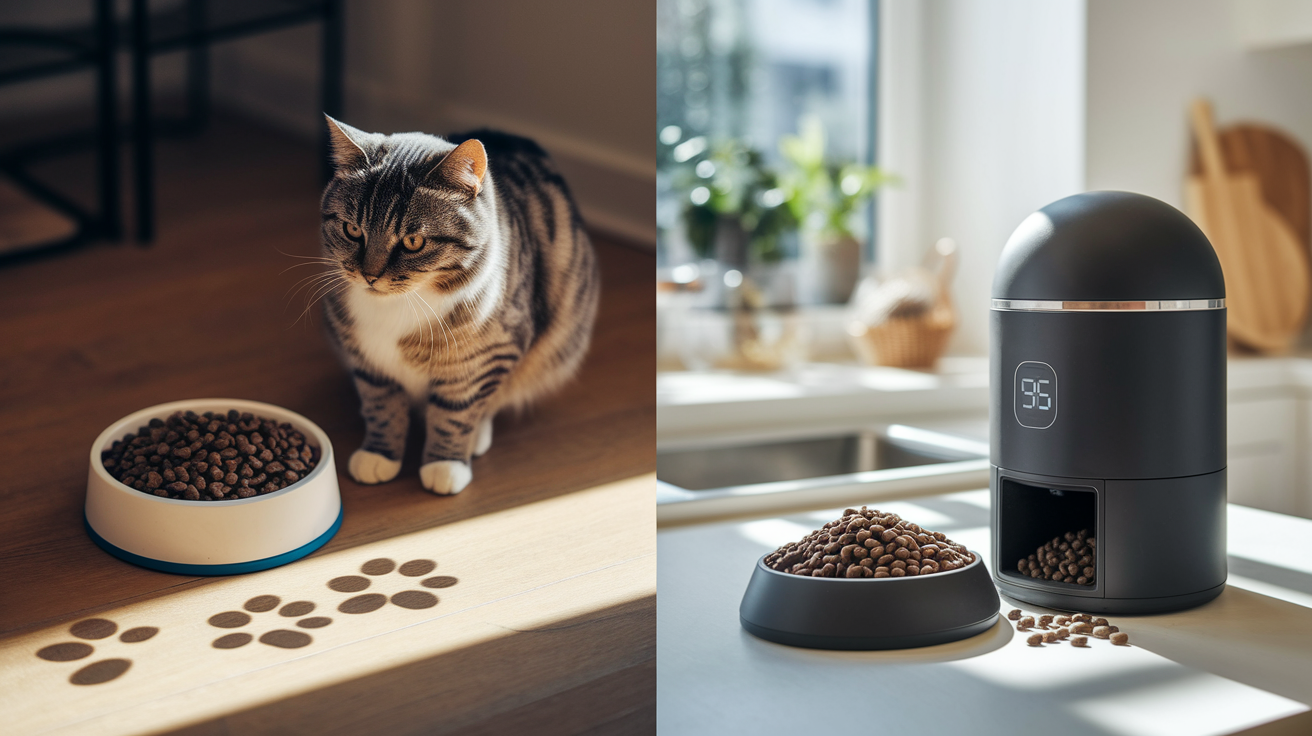
Free feeding means you leave food out all day and your cat eats whenever they feel like it. You fill the bowl, go about your life, and top it off when it’s running low. This only works with dry kibble, though. Wet food spoils fast at room temperature. Within a couple hours, that moisture-rich stuff starts breaking down, smelling funky, and growing bacteria that can make your cat sick.
Scheduled feeding is different. You measure portions and serve them at set times, usually 3 to 4 small meals throughout the day for cats. You control when the bowl goes down, how much goes in, and when it gets picked back up. Your cat learns to expect food at certain times, and you can track what goes in and what gets left behind.
Most cat owners end up here because they’re trying to balance convenience with health. Or they’re dealing with weight gain, picky eating, or the chaos of feeding multiple cats. Both methods can work, but the trade-offs are pretty different.
| Feeding Method | Description | Key Advantage | Key Drawback |
|---|---|---|---|
| Free Feeding | Food available all day, refilled as needed | Convenient for busy schedules | Hard to track intake or prevent overeating |
| Scheduled Feeding | Measured portions at set times (3–4 meals/day) | Better portion control and health monitoring | Requires consistent time and attention |
Pros and Cons of Free Feeding for Cats
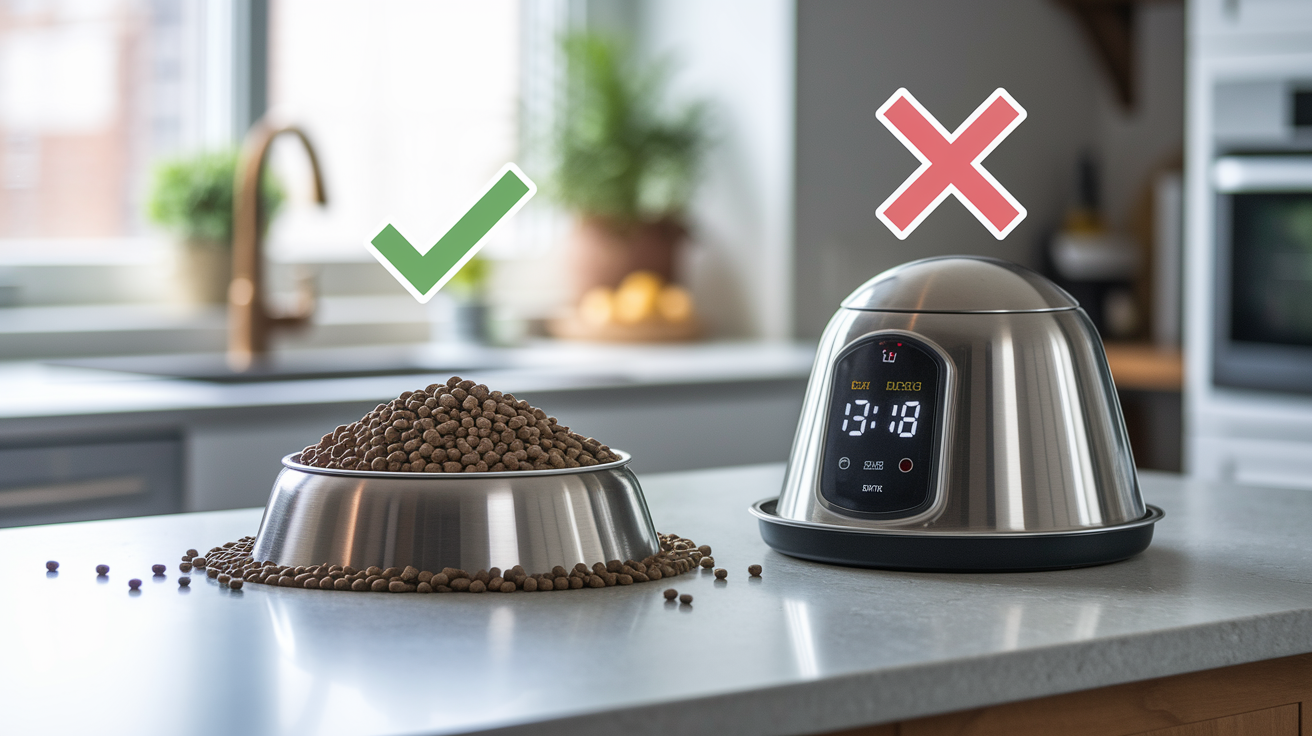
Some owners go with free feeding because it fits a hectic work schedule, cuts down on meal prep stress, and lets their cat snack in small amounts all day. Which sounds natural for an animal that’d hunt multiple small prey in the wild. It feels low maintenance. You’re not racing home at 6 p.m. to serve dinner.
Pros:
- Convenient when you’ve got unpredictable schedules or long work hours
- Lets cats graze and eat multiple small portions naturally
- Cuts down on immediate hunger driven begging or food anxiety
Cons:
- Makes it nearly impossible to monitor how much your cat actually eats each day
- Increases risk of overeating and weight gain, especially in less active or food motivated cats
- Only works with dry kibble since wet food spoils after about 2 hours
- Creates competition and resource guarding in multi-cat homes where one cat may block access or eat most of the food
- Prevents early detection of appetite changes that can signal illness
Benefits and Drawbacks of Scheduled Feeding Cats

Scheduled feeding mirrors the natural hunt, catch, kill, eat cycle cats are wired for. In the wild, a cat doesn’t have a buffet sitting around. Food becomes available after effort, gets consumed, then the cycle starts again. Feeding at set times supports this rhythm and gives you control over portions, which directly impacts weight management and long term metabolic health.
The main drawback? Time. You need to be home or set up an automatic feeder to maintain consistency. If your schedule changes often or you travel frequently, sticking to exact meal times can feel rigid or stressful.
- Allows precise portion control based on age, weight, activity level, and health needs
- Makes it easy to notice appetite changes, which can be an early warning sign of illness
- Creates predictable litter box habits since digestion follows a routine
- Supports bonding and interaction since mealtime becomes a structured part of your relationship
- Reduces boredom driven overeating by making food a reward tied to routine, not constant availability
- Offers flexibility to include wet food, raw food, or combination diets without spoilage concerns
Health Impacts of Free Feeding vs Scheduled Feeding in Cats
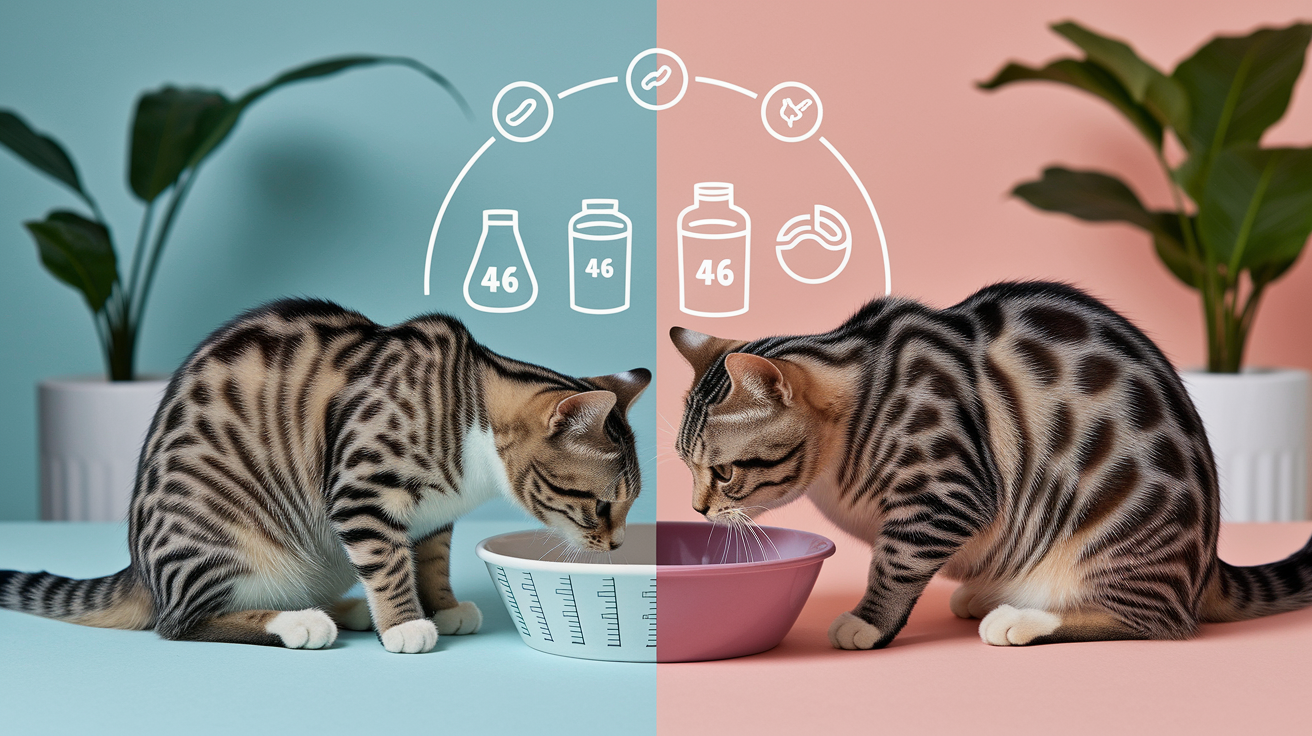
Nearly 60% of cats in the United States are overweight or obese, according to clinical surveys from the Association for Pet Obesity Prevention. Free feeding contributes to this directly. When food’s always available, many cats eat past the point of hunger, especially if they’re bored, under stimulated, or genetically prone to food motivation. Dry kibble, the only practical option for free feeding, is often loaded with starches and carbohydrates cats don’t need and can’t process efficiently. Over time, that can increase diabetes risk.
Scheduled feeding gives you a natural checkpoint. You know exactly how many calories went into the bowl and how much came back out. Makes it easier to adjust portions up or down as your cat ages, gains weight, or becomes less active. It also supports gut health by creating a predictable digestive rhythm, which can reduce issues like constipation, diarrhea, or vomiting. Behaviorally, scheduled meals align with your cat’s primal wiring and can reduce stress related overeating or food obsession.
Health monitoring becomes much simpler with scheduled feeding. If your cat suddenly leaves food in the bowl or skips a meal, you notice immediately. With free feeding, a small appetite drop can go undetected for days until weight loss or lethargy becomes obvious.
- Chronic overeating leading to obesity and joint stress
- Higher risk of diabetes from excessive carbohydrate intake in dry food
- Difficulty detecting early signs of kidney disease, dental pain, or digestive upset
- Increased likelihood of urinary issues due to lower moisture intake from dry only diets
- Behavioral problems like food aggression, anxiety, or boredom eating
Feeding Methods for Kittens, Adults, and Senior Cats
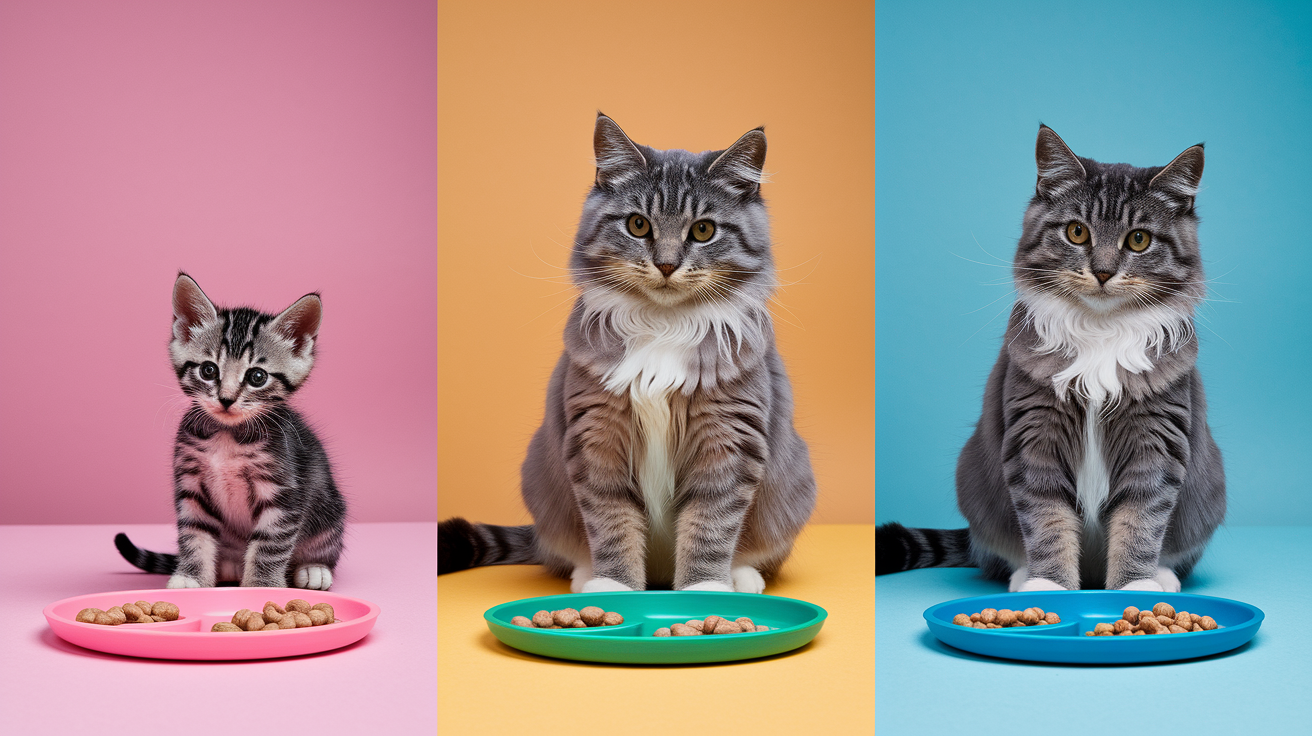
Kittens have fast metabolisms and high energy needs, but that doesn’t mean free feeding is the answer. Scheduled meals teach portion awareness early and help you monitor growth rates, stool quality, and energy levels during a critical development window. Feeding kittens 3 to 4 small meals per day supports their natural eating pattern while giving you control over intake and preventing the habit of constant grazing that can carry into adulthood.
Adult cats generally do well on 2 to 3 meals per day, depending on activity level and individual metabolism. Senior cats may need smaller, more frequent meals if they’ve got dental issues, digestive sensitivities, or conditions like kidney disease that require careful intake monitoring. Free feeding makes it harder to notice when an older cat starts eating less, which is often the first sign something’s wrong.
| Life Stage | Best Feeding Method | Why |
|---|---|---|
| Kittens | Scheduled (3–4 meals/day) | Supports growth monitoring and prevents lifelong grazing habits |
| Adults | Scheduled (2–3 meals/day) | Maintains ideal weight and allows diet flexibility |
| Seniors | Scheduled (smaller, frequent meals) | Easier to track health changes and adjust for medical needs |
Practical Setup Tips for Both Cat Feeding Methods
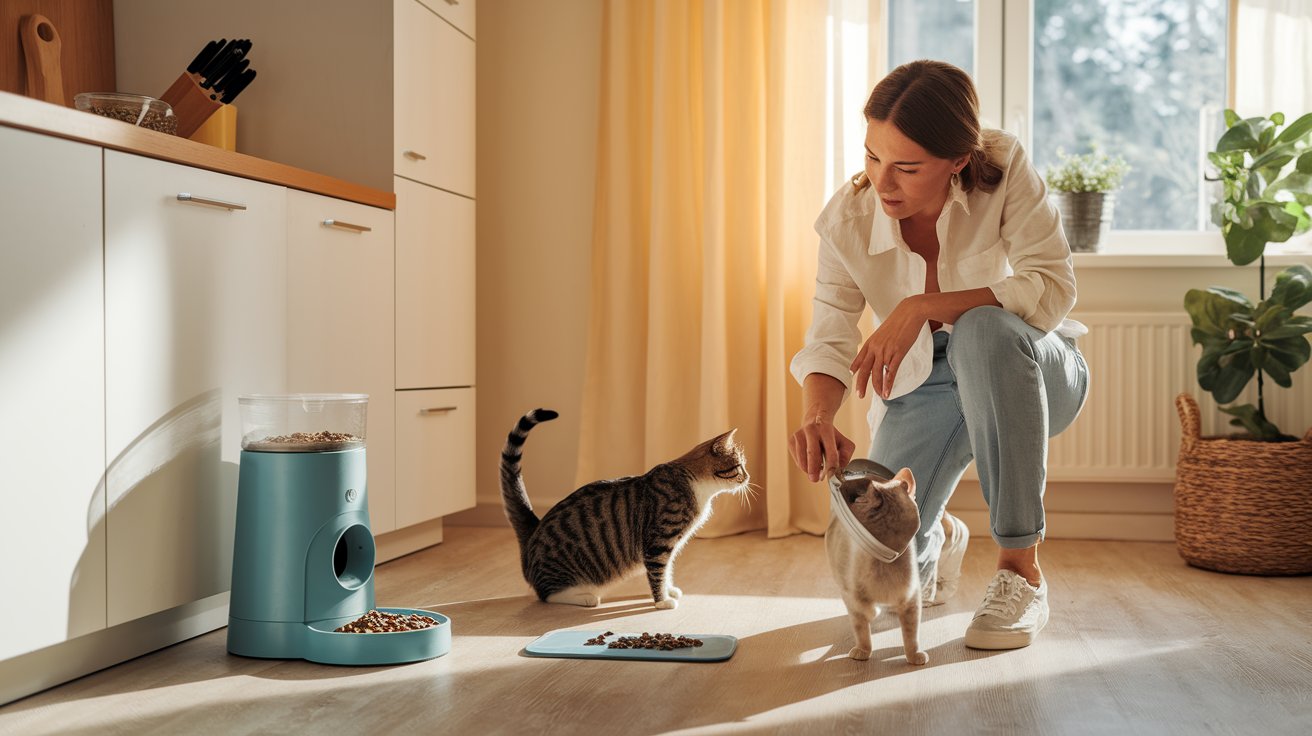
If you’re committed to scheduled feeding, an automatic timed feeder can be a lifesaver when you’re at work or traveling. Look for models that dispense measured portions at set times and allow wet food if you want to move away from kibble only diets. Place the feeder in a quiet spot where your cat feels safe, not near litter boxes or high traffic zones. Puzzle feeders and slow feed bowls add mental enrichment and prevent cats from inhaling their food too quickly, which can cause vomiting or digestive upset.
For free feeding, stick to dry food and replace it daily, even if the bowl isn’t empty, to prevent staleness and rancidity. Wash the bowl every day to avoid bacterial buildup. Measure out a daily portion in the morning so you’re not just endlessly topping off the bowl without tracking total intake. Keep an eye on your cat’s body condition and adjust the daily amount if you notice weight creep.
In multi-cat homes, separate feeding stations reduce competition and resource guarding. Give each cat their own bowl in different areas of the house, and consider feeding scheduled meals in separate rooms if one cat’s food aggressive. This setup works for both feeding methods, but it’s especially important with free feeding, where dominant cats can monopolize the bowl all day.
- Automatic feeder: Maintains consistency when you’re not home and allows portion control
- Puzzle or slow feeder: Adds mental stimulation and slows down fast eaters
- Multiple feeding stations: Prevents competition and ensures fair access in multi-cat households
- Measured scoops or portion cups: Takes guesswork out of daily calorie totals
Common Mistakes Owners Make With Free Feeding vs Scheduled Feeding

Most feeding problems come from guessing at portions or not adjusting them as your cat’s needs change. With free feeding, it’s easy to keep refilling the bowl without ever adding up how much your cat actually eats in a day. With scheduled feeding, owners sometimes serve portions that are too large because the cat acts hungry, or they pick inconsistent times that confuse the routine and create anxiety.
- Constantly topping off the free feed bowl without measuring daily totals
- Leaving wet food out for more than 2 hours, risking spoilage and stomach upset
- Serving overly large scheduled portions based on begging behavior instead of actual calorie needs
- Feeding at wildly different times each day, which disrupts digestion and increases stress
- Ignoring body condition changes and continuing the same portion sizes for months or years
- Not adjusting for treats, toppers, or table scraps, which can add significant hidden calories
How to Transition Cats Between Feeding Methods Safely
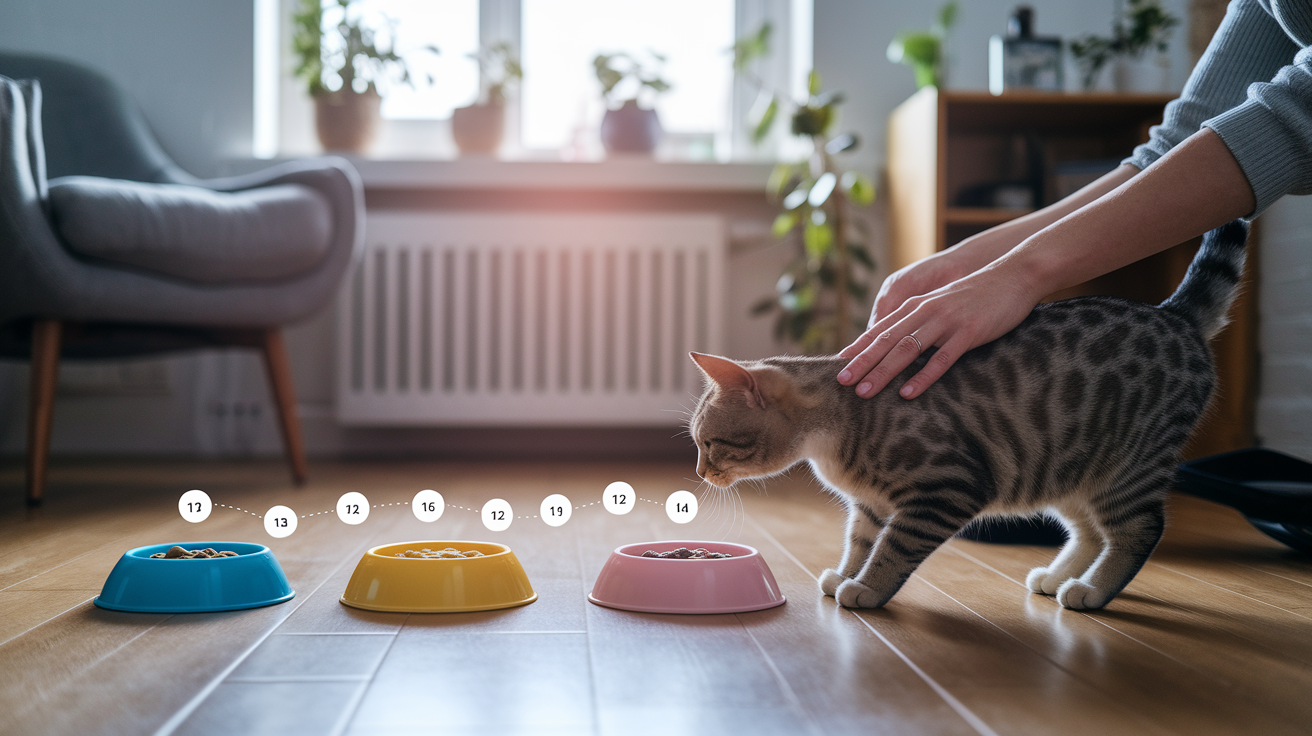
Sudden changes in feeding routine can cause digestive upset, stress, or refusal to eat. If you’re switching from free feeding to scheduled meals, start by measuring out the current daily amount your cat eats and dividing it into 2 to 3 portions. Offer those portions at set times, but leave them down for 30 minutes at first so your cat doesn’t panic about food disappearing. Gradually reduce the window over a week until your cat learns to eat within 15 to 20 minutes.
Watch your cat’s stool, energy level, and coat condition during the transition. Soft stool, increased begging, or visible weight loss means you’re moving too fast or portions are too small. Continued normal stool, steady weight, and calm behavior between meals means the new routine’s working.
- Measure your cat’s current daily intake for 3 days to establish a baseline
- Divide that total into 2 to 3 portions and begin offering them at consistent times
- Leave the bowl down for 30 minutes initially, then reduce to 20, then 15 minutes over 7 to 10 days
- Monitor stool quality, weight, and behavior daily and adjust portions as needed
- Consult your vet if your cat refuses to eat, loses weight rapidly, or shows signs of stress like hiding or vomiting
Final Words
You learned the two main feeding methods—free feeding and scheduled meals—what they look like, and how each affects weight, behavior, and monitoring.
We covered pros and cons, age-based tips for kittens/adults/seniors, setup ideas, common mistakes, and a safe step-by-step transition plan.
Deciding between free feeding vs scheduled feeding cats comes down to your cat’s needs, your routine, and what you can keep up. Start small: measure portions, watch stool and energy for two weeks, and adjust. You’ve got this.
FAQ
Q: Is free feeding or timed feeding better for cats?
A: Whether free feeding or timed feeding is better for cats depends on age, health, and household; timed (scheduled) feeding is usually better for portion control, weight management, and noticing appetite changes.
Q: Is there a 3-3-3 rule for cats?
A: The 3-3-3 rule for cats is a settling guideline: three days hiding, three weeks cautious exploring, and three months to feel fully at home after bringing a new cat in.
Q: What is the 25 rule for cat food?
A: The 25 rule for cat food isn’t a universal standard; some people use about 25 calories per pound per day as a rough starting point, but needs vary by age, activity, and health—check with your vet.
Q: What is the #1 cause of death in cats?
A: The #1 cause of death in cats depends on age; trauma and accidents are common in younger cats, while chronic kidney disease and cancer are leading causes in older cats—regular vet checks help.