
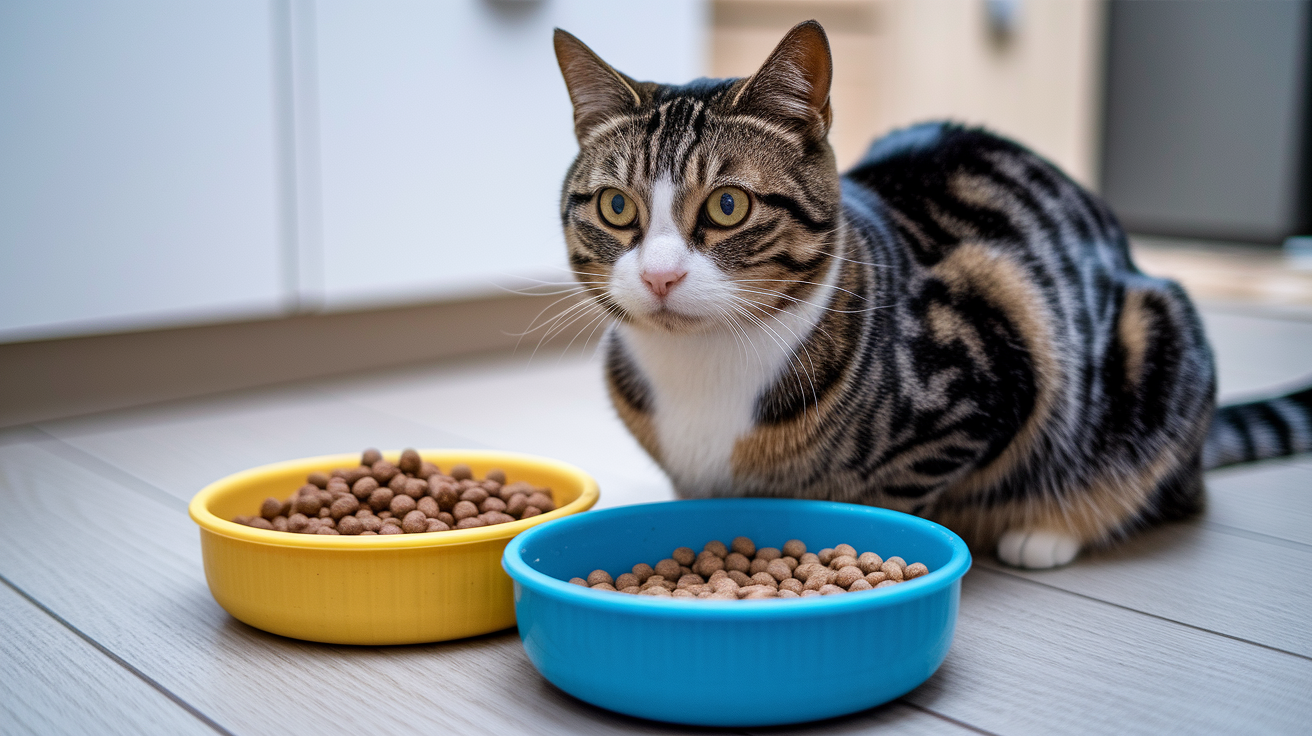
Think mixing wet and dry is as simple as pouring both into a bowl? Not quite.
When done right, a wet-and-dry routine adds moisture, texture, and a bit of teeth-scraping without doubling calories.
This post shows practical ratios, like 75/25, 50/50, or more wet for seniors and weight loss, plus feeding schedules that fit your day.
You’ll get a step-by-step way to split calories into cans, tablespoons, and cups, and know what to watch for during a two-week trial.
Best Ways to Use a Wet and Dry Food Combination for Cats
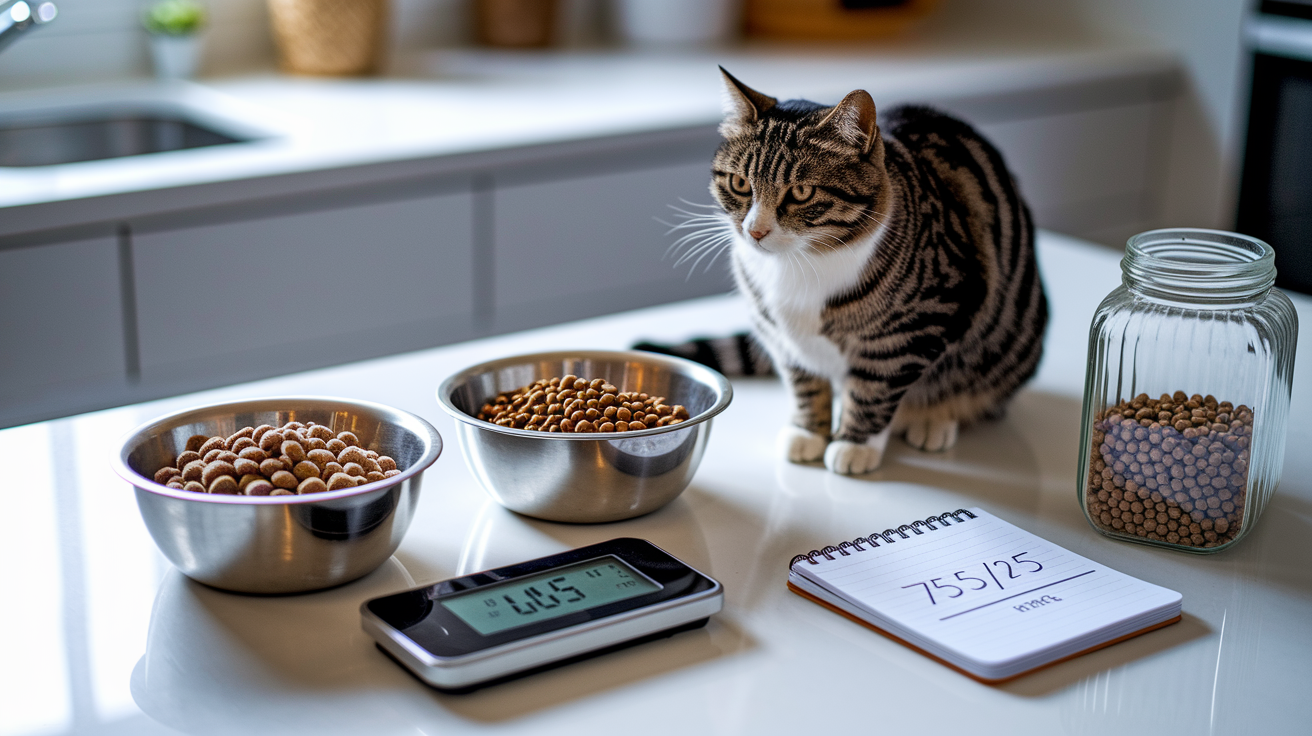
Here’s how you combine wet and dry food without turning it into a calorie free-for-all: figure out your cat’s daily calorie needs based on weight and activity, then split those calories between both types. You can start with 75% dry and 25% wet, or go half and half if your cat drinks water about as often as you win the lottery. Serve wet food at mealtime in a clean dish, leave measured kibble out for grazing. You get the dental scraping from kibble plus the moisture boost from wet without accidentally doubling your cat’s calories.
Figuring out portions means checking the calorie info on both packages. A 10 pound indoor cat usually needs around 200 calories a day. If you’re splitting it evenly, that’s 100 from each type. Wet food typically packs 70 to 100 calories in a 3 ounce can, while dry clocks in at 300 to 400 per cup. Measure both carefully and watch your cat’s body condition over a couple weeks.
Wet food goes down at room temperature and gets picked up after 30 minutes so it doesn’t spoil or invite an ant parade. Most cats polish off the wet portion first, then come back to nibble kibble throughout the day. Opened cans live in the fridge for two days max. Bring cold food to room temp by letting it sit for 10 to 15 minutes or adding a splash of warm water.
-
Weigh your cat and look up their daily calorie target on the food bag or ask your vet for a range.
-
Pick a ratio that fits your goals, like 50/50, 75/25 dry to wet, or 25/75 if your cat treats the water bowl like a decoration.
-
Calculate portions by splitting total daily calories between wet and dry, then convert those calories into actual amounts using the labels.
-
Set a schedule like wet in the morning and evening with measured kibble left out, or mix both at mealtimes.
-
Monitor stool, weight, and energy for two weeks and adjust portions to keep your cat at a healthy weight.
Key Benefits of a Wet and Dry Cat Food Combination
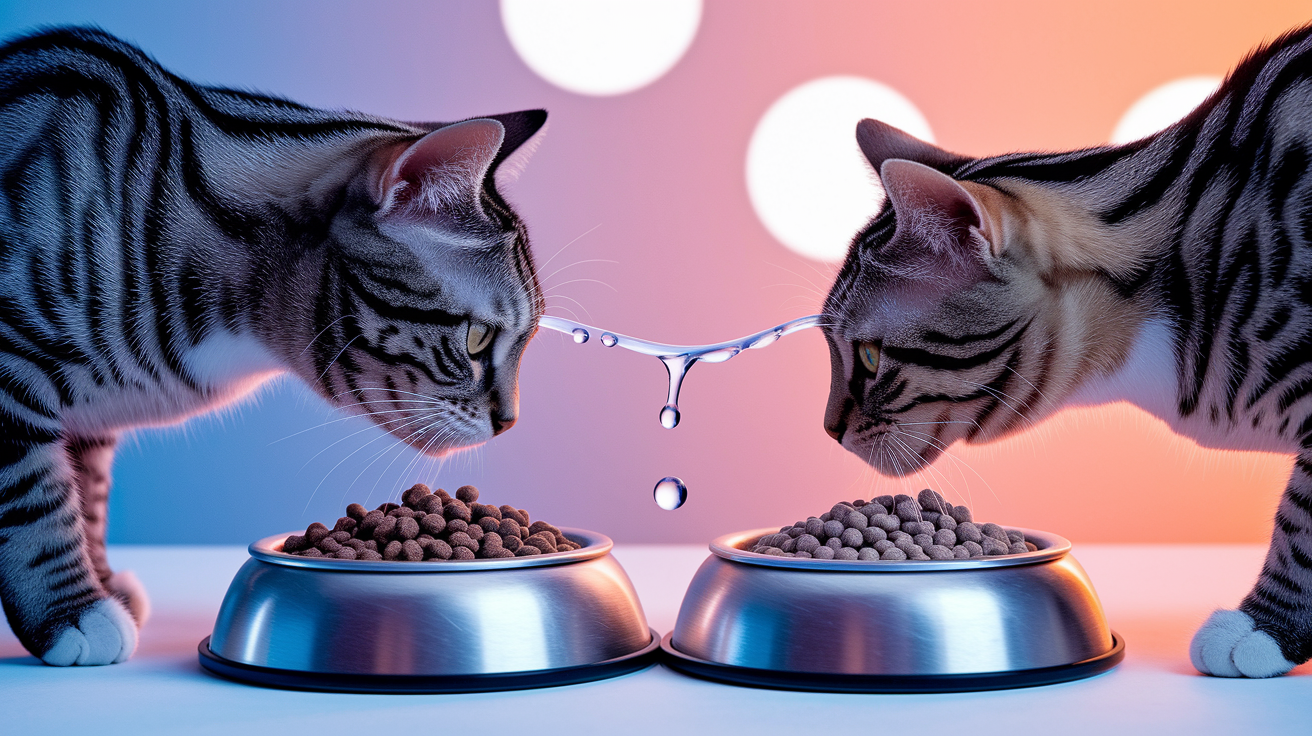
Wet food delivers moisture that most cats don’t get from drinking alone, which keeps kidneys happy and the urinary tract running smoothly. Cats evolved as desert hunters with a lousy thirst drive, so they stay mildly dehydrated on kibble only diets. Adding wet food can bump daily water intake by 50% or more, which dilutes urine and cuts the risk of crystals or bladder flare ups.
Dry kibble scrapes teeth as cats chew, which helps slow tartar buildup between vet cleanings. It’s not a substitute for brushing or professional work, but it’s better than nothing. Wet food gets easier to eat as cats age and deal with missing teeth or sore gums. It’s also a sneaky way to hide pills, since you can tuck them into soft pâté or minced recipes.
- Better hydration from wet food takes pressure off kidneys and supports urinary health.
- Dental cleaning from kibble controls tartar between checkups.
- Easier digestion for seniors or sensitive stomachs thanks to softer texture.
- Medication delivery gets simpler when you can hide pills in wet food.
- More appeal from mixing textures and flavors keeps picky eaters interested.
- Flexible feeding lets you adjust ratios for activity level, health needs, or the season.
How to Introduce Wet Food Into a Mostly Dry Cat Diet
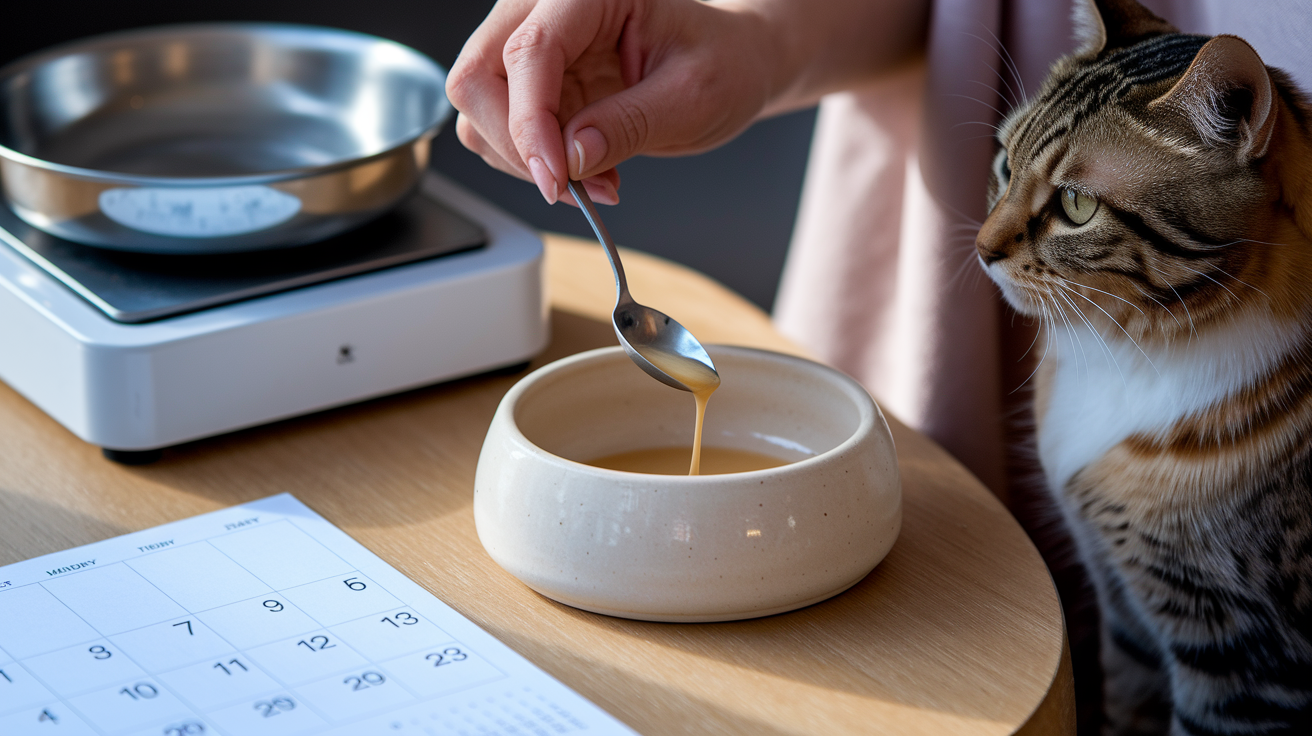
Start with one heaped teaspoon of wet food in a saucer, separate from the regular dry meal. This tiny amount lets your cat check out the new texture and flavor without overwhelming their system or wasting a can if they turn up their nose. Serve it at room temp instead of fridge cold, since cold food smells weak and can upset some stomachs.
Pick recipes with the same protein that’s already in your cat’s kibble. If they eat chicken based dry food, start with chicken wet instead of switching to fish or beef while you’re also changing texture. Offer the teaspoon once a day when you’re home to watch. Some cats dive in immediately, others sniff and walk away a few times before giving it a shot.
Build the portion slowly over 7 to 10 days as your cat accepts it. Go from one teaspoon to two, then a full tablespoon, then a complete serving based on your calorie plan. If your cat refuses the first try, switch textures (pâté to minced or shredded) or try a different protein. Taking it slow prevents stomach issues and builds good associations with the new food.
| Introduction Step | Details |
|---|---|
| Day 1-3 | Offer one heaped teaspoon at room temp, separate from dry food, once per day |
| Day 4-6 | Bump to two teaspoons if they’re into it; try different texture or protein if they’re not |
| Day 7-10 | Work up to one tablespoon or a small meal portion while trimming dry food a bit |
| Day 11+ | Hit your target wet portion and dial back dry to keep total daily calories steady |
How to Introduce Kibble Into a Mostly Wet Cat Diet

For cats switching to dry, start with 7 to 10 kibble pieces in a dish or treat toy near their regular wet meal. This small intro lets them explore the crunch and taste without replacing food they already trust. Some cats bat pieces around like toys before eating, which is totally normal during texture adjustment.
Cats might need time to get used to chewing if they’ve eaten only wet food for months or years. Their jaw muscles aren’t conditioned for harder pieces, and the drier texture feels weird at first. Increase kibble slowly over 10 to 14 days, adding a few more pieces every two or three days while cutting back wet food slightly. If your cat ignores the kibble, try wetting a few pieces with a teaspoon of juice or broth from their wet food to bridge the flavor gap.
- Start with single ingredient kibble if you can, like freeze dried chicken, which smells stronger and feels closer to wet texture.
- Put kibble in a puzzle feeder to turn eating into play, which can spark interest in hesitant cats.
- Mix 5 to 7 dry pieces into wet food for cats who need a slower bridge between textures.
- Increase kibble every 3 days while trimming wet by a matching calorie amount to keep daily intake stable.
Practical Mixing Ratios and Feeding Schedules for Cats

Your daily total needs to account for both wet and dry calories, which means you’re adjusting portion sizes instead of just piling wet on top of a full dry ration. A 10 pound cat eating 200 calories a day might get 100 from a 3 ounce can and 100 from about 1/4 cup of dry, depending on the specific products. Always start with the feeding guides on both bags, then tweak based on your cat’s body over a couple weeks.
Wet food gets supervised and picked up after 30 minutes to avoid spoilage, while dry can be portioned and left out for grazing. Cats usually eat wet first and come back for dry later, hitting the bowl several times during the day. This works great for mixed feeding since you get kibble convenience alongside wet food hydration. You can also alternate meals (wet in the morning, dry at night) if your cat prefers eating them separately instead of mixed in one bowl.
Some people feed wet twice daily at set times with measured kibble available between meals. Others mix both in the same bowl at breakfast and dinner, remove leftovers after 30 minutes, and offer nothing until the next meal. The right way depends on your cat’s habits, your schedule, and whether your cat overeats when food sits out all day.
- Option 1 (Two Mixed Meals): Combine wet and dry in one bowl at breakfast and dinner, pick up after 30 minutes, no grazing.
- Option 2 (Wet Meals + Dry Grazing): Serve wet at set times, leave measured kibble out all day.
- Option 3 (Alternating Meals): Feed wet in the morning, dry at night, or rotate daily.
- Option 4 (All Mixed, Free Fed): Mix both at breakfast, leave out all day (only if your cat self regulates and doesn’t pig out).
| Cat Type | Suggested Wet % | Suggested Dry % |
|---|---|---|
| Kitten (high energy, growth needs) | 40-50% | 50-60% |
| Adult (normal activity, healthy weight) | 25-50% | 50-75% |
| Senior (7+ years, possible dental issues) | 50-75% | 25-50% |
| Overweight (weight loss needed) | 60-75% | 25-40% |
Choosing Wet and Dry Foods That Work Well Together
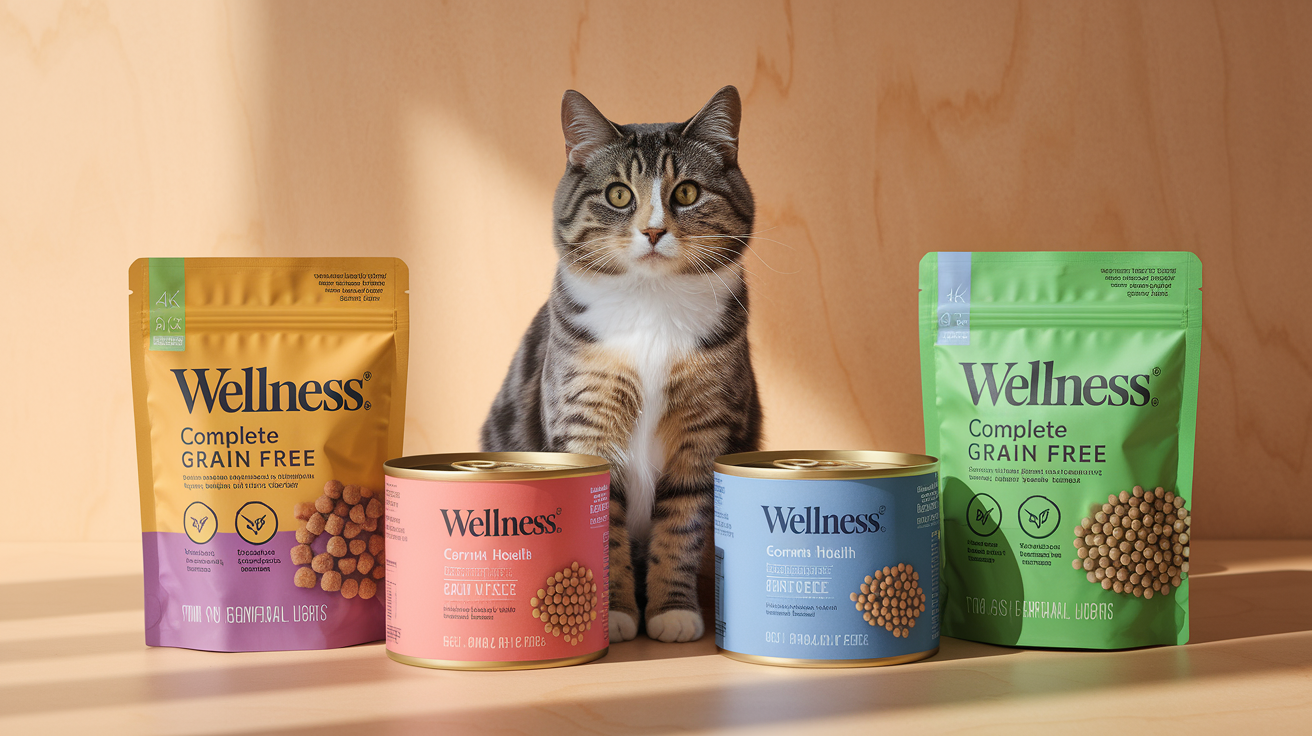
Both foods need to be labeled “complete and balanced” so mixing doesn’t create nutrient gaps or overloads. Check the AAFCO statement on each package to confirm it’s made for your cat’s life stage, whether that’s kitten, adult, or all life stages. Don’t mix a complete food with something marked “supplemental” or “for intermittent feeding” since those aren’t designed to be main meals.
Match protein sources between wet and dry when you can, especially during transitions or for sensitive cats. If your cat eats chicken kibble, starting with chicken wet reduces variables and makes it easier to spot any ingredient that might cause stomach upset or itching. Wellness Complete Health Grain Free and CORE Grain Free give you multiple protein and texture options like pâté, minced, shredded, morsels, chunks, and broth based recipes, so you can rotate flavors without switching brands or reformulating the base nutrition.
Look for named animal proteins (chicken, turkey, salmon) as the first ingredient in both formulas. Skip generic terms like “meat by-products” as the main protein. Both should list taurine (an amino acid cats can’t make themselves), omega 3 and omega 6 fatty acids, and vitamins A and E. Check the guaranteed analysis to make sure crude protein hits at least 26% for dry and 8 to 10% for wet on an as fed basis.
- Both need to be complete and balanced with an AAFCO statement for your cat’s life stage.
- Named animal protein should be first on the ingredient list in both formulas.
- Matching proteins cut the risk of stomach upset during transitions or for touchy cats.
- Texture variety (pâté, shredded, minced, chunks in gravy) helps you find what your cat actually likes.
- Taurine, omega fats, and key vitamins should show up in both wet and dry nutrition panels.
Feeding a Wet and Dry Combination for Kittens, Adults, and Senior Cats
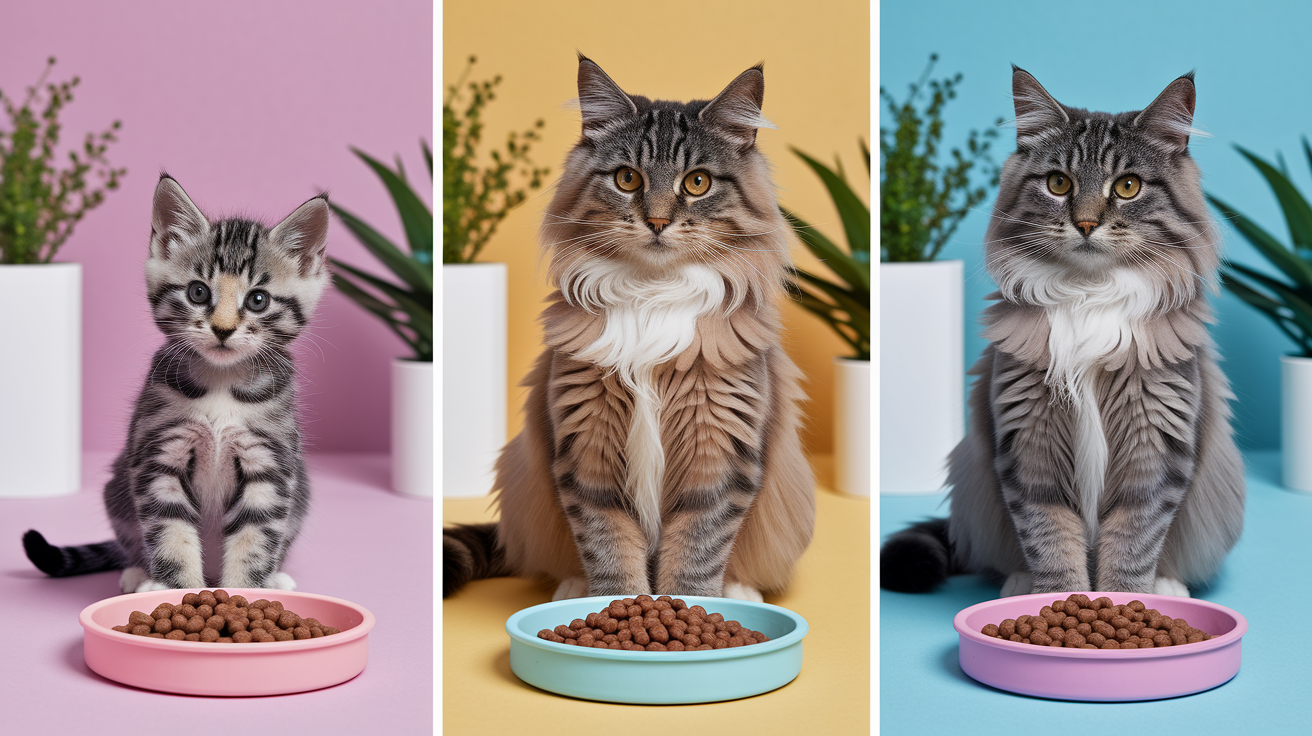
Kittens burn more calories per pound than adults and do well with frequent small meals, so mixed feeding works when you offer wet three to four times daily with a bit of kitten kibble left out for snacking. Their high energy needs and developing teeth make kibble useful, while wet supports hydration during fast growth. Most kittens switch to adult portions around 12 months, though big breeds like Maine Coons might stay on kitten formulas until 18 months.
Adult cats in their prime (1 to 7 years) can handle a wide range of wet to dry ratios, so adjust based on activity, weight goals, and how much they drink on their own. Indoor cats with lower activity often do well on 50 to 75% wet to help them feel full without extra calories, while active cats or outdoor types can handle more kibble without packing on weight. Check body condition every few weeks and adjust portions before weight changes get obvious.
Wet food gets easier to handle as cats age and deal with dental problems like worn teeth, missing teeth, or inflamed gums. Senior cats (7+ years) often eat more consistently when at least half their diet is wet, since the soft texture reduces discomfort and the strong smell helps maintain appetite as their nose gets weaker. Mixed feeding helps finicky seniors stay interested by offering variety, which can be especially helpful for cats managing chronic stuff like kidney disease or hyperthyroidism.
- Kittens: Feed wet 3 to 4 times daily with kitten kibble out for grazing; switch to adult portions around 12 months.
- Adults: Adjust wet/dry ratio based on activity and weight goals; check body condition every 2 to 3 weeks.
- Seniors: Bump wet to 50 to 75% of the diet to support easier eating, better hydration, and steady appetite.
Preventing Weight Gain and Overfeeding When Using Mixed Feeding

Your daily total has to include both food types, since the biggest mistake is dumping wet on top of a full dry ration without cutting kibble. This doubles calories and leads to slow, steady weight gain over weeks or months. Start by checking calories per cup of dry and per can or pouch of wet, then split your cat’s daily target between the two. If you’re going half and half, each type should give half the daily calories, not half the usual portion of each.
Measuring portions is the only way to control intake when you’re combining foods. Use a digital kitchen scale for dry or a standard measuring cup that you level off after scooping, since a heaping cup can pack 20 to 30% more than a level one. For wet, spoon out the portion onto a plate instead of serving a full can if it’s more than your cat needs. Store leftover wet in the fridge and use within two days.
-
Figure out your cat’s daily calorie needs based on ideal weight and activity, using feeding guides or your vet’s advice.
-
Check calorie density on both packages, usually listed as “kcal per cup” for dry and “kcal per can” for wet.
-
Split total daily calories between the two types based on your ratio (50/50, 75/25, whatever).
-
Convert calories to portions using the nutrition panel, then measure dry with a level cup and wet by weight or serving size.
-
Weigh your cat every 2 to 3 weeks and adjust portions to keep a healthy body condition, which you check by feeling for ribs under a thin fat layer.
Handling, Storage, and Food Safety for Mixed Feeding
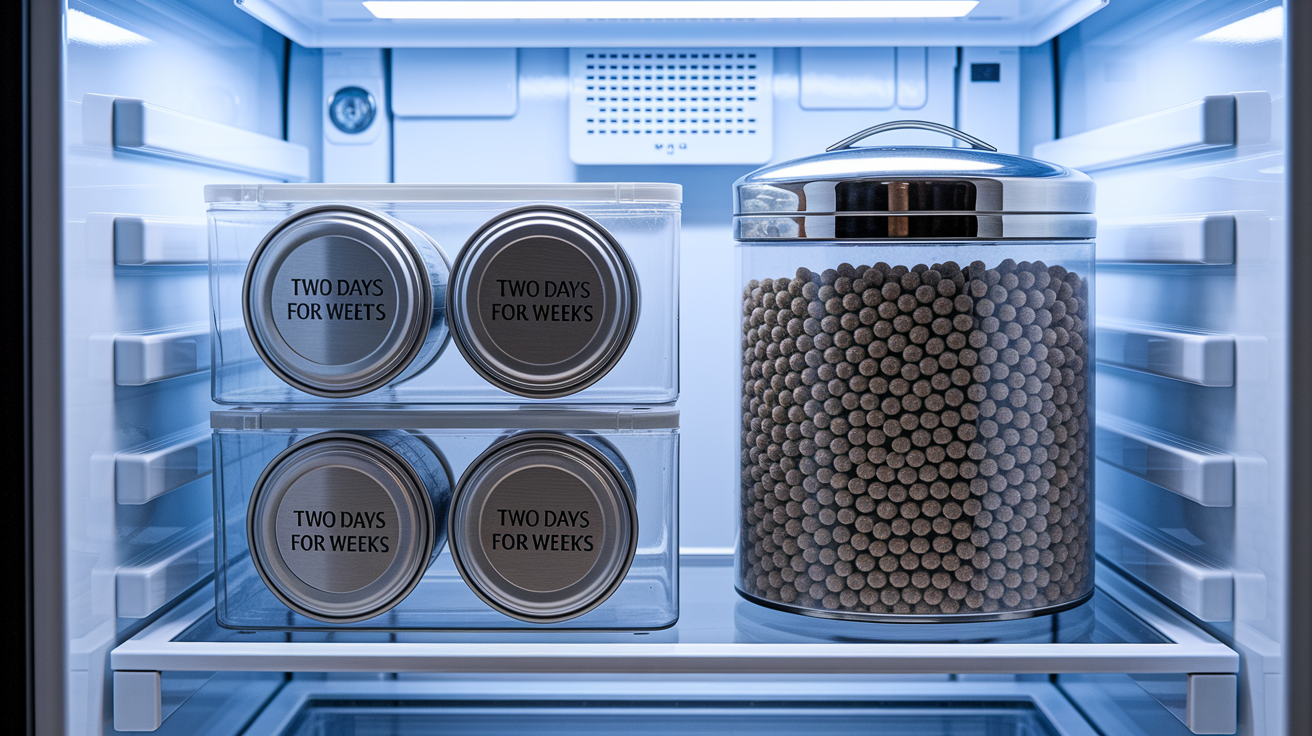
Wet food gets picked up after 30 minutes to avoid spoilage and keep ants away, especially in warm or humid weather. Bacteria grow fast in moist food left at room temp, and spoiled food can cause vomiting or diarrhea. Set a timer after serving if you need a reminder to grab the bowl, and rinse it with hot water before the next meal.
Store opened cans or pouches in the fridge for two days max, covering cans with a plastic lid or moving the food to an airtight container. Bring cold food to room temp before serving by letting it sit for 10 to 15 minutes or stirring in a teaspoon of warm water to take the chill off. Dry food stays in its original bag inside an airtight container to keep it fresh and away from moisture or pests, and gets used within six weeks of opening.
- Pick up wet food after 30 minutes to stop spoilage, especially when it’s warm or humid.
- Store opened wet in the fridge for 2 days max in an airtight container or covered can.
- Serve wet at room temp by letting it sit 10 to 15 minutes or adding a bit of warm water.
- Keep dry in an airtight container inside the original bag and use within 6 weeks for best freshness.
Common Problems When Combining Wet and Dry Food (and Solutions)
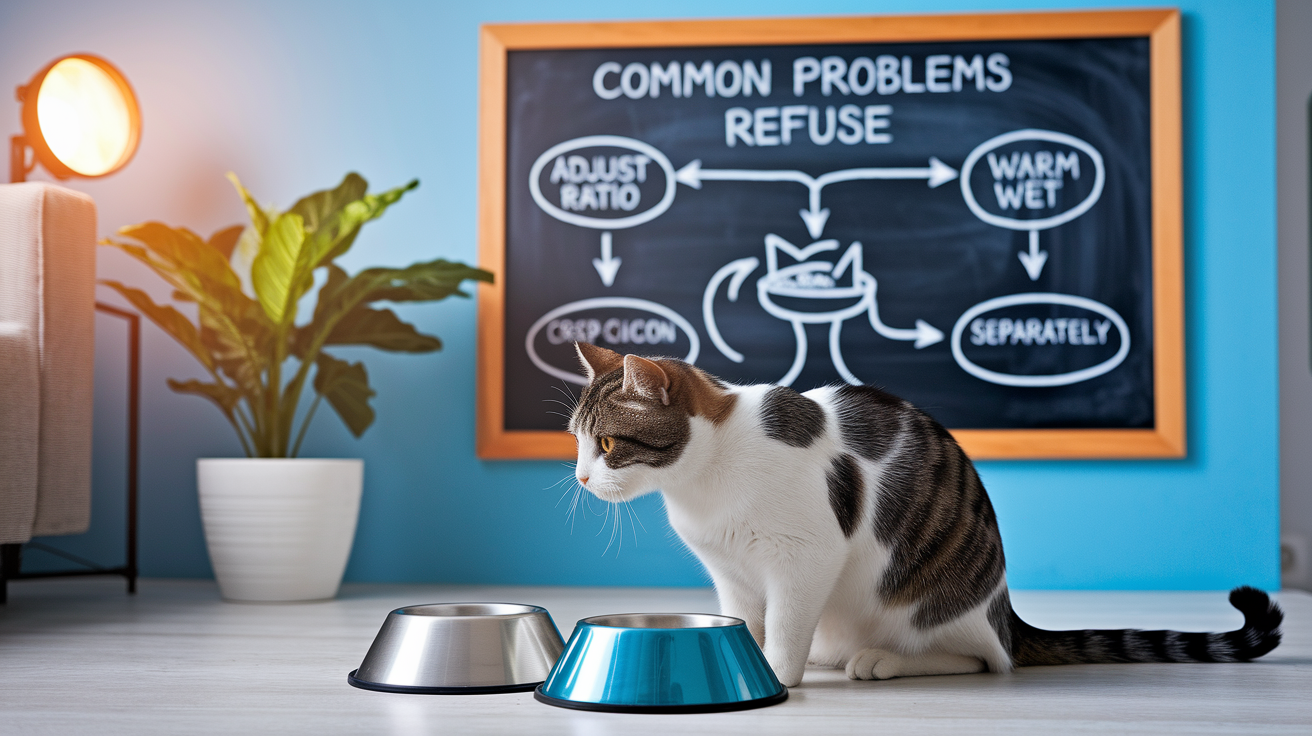
If your cat refuses mixed food, tweak the wet to dry ratio by starting with less of the new type, or serve them separately in different bowls at the same meal. Some cats want to eat wet first and hit the kibble later, while others want them totally separate. Warming wet food a bit to boost the smell can help, but don’t microwave it to steaming hot, which creates burn spots and kills some nutrients.
Bring changes in slowly to avoid stomach upset, which shows up as vomiting, soft stool, or gas. A safe switch takes 7 to 10 days, gradually upping the new food while cutting the old by small amounts every two to three days. If your cat gets diarrhea or vomits more than once during a change, slow down or go back to the previous ratio for a few days before trying again. Vomiting or diarrhea that lasts more than 24 hours means it’s time to check with a vet.
Try different proteins and textures if your cat keeps refusing a particular food. A cat that won’t touch chicken pâté might demolish turkey shreds in gravy, or one that ignores minced beef might go for salmon chunks. Wellness says 9 in 10 cats accept the taste of their recipes based on independent kennel studies, but individual cats have their own opinions. Texture matters as much as flavor for some, so rotate through pâtés, gravies, minced, morsels, sliced, and shredded proteins in light broth or chunky cuts until you find what your cat actually finishes.
- Start tiny (1 teaspoon) with the new food type and build slowly over 7 to 10 days to avoid rejection or stomach issues.
- Serve separately if your cat won’t eat mixed bowls, offering wet at breakfast and dry at dinner, or side by side at the same meal.
- Warm wet food slightly to body temp to boost smell, but don’t make it hot enough to burn or wreck nutrients.
- Try different textures and proteins like switching pâté to shredded or chicken to fish until you find what works.
- Slow down changes if loose stool or vomiting happens, and call your vet if it lasts more than 24 hours or gets worse.
Final Words
Mix smart: balance calories, pick complementary proteins, and serve wet food at room temperature, then remove it after 30 minutes to avoid spoilage.
Introduce changes slowly, measure portions, follow simple schedules, and adjust for kittens, adults, or seniors while watching weight and stool.
A wet and dry food combination for cats can boost hydration, add texture variety, and make medication easier. Start with small steps and you’ll see steady, low-stress improvements.
FAQ
Q: Should you mix wet and dry food together for cats?
A: Mixing wet and dry food together for cats is fine if you account for calories, remove wet food after about 30 minutes, and watch whether your cat prefers separate textures or combined meals.
Q: What is the 25 rule for cat food?
A: The 25 rule for cat food usually means keeping extras—treats, toppers, or added wet food—to about 25% of your cat’s daily calories so you don’t unintentionally overfeed; check labels to be sure.
Q: How to split wet and dry cat food?
A: To split wet and dry cat food, calculate your cat’s total daily calories, divide those calories into a practical ratio (example: AM wet, PM dry or 30/70 wet/dry), then measure portions and adjust.
Q: Is it okay to feed cats wet and dry food?
A: Feeding cats wet and dry food is okay and often helpful—wet boosts hydration and digestion, dry can help dental health—just balance calories, monitor weight, and transition slowly to avoid tummy upset.